The Israel Defense Forces revealed on Tuesday that it had carried out dozens of secret ground operations into Southern Lebanon over the past year to reduce Hezbollah’s war-making capability, destroying the terror group’s tunnels and hidden weapons caches.
The raids were part of an effort to prepare for the larger ground operation, which got underway this morning. The goal was to cripple Hezbollah’s ability to invade Israel.
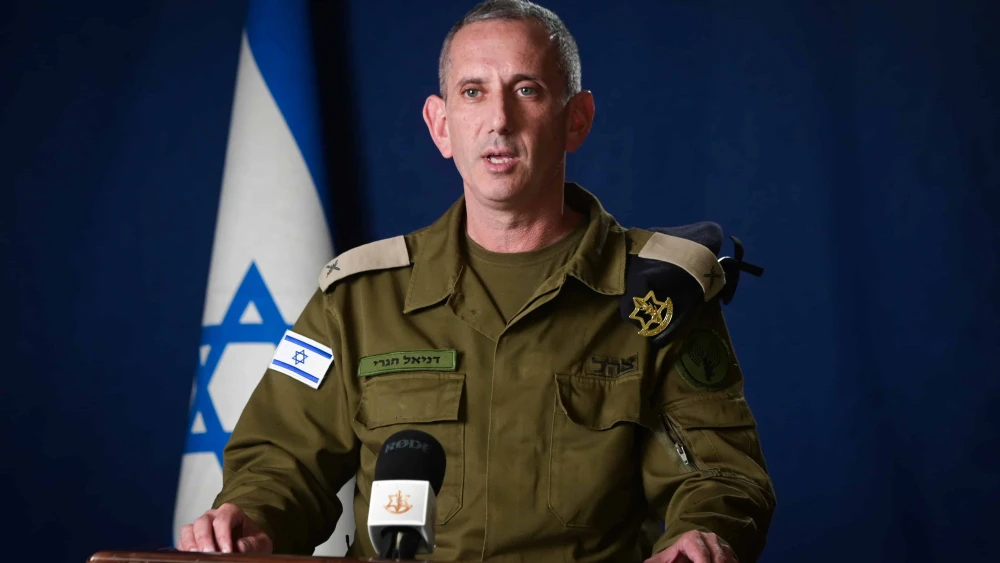
IDF spokesman Rear Adm. Daniel Hagari told press that IDF forces discovered more details of Hezbollah’s plan to invade northern Israel, which was to be spearheaded by the group’s Radwan Force.
Israel killed Ibrahim Aqil, the head of the terror group’s special operations unit, on Sept. 20.
Holding up a map, Hagari said: “We found this map inside one of the compounds that our fighters raided. It is a map that Hezbollah planned to give to its terrorists during a broad infiltration into the territory of the State of Israel as part of the ‘Plan to occupy the Galilee.’ ”
“As you can see, it has a legend marking Israeli settlements, IDF posts, access roads and attack targets that Hezbollah planned to conquer. This map was supposed to be used by thousands of Hezbollah terrorists on the day of the order to raid the territory of the State of Israel, as Hamas did on Oct. 7,” he said.
Hagari also detailed three IDF raids into Southern Lebanon, including the villages of Meiss El Jabal, Kfarkela and Ayta ash Shab.
In Ayta ash Shab, soldiers found dozens of underground shafts and tunnels to a depth of 20 to 25 meters (65 to 83 feet), rocket launchers and more than 10 ammunition stores.
In Meiss El Jabal, soldiers entered the houses of the village, where they found an ammunition depot for an entire company of Radwan terrorists in a 12-meter-deep shaft just 30 meters (98 feet) from the border with Israel.
Weapons stores were meant for future use in the planned invasion of Northern Israel, Hagari said. Terrorist infrastructure was destroyed by a combination of ground demolitions and air attacks.
Some of the raids took Israeli forces 10 kilometers (6.2 miles) into Lebanon, but most were a distance of two to three kilometers (1.2 to 1.8 miles) from Israel’s border.
Israeli forces would sometimes spend a few days in enemy territory. But their work was carried out in secret, unchallenged by Hezbollah terrorists, according to the IDF.