


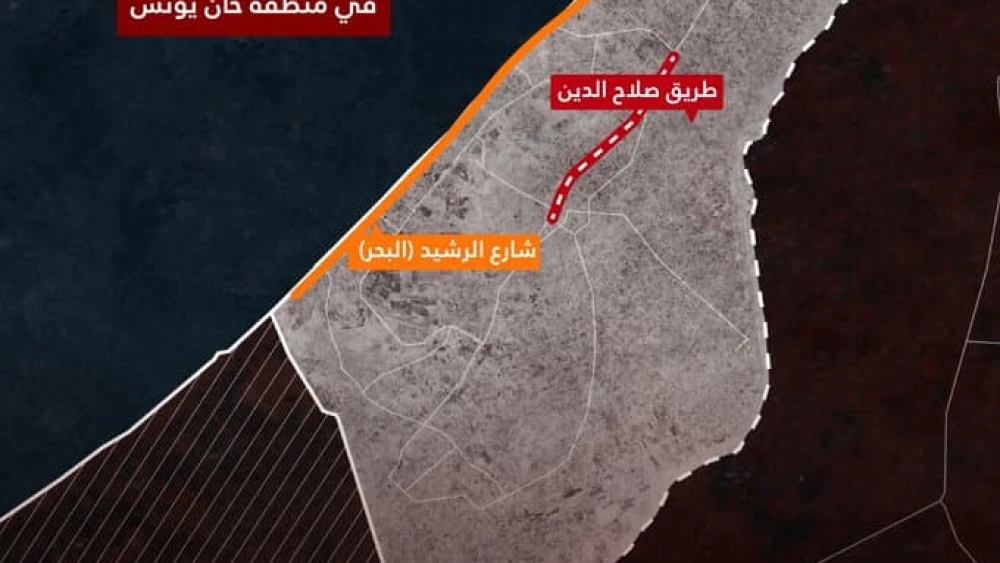
The IDF announced on Monday a new humanitarian corridor in the southern Gaza Strip and warned Palestinians to avoid certain areas due to heavy fighting, as part of Israel’s ongoing efforts to minimize civilian casualties.
“The IDF will allow humanitarian movement of civilians through a bypass axis located west of Khan Yunis,” said Lt.-Col. Avichai Adree, the IDF spokesman to the Arab media.
Adree tweeted a map warning Palestinians against remaining in specific areas north and east of the city.
“In these clips, the Salah al-Din Axis constitutes a battlefield, so it is extremely dangerous to reach it,” he said.
سكان قطاع #غزة،
— افيخاي ادرعي (@AvichayAdraee) December 4, 2023
جيش الدفاع يتصرف بقوة ضد #حماس والمنظمات الإرهابية في قطاع غزة وبشكل خاص في منطقة #خان_يونس.
فيما يلي عدة تعليمات عاجلة:
القتال والتقدم العسكري لجيش الدفاع في منطقة خان يونس لا يسمحان بتنقل المدنيين عبر محور صلاح الدين في المقاطع الواقعة شمالي وشرقي مدينة… pic.twitter.com/fQOBR6fHsF
He also identified areas where transportation would be available, noting a “temporary tactical suspension of military activities for humanitarian purposes in the Rafah camp” until early afternoon.
“The people of Gaza are not our enemies. For this reason, the IDF is leading controlled and specific evacuations in order to remove them as much as possible from areas of combat,” the IDF said in a message to Gaza residents on Friday.
The IDF’s actions are in keeping with Israel’s efforts, in agreement with the U.S., to avoid harming noncombatants.
White House National Security Council Spokesman John Kirby said on Sunday in an interview with anchor George Stephanopoulos of ABC‘s “This Week” that Jerusalem has been “receptive to our messages here in terms of trying to minimize civilian casualties.”
“And I would tell you,” said Kirby, “we saw that as they went into north Gaza. They did it in a more precise way, a smaller way. And just in the last 24, 48 hours, George, they published online a map of places where people could go to avoid combat, and where they could go where they could find safety from combat.”
“There’s not a whole lot of modern militaries that would do that. I mean that ... to telegraph their punches in that way. So, they are making an effort,” Kirby added.
Israeli forces continued to expand ground operations in the Gaza Strip on Monday, including extensive activity near Rafah and Khan Yunis in central and southern Gaza, and in northern Gaza at Shejaiya as well as the Tuffah neighborhood east of Gaza City.



