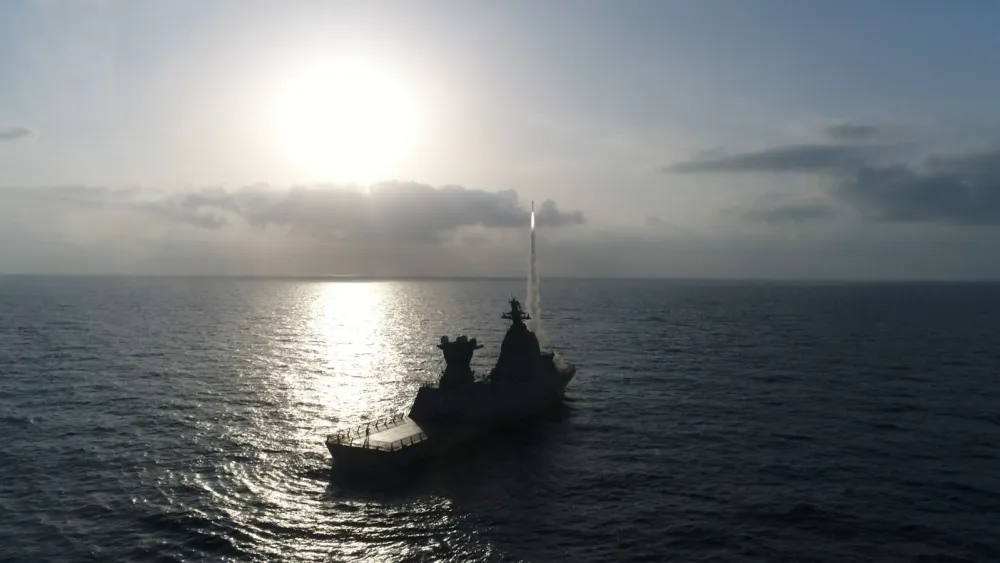
Israel has successfully tested a naval version of its land-based Iron Dome air-defense system, the C-Dome.
The interceptor was installed on the Israel Navy’s Sa’ar 6-class “Magen” corvette and was on target when faced with simulated threats such as rockets, cruise missiles and unmanned aerial vehicles.
C-Dome is a joint project of the Israel Navy, the Israel Missile Defense Organization (part of the Defense Ministry’s Directorate of Defense Research and Development) and Rafael Advanced Systems.
The naval Iron Dome adds to the Israeli military defensive capabilities within its maritime borders and to the protection of strategic assets including natural gas production in Israel’s exclusive economic zone in the eastern Mediterranean.
Its development is modeled after Israel’s existing air-defensive array: Iron Dome, David’s Sling, Arrow 2 and Arrow 3.
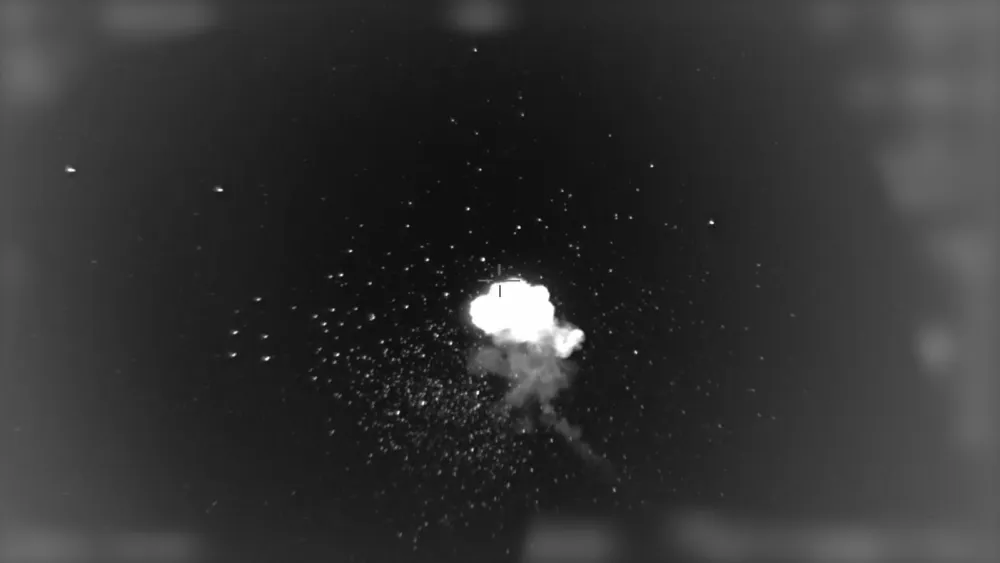
“The C-Dome system constitutes a significant leap forward in our defense capabilities and ensures the Israeli defense establishment’s superiority and operational capabilities in the face of growing threats in the maritime arena,” Defense Minister Yoav Gallant said.
“The system’s naval adaptation is part of our advanced multi-tier air and missile defense system. I would like to express my great appreciation to the Directorate for Defense R&D, the IDF and Rafael, for turning a tech vision into reality—developing operational capabilities in the field,” the minister continued.
Hezbollah has threatened to attack Israeli gas fields and has developed a naval unit with Iranian assistance.
During the 2006 Second Lebanon War, Hezbollah fired a Chinese-made C-701 anti-ship missile at the Israel Navy’s “Hanit,” killing four crew members and damaging the Sa’ar-5 class corvette.
Since then, Hezbollah is believed to have acquired more advanced Russian and Chinese anti-ship missiles with Iranian assistance.
In June 2022, the IDF intercepted unarmed Hezbollah drones on their way to Israel’s Karish offshore gas field.