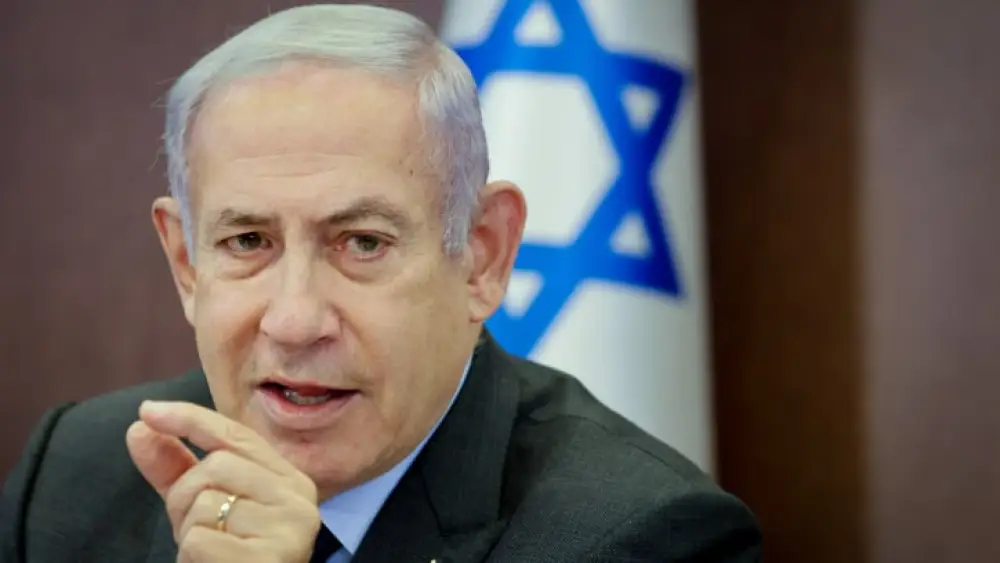
Israeli Prime Minister Benjamin Netanyahu on Saturday night slammed the emerging U.S.-Iran deal for the release of five U.S. prisoners in exchange for Washington unfreezing billions of dollars in Iranian assets.
“Israel’s position is known: Arrangements that do not dismantle Iran’s nuclear infrastructure do not stop its nuclear program and only provide it with funds that go to terrorist elements sponsored by Iran,” said Netanyahu.
After the deal was announced on Thursday, Tehran transferred the American detainees to house arrest and Washington moved to unfreeze $6 billion-plus in sanctioned Iranian funds held in South Korea.
Seoul owed the sum to the Islamic Republic for oil purchased before the Trump administration re-imposed penalties on such transactions following its withdrawal in 2018 from the 2015 Joint Comprehensive Plan of Action nuclear deal.
On Friday, The Wall Street Journal reported that Iran had also started slowing the pace of its uranium enrichment and diluted a small amount of its stockpile. The report was denied by the Iranians.
While details of the emerging agreement remain unknown, U.S. and Iranian officials expect it to be completed by the end of September.
In June, The New York Times reported the broad outlines of the indirect negotiations, some of which reportedly took place in the Gulf state of Oman.
The overall agreement would limit Iran’s uranium enrichment to its current production level of 60%. Iran would also put a stop to attacks against American contractors in Syria and Iraq by the regime’s terrorist proxies.
Additionally, Iran would increase its cooperation with international nuclear inspectors and halt ballistic-missile sales to Russia.
In exchange, the United States would agree not to ratchet up economic sanctions, to stop confiscating Iranian oil and not to seek punitive resolutions against Iran at the United Nations or at the International Atomic Energy Agency.
Both Washington and Tehran have denied working to revive the broader pact abandoned by former U.S. president Donald Trump in 2018.
Israeli Foreign Minister Eli Cohen recently told JNS: “We think that there is no value in agreements with Iran. Its desire to obtain nuclear weapons is intended to [allow it to] continue [to increase] regional instability, to continue to violate human rights. We made it clear, unlike the previous government: We will not accept any agreement.”