


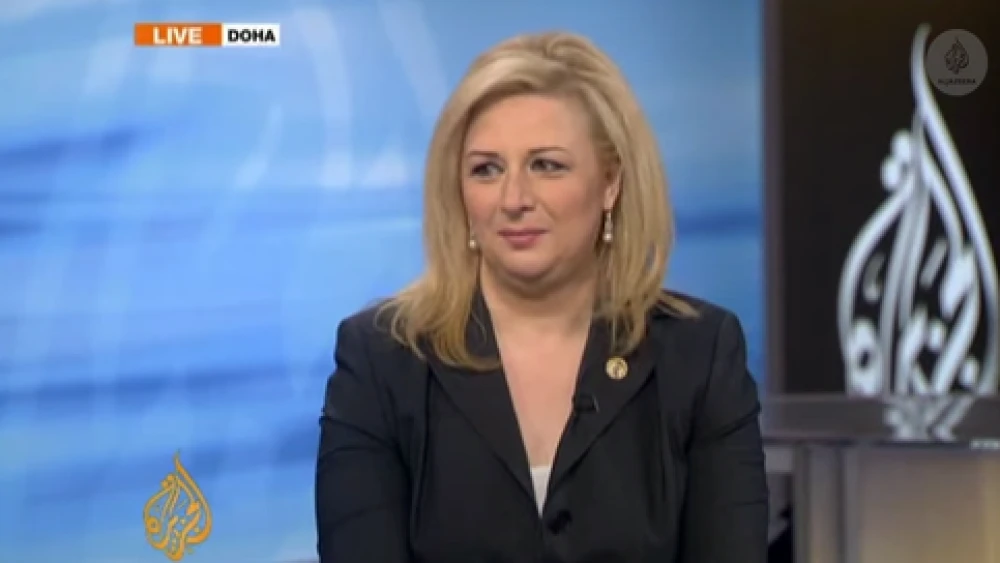
Suha Arafat, the wife of the late Palestine Liberation Organization (PLO) terrorist Yasser Arafat, last week gave an exclusive interview with the Italian newspaper La Repubblica on the 10th anniversary of her husband’s passing. She discussed contemporary issues between Israel and the Palestinian factions, as well as the hopes of peace between both peoples. Some of her statements garnered headlines, including one in which The Times of Israel implied that Suha disapproved of the Palestinian “armed struggle” against the Jewish state. Most notably, she said Hamas holds Palestinian Arabs in Gaza hostage and commits genocide.
To most observers, Suha’s words were not only significant, but also supported the same narrative that Israelis have used since Hamas took over Gaza eight years ago. The interview may also suggest that Suha endorses a more peaceful path than that of her late husband and the current Palestinian leadership. But upon closer examination of the facts, her interview is both deceiving and ironic.
Suha complained that Hamas did not celebrate her husband’s life, indicating the rift between the Palestinian Fatah faction and Hamas. Yet Suha has admitted that if she could go back in time, she would never have married Yasser Arafat. One can infer that her latest jabs at Hamas come out of her frustration that it refuses to honor the former leader of Fatah and its partner groups, the PLO and the Palestinian Authority. Though her harsh comments about Hamas are welcome, it seems rather contradictory that she called on the group to celebrate Arafat’s life.
Additionally, Suha in her interview called on Italy to recognize “Palestine,” following Sweden’s decision to do so last month. Swedish Foreign Minister Margot Wallstrom told Al Jazeera that recognizing a Palestinian state and the leadership of Palestinian Authority President Mahmoud Abbas would help move Israeli-Palestinian peace talks forward by putting each party on a level playing field. Yet Hamas, the same organization whom Suha condemns for its terrorism, is currently part of a unity government with the Abbas-led Fatah faction.
Wallstrom also stated that “the [Swedish] government will now work to support renewed negotiations to reach a final agreement.” Wallstrom is not outwardly supporting a two-state solution, but instead remains ambiguous on his ideal solution. If Suha contends that Italy should follow Sweden’s path, that would mean further obscuring Israel’s legitimacy alongside an independent Palestinian state. That does not constitute being “peace-oriented.”
Let us be clear. Suha Arafat is still hostile towards Israel. In her interview, she further stated, “We have to continue negotiations, proving, if anything, that it is Israel that does not want peace.” She blames Israel for the failures of her husband and his successor, Abbas, to achieve peace. Specifically, she conveniently “forgets” why her husband initiated the second Palestinian intifada (uprising). It all started with the Camp David talks of 2000, in which Israel offered the Palestinians 95 percent of Judea and Samaria as well as control of eastern Jerusalem. Arafat rejected the proposal and decided not to make a counteroffer, allowing the second intifada to fester.
In 2008, Abbas rejected another extraordinarily generous offer from Israel, this time from Prime Minister Ehud Olmert. Olmert offeredmore than Barak, including 97 percent of Judea and Samaria, and also accepted the idea of a Palestinian “right of return.” But like Arafat before him, Abbas did not give a counteroffer and the prospects for peace were lost once more.
This particular pattern does not favor the Suha Arafat’s argument that “Israel does not want peace.” Instead, it supports the claim that the Palestinian leadership refuses to negotiate past any offer given by an Israeli prime minister—whether it is Barak, Olmert, or Netanyahu. Thus, Suha’s claims should not be taken seriously.
Suha Arafat, the wife of the late Palestine Liberation Organization (PLO) terrorist Yasser Arafat, last week gave an exclusive interview with the Italian newspaper La Repubblica on the 10th anniversary of her husband’s passing. She discussed contemporary issues between Israel and the Palestinian factions, as well as the hopes of peace between both peoples. Some of her statements garnered headlines, including one in which The Times of Israel implied that Suha disapproved of the Palestinian “armed struggle” against the Jewish state. Most notably, she said Hamas holds Palestinian Arabs in Gaza hostage and commits genocide.
To most observers, Suha’s words were not only significant, but also supported the same narrative that Israelis have used since Hamas took over Gaza eight years ago. The interview may also suggest that Suha endorses a more peaceful path than that of her late husband and the current Palestinian leadership. But upon closer examination of the facts, her interview is both deceiving and ironic.
Suha complained that Hamas did not celebrate her husband’s life, indicating the rift between the Palestinian Fatah faction and Hamas. Yet Suha has admitted that if she could go back in time, she would never have married Yasser Arafat. One can infer that her latest jabs at Hamas come out of her frustration that it refuses to honor the former leader of Fatah and its partner groups, the PLO and the Palestinian Authority. Though her harsh comments about Hamas are welcome, it seems rather contradictory that she called on the group to celebrate Arafat’s life.
Additionally, Suha in her interview called on Italy to recognize “Palestine,” following Sweden’s decision to do so last month. Swedish Foreign Minister Margot Wallstrom told Al Jazeera that recognizing a Palestinian state and the leadership of Palestinian Authority President Mahmoud Abbas would help move Israeli-Palestinian peace talks forward by putting each party on a level playing field. Yet Hamas, the same organization whom Suha condemns for its terrorism, is currently part of a unity government with the Abbas-led Fatah faction.
Wallstrom also stated that “the [Swedish] government will now work to support renewed negotiations to reach a final agreement.” Wallstrom is not outwardly supporting a two-state solution, but instead remains ambiguous on his ideal solution. If Suha contends that Italy should follow Sweden’s path, that would mean further obscuring Israel’s legitimacy alongside an independent Palestinian state. That does not constitute being “peace-oriented.”
Let us be clear. Suha Arafat is still hostile towards Israel. In her interview, she further stated, “We have to continue negotiations, proving, if anything, that it is Israel that does not want peace.” She blames Israel for the failures of her husband and his successor, Abbas, to achieve peace. Specifically, she conveniently “forgets” why her husband initiated the second Palestinian intifada (uprising). It all started with the Camp David talks of 2000, in which Israel offered the Palestinians 95 percent of Judea and Samaria as well as control of eastern Jerusalem. Arafat rejected the proposal and decided not to make a counteroffer, allowing the second intifada to fester.
In 2008, Abbas rejected another extraordinarily generous offer from Israel, this time from Prime Minister Ehud Olmert. Olmert offeredmore than Barak, including 97 percent of Judea and Samaria, and also accepted the idea of a Palestinian “right of return.” But like Arafat before him, Abbas did not give a counteroffer and the prospects for peace were lost once more.
This particular pattern does not favor the Suha Arafat’s argument that “Israel does not want peace.” Instead, it supports the claim that the Palestinian leadership refuses to negotiate past any offer given by an Israeli prime minister—whether it is Barak, Olmert, or Netanyahu. Thus, Suha’s claims should not be taken seriously.



