


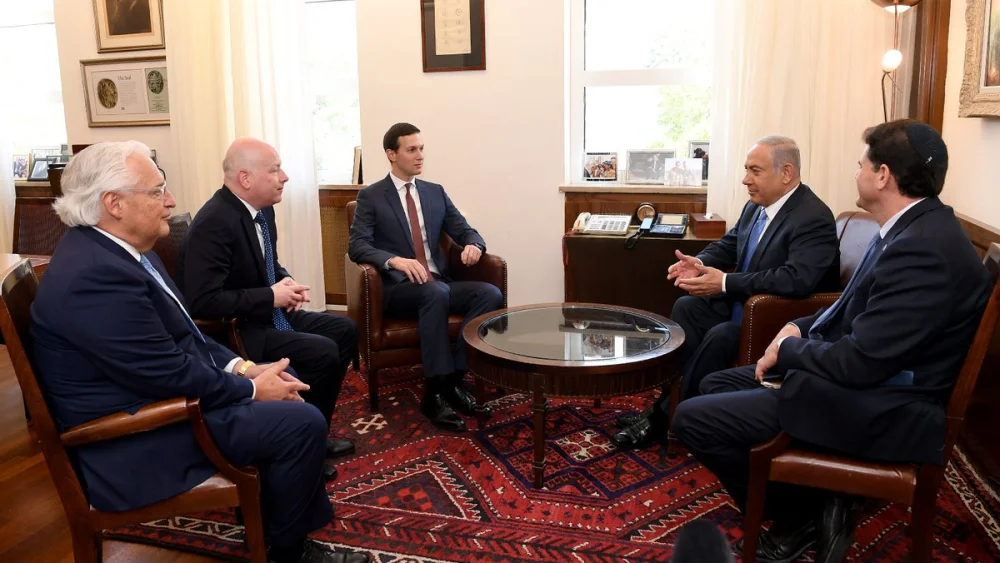
The Trump administration is reportedly ramping up preparations for the unveiling of an Israeli-Palestinian peace plan, although a timetable for its release remains unclear.
The National Security Council began approaching other government agencies, including the State Department, Pentagon, intelligence agencies and Congress, for volunteers to join a team that will work with Jared Kushner, U.S. President Donald Trump’s son-in-law, and Jason Greenblatt, Trump’s special envoy for international peace negotiations, the Associated Press reported.
“The team, which is being set up to organize the peace plan’s public presentation and any negotiations that may ensue, will comprise three units: one concentrating on its political and security details, one on its significant economic focus and one on strategic communications,” the report said.
The creation of a White House team is the first evidence in several months that the administration’s plan to unveil an Israeli-Palestinian peace plan is moving forward. However, administration officials were silent on when that plan would be unveiled. It is estimated to come after the U.S. midterm elections in November, reports indicate.
Any peace plan, however, will most likely face an uphill battle with the Palestinians, who have boycotted contacts with the Trump administration since the recognition of Jerusalem as Israel’s capital in December.
At the same time, Arab leaders have also encouraged the Trump administration to not release the plan right now out of fears that it could destabilize the region.
Senior Arab officials confirmed to Israel Hayom that the peace plan will likely be delayed by several months because of assessments in Egypt and Saudi Arabia that Israel will hold elections in early 2019. While Israel is not scheduled to hold elections until September 2019, Israeli Prime Minister Benjamin Netanyahu’s coalition maintains a slim majority in the Knesset that could collapse at any time.
The White House officials dismissed any political concerns over the release.
“The release date for the peace plan won’t be determined by political matters in the U.S. or the political situation in Israel, but rather by the date it is completed and when the timing is appropriate,” a White House National Security official told Israel Hayom.


