Newsletter
Newsletter Support JNS

Israel struggles to integrate haredi, Arab workers into high-tech sector

Report: Despite forming more than 50% of Israeli exports, Israel Innovation Authority figures show the two communities’ participation in high-tech industry is declining.

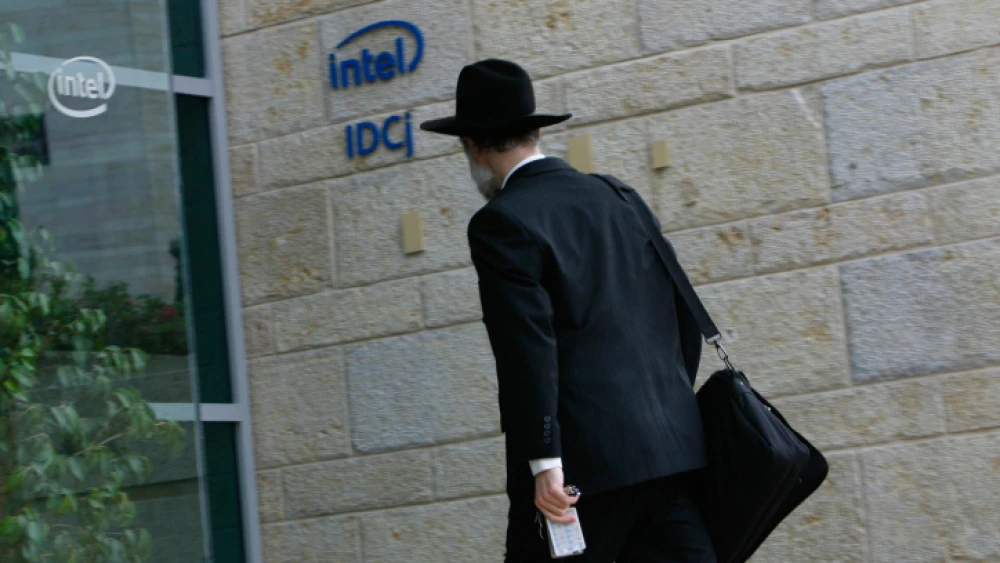
An Orthodox man enters the Intel high-tech compound in Jerusalem on Nov. 16, 2009. Photo by Miriam Alster/Flash90.

Israel is struggling to incorporate Arabs and haredim into its blossoming high-tech sector, Israeli business daily Globes reported on Monday.

Citing newly released Israel Innovation Authority figures, the report noted that more than half of Israel’s exports come from the high-tech sector (54%), which employs 12% of the country’s workforce.

“Israel is number one among the OECD countries for research and development expenditure per capita, and computer sciences have become an extremely popular discipline among students,” said the report.

Nevertheless, the figures showed that in 2021, the number of haredi employees in the sector fell by 6%, with 1,200 haredi women leaving the sector and 500 haredim joining.

IIA chairman Ami Appelbaum said the figures partly reflect the impact of the coronavirus pandemic, “which led to many haredi women leaving work in order to be at home with their children, while more men completed special training by organizations catering to the religious community that won Ministry of Economy and Labor tenders.”

The percentage of haredi employees in the high-tech sector stood at 3.4%, according to a 2021 IIA report.

Meanwhile, the integration of Arab Israelis into the sector is “in deep freeze,” said the report, with less than 2% of high-tech employees being Arab.

On Monday, Israeli Prime Minister Naftali Bennett tweeted: “We want to bring as many haredi employees into high-tech as possible. That is the bottom line of the meeting I just had with haredi high-tech entrepreneurs and personnel, in the context of our program. It is possible, even with haredi individuals who have not learned English and math.”

Rabbi Zushe Cunin, of the Chabad Jewish Community Center of Pacific Palisades, told JNS that there has been “tremendous anxiety” in the community over Bruce Lion’s behavior.
“At our own endorsement meeting, when asked to condemn Hamas and its Oct. 7th attacks, she point-blank refused, turning the question into yet another attack on Israel,” the Broadway Democrats wrote about their decision not to endorse Darializa Avila Chavelier, who is running for Congress in New York.
“Even if any Arab or Palestinian thinks that injustice has befallen them because of the existence of the state of Israel, moving on and forgetting about the injustice is much more in their interest than looking backwards,” Hussain Abdul-Hussain, author of The Arab Case for Israel, told JNS.
A month after his father was killed in a Queens park, Tzvi Yonie Itzkowitz told JNS that his family believes that the still-unsolved killing was motivated by Jew-hatred.
“The gravity of the situation and its widespread impact on our school community make this not the right time for a celebration,” the school stated in an email to parents.
The department said New York may be unlawfully discriminating against religious organizations by requiring long-term care facilities to accommodate residents based on gender identity without providing comparable faith-based exemptions.