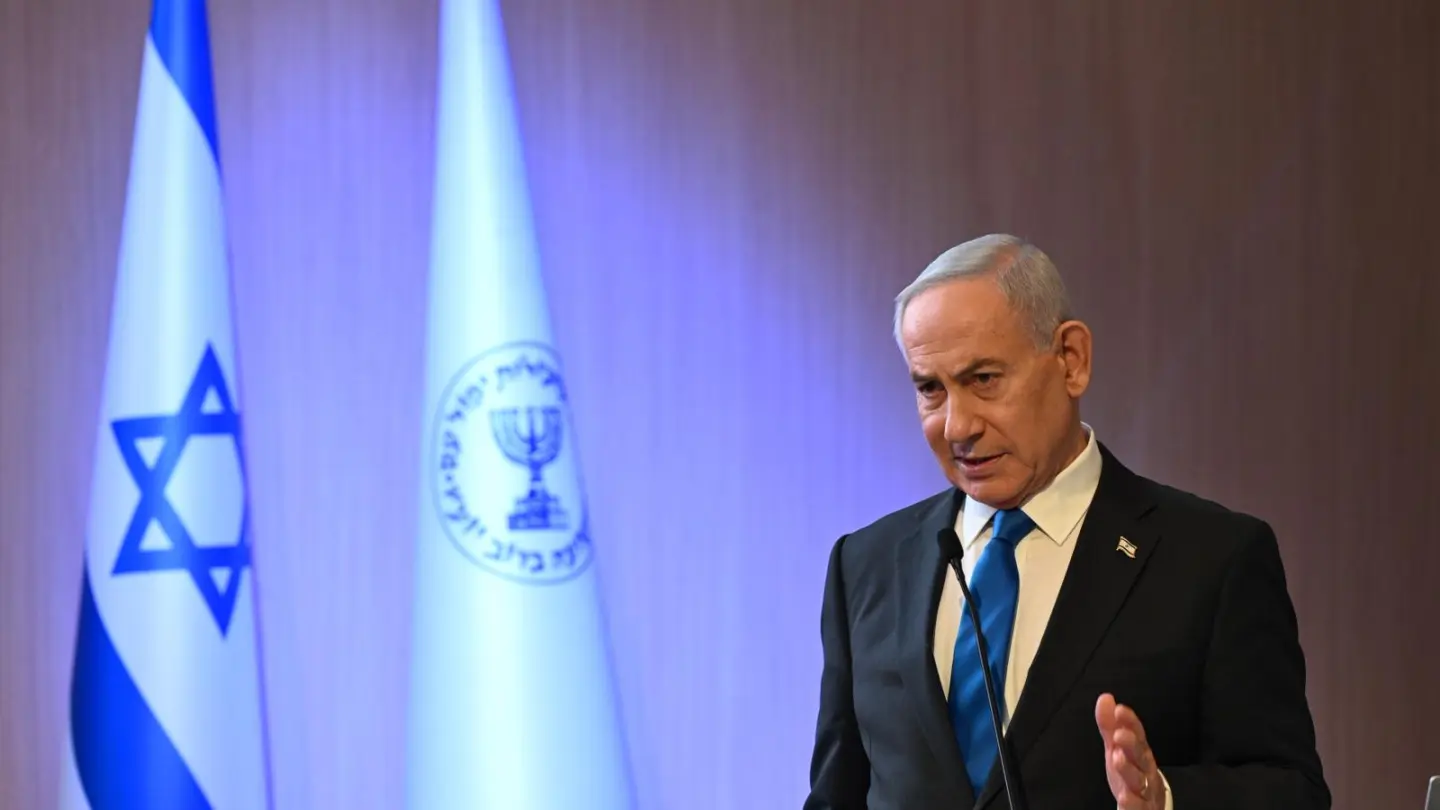
Numerous ideas for the “day after” the war against Hamas have been floated by people both in and outside Israel’s government, but Maariv claims that a plan which has the prime minister’s approval involves a temporary military administration to be eventually replaced by a multinational coalition.
According to Maariv columnist Ben Caspit, the staged plan would start with a full Israeli military government in the Gaza Strip, which would manage both security and civilian affairs and take care of the transfer of humanitarian aid to the Arab population.
The military administration would then be phased out in favor of an international coalition of Arab countries including Saudi Arabia, Egypt, Morocco, the United Arab Emirates and Bahrain.
The coalition would be part of a regional normalization agreement.
“It will stand behind the establishment of a new body that will be called the ‘New Palestinian Authority,’” Caspit reported.
Palestinian officials not associated with Hamas and not directly identified with Palestinian Authority President Mahmoud Abbas would be employed in administrative duties.
Israel would reserve the right to act militarily in Gaza, just as it does in Judea and Samaria, to prevent terrorism.
After the stabilization of the Gaza Strip and the “new Palestinian Authority” proves itself, the P.A. in Judea and Samaria would be reformed, meaning an end to its incitement to terrorism in schools and its “pay-for-slay” program that rewards terrorists and their families.
If this phase goes well, Israel would recognize a demilitarized Palestinian state in the areas of the P.A. and even transfer additional territories to that state, provided it doesn’t require the evacuation of Jewish communities.
Last month, Netanyahu, speaking during a stormy discussion in the Knesset Foreign Affairs and Security Committee, said there is no way the Palestinian Authority would be allowed to rule the Gaza Strip in a post-Hamas world.
“Oslo was the mother of all sins. The difference between Hamas and the Palestinian Authority is only that Hamas wants to destroy us here and now, and the P.A. wants to do it in stages,” the prime minister said.
Netanyahu’s stance against a P.A.-controlled Gaza Strip is at odds with that of the Biden administration, which has taken the position that the P.A. is the best alternative.
The prime minister also said that Israel would control the Philadelphia Corridor—the border between Gaza and Egypt—and that the IDF would impose a buffer zone within the Strip between the Palestinian populations and Israeli communities.
Reconstruction of the enclave would be done by “Abraham Accords” countries, including Saudi Arabia, Netanyahu said.
Also in December, Netanyahu presented conditions for peace between Israel and the Palestinians: 1) the destruction of Hamas; 2) the demilitarization of Gaza and 3) the deradicalization of Palestinian society.