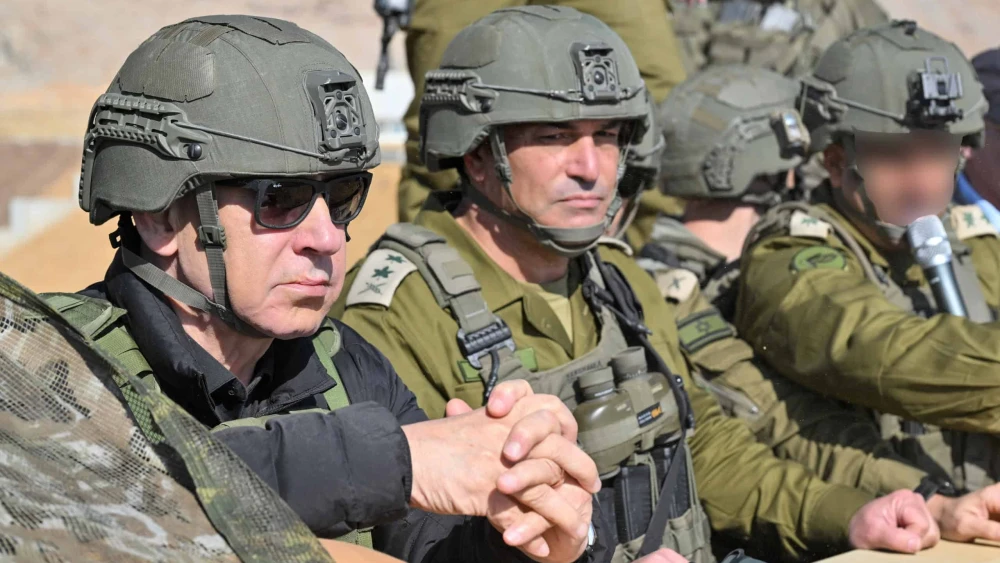
Israel may need to defend itself or strike in “at any moment” the Israel Defense Forces-controlled security zone in southern Syria, Israeli Prime Minister Benjamin Netanyahu said during a visit to the area on Wednesday with other top officials.
“We attribute enormous importance to our defensive and offensive ability here; it’s a mission that could develop at any moment,” Netanyahu said, according to a statement by the Prime Minister’s Office.
According to the PMO, the high-level delegation that accompanied Netanyahu also included Defense Minister Israel Katz; Foreign Minister Gideon Sa’ar; IDF Chief of Staff Lt. Gen. Eyal Zamir; Israel Security Agency (Shin Bet) director David Zini; and Yechiel Leiter, Israeli ambassador to the United States.
Netanyahu also noted the importance Israel attached to “guarding our Druze allies and mainly guarding the State of Israel and its northern border along the Golan,” the statement read. Netanyahu also thanked the soldiers serving along the border.
During the visit, which local media said led to the cancellation of Netanyahu’s testimony in his corruption trial on Wednesday, the officials were briefed on regional developments, according to the statement. Netanyahu met with some soldiers, both in regular service and reservists, and answered some of the questions they posed, his office said.
Earlier this week, Israel’s Kan News public broadcaster cited officials in Jerusalem as saying that talks for a renewed security arrangement with Damascus were at an impasse.
Israel reportedly refused Syrian President Ahmed al-Sharaa’s demands for a complete IDF withdrawal from all territory it captured in Syria in the wake of the fall of President Bashar Assad’s regime in late 2024.
“We are engaged in direct negotiations with Israel, and we have gone a good distance on the way to reach an agreement. But to reach a final agreement, Israel should withdraw to their pre-December 8 borders,” al-Sharaa told The Washington Post in an interview published on Nov. 10.
After the fall of the Assad regime in December 2024, Jerusalem seized control of large parts of southern Syria, expanding a security zone and maintaining a military presence amid ongoing clashes and airstrikes.
Netanyahu on Sept. 22 dismissed reports that Jerusalem was willing to give up the country’s buffer zone in Syria as part of a new security deal.
Talks with Syria are focused on “a security arrangement in which they demilitarize southwest Syria, and we ensure the security of our Druze allies in Jabal al-Druze,” the Israeli leader stated in a recording on X.