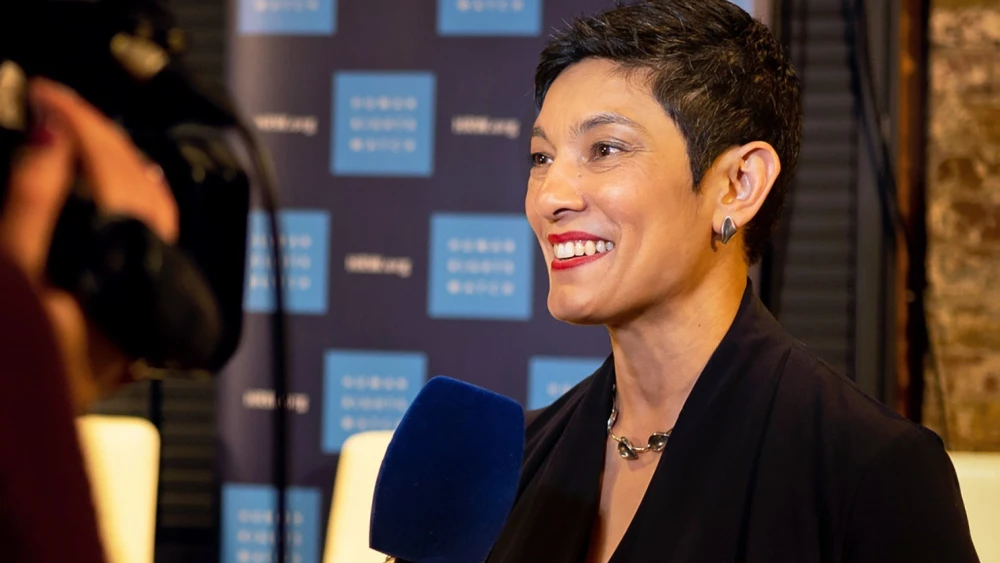
Human Rights Watch, an NGO with a history of anti-Israel advocacy, announced its interim executive director Tirana Hassan will now hold the position permanently.
“Different leader, same antisemitic, Israel-obsessed, Jew-hating,” Arsen Ostrovsky, CEO of the International Legal Forum, tweeted of Hassan’s appointment.
In 2014, Hassan tweeted: “When Israel strikes ‘targets’ and takes out large civilian casualties it’s sloppy, reckless and illegal.”
“My commitment to justice and human rights is drawn from lived experience. My family—from Pakistan to Jaffna in Sri Lanka to Singapore—faced the kinds of threats to their human rights that we are combating today in communities around the world,” Hassan said in a video that the NGO posted on Twitter.
“We are living in an era where facts are up to debate,” she added.
Israel supporters say Human Rights Watch is guilty of getting the facts wrong. NGO Monitor called a 2022 Human Rights Watch report “fundamentally flawed.” The group used “lies, distortions, omissions and blatant double standards to construct a fraudulent and libelous narrative demonizing Israel,” NGO Monitor accused.
Hassan replaces Kenneth Roth, who left Human Rights Watch last August.