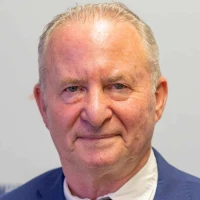
Israeli Prime Minister Benjamin Netanyahu on Sunday paid tribute to his brother, Lt. Col. Yonatan (Yoni) Netanyahu, on the 50th anniversary of his death while leading the daring Entebbe hostage-rescue operation, describing him as a model of courage, moral clarity and devotion to the Jewish state.
Speaking at a memorial ceremony on Mount Herzl attended by family members, government officials, military commanders and veterans of the elite IDF unit, Sayeret Matkal, Netanyahu reflected on the life and legacy of the officer whose name became synonymous with one of Israel’s most celebrated military operations.
“Fifty years have passed since my eldest brother, Yoni, fell in the heroic operation to free the hostages in Entebbe,” Netanyahu said. “There is not a single day that I do not think of you. I remember you with infinite longing, with deep pain, with immense pride.”
Lt. Col. Yoni Netanyahu was 30 years old when he was killed on July 4, 1976, while leading the Sayeret Matkal force during the rescue operation of 102 hostages at Entebbe Airport in Uganda, now known as “Operation Yonatan.”
Netanyahu, joined by his wife, Sara, and sons Yair and Avner, recalled childhood stories that he said foreshadowed his brother’s future leadership. He described Yoni as a seeker of justice, a natural leader and someone who remained calm under pressure even as a child.
He recounted Yoni’s distinguished military service, from the Six-Day War and the Yom Kippur War to the July 1976 mission in Uganda that rescued more than 100 hostages held by terrorists.
“‘Operation Yonatan’ raised Israel’s stature among the nations, and it proved to the free world that it is both possible and necessary to fight terrorism,” Netanyahu said.
The prime minister said his brother embodied qualities that later inspired generations of Israeli soldiers, including “humanity, moral clarity, courage, sound judgment, exceptional composure, a readiness to lead from the front, and a burning love for the people, the land and the state.”
Quoting from a letter Yoni wrote after the Yom Kippur War, Netanyahu recalled his brother’s determination to build his future in Israel despite the dangers facing the country.
“I prefer to live here in a state of ongoing war than to be part of the wandering Jewish people,” Yoni wrote. “I intend to take root here with great force.”
Netanyahu said that spirit continues to inspire Israeli soldiers today.
“During the 50 years after your falling, we have seen new generations of heroes rise,” he said. “Many of them draw inspiration from the story of your life and from your letters, just as the coming generations will draw inspiration from the story of their heroism and sacrifice.”
Addressing his late brother directly, he concluded: “Yoni, my dear and beloved brother, my longing for you will not cease until my dying day. I promise you that we will continue to proudly carry the torch of your mission to ensure the eternity of Israel.”
He added, “Whatever the diplomatic developments may be, I will not allow Iran to arm itself with nuclear weapons. As long as I am the prime minister of Israel, that will not happen.
“To this sacred mission, I have dedicated my life since your fall, Yoni.”
Later on Sunday, speaking at the JNS International Policy Summit in Jerusalem, Netanyahu again invoked the legacy of his brother and father while discussing the threat posed by Iran.
“I came here on the 50th anniversary of my brother’s fall in Entebbe, from Mount Herzl, at his gravesite,” he said. “Yoni fell in Entebbe, leading his soldiers in what is regarded as the greatest rescue operation of modern times.”
Netanyahu said the Entebbe operation demonstrated that “a free people, if they mobilize their courage and muster their strength and their will, can overcome the worst tyrannies in the world.”
The prime minister recalled remarks made by his father, historian Benzion Netanyahu, on his 100th birthday in 2010, when he warned that Iran sought to destroy the Jewish state and urged Israel to confront existential threats with determination and clear-eyed judgment.
Quoting his father, Netanyahu said, “Iran vows to destroy the Jewish state. The people of Israel are showing the world how a nation should behave when faced with an existential threat. Stare unflinchingly at the danger, calmly consider what needs to be done and what can be done, and be ready to enter the fray at the proper moment.”
Netanyahu said those words helped shape his own approach to Israel’s security challenges, as the United States and Iran conduct talks in Switzerland.
“Sixteen years later, we did just that,” he said. “No matter what happens in the talks, with an agreement, without an agreement, I pledge to you that Iran, as long as I am prime minister, will never have a nuclear weapon. Never. As long as I am the prime minister of Israel, I will not let that happen.”