U.S. President Donald Trump hailed the withdrawal of American military forces from Iraq as “a victory for the United States” on Wednesday.
He contrasted the removal of U.S. troops from Erbil with the Biden administration’s ending of the U.S. presence in Afghanistan.
“Unlike Afghanistan, where much military equipment and everything else was left behind and 13 warriors lie dead, with many badly wounded, this orderly departure of coalition forces and equipment from Erbil Air Base marks the end of a very expensive excursion into hell,” Trump wrote.
“We came to fight a caliphate,” he stated. “There is no longer a caliphate. We are going home.”
U.S. Central Command said earlier on Wednesday that it completed “Operation Inherent Resolve,” the counter-ISIS mission launched in 2014 during the Obama administration, and removed the last U.S. troops in Iraq from Erbil Air Base in Iraqi Kurdistan.
Michael Makovsky, president and CEO of the Jewish Institute for National Security of America, told JNS that he is concerned about what the decision means for U.S. force posture in the region and the relationship between the United States and the Kurds.
“I can understand moving from other parts of Iraq, but that would be the one place I would have stayed,” Makovsky said.
“We don’t look to the Kurds as a strategic asset,” he told JNS. “It’s possible that Trump, given his relationship with Erdoğan and Turkey, might see them as a liability.”
In 2024, the Biden administration negotiated the timeline for the United States to remove its troops from Iraq. The Trump administration upheld it, despite the ongoing conflict with Iran.
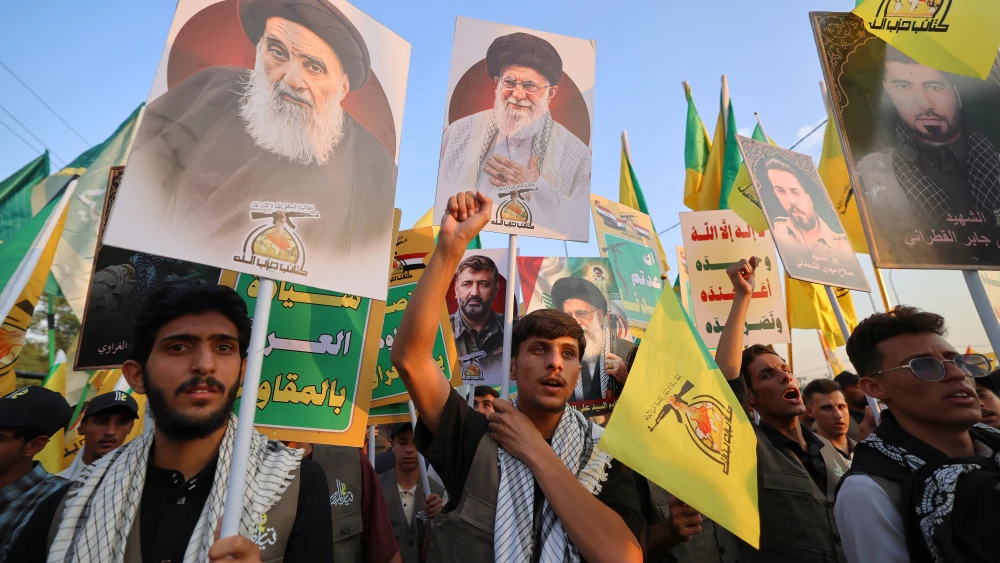
The stability of the Iraqi government, once threatened by ISIS and other Sunni terrorist groups, may now depend on Iran, which backs the Iraqi Shia militias that have undergirded Iraqi security for more than a decade.
The Pentagon’s inspector general revealed earlier this month that Iran and its Iraqi proxies have attacked U.S. facilities in Iraq more than 600 times since the launch of “Operation Epic Fury” in February, with particular damage to the U.S. consulate in Erbil.
Erbil has long been a bastion of security and stability thanks to the decades-long partnership between the United States and the Kurds, which left the semi-autonomous Kurdistan Region largely unaffected by the sectarian civil conflict that killed tens of thousands of people in other parts of Iraq.
On Monday, the Kurdistan Regional Government’s Peshmerga Ministry said that it was worried about what Iranian drone and missile attacks might do to the region following the American departure.
“U.S withdrawal will not be accompanied by the establishment of an alternative air defence system, which is deeply concerning,” the ministry stated.
“At a time when vigilance and sound political decision-making are required, we reiterate that the Kurdistan Region’s airspace is part of Iraq’s national airspace and remind the government of Iraq that it is primarily responsible for providing future protection from aerial threats,” it said.
Makovsky told JNS that it’s not clear if other U.S. bases in the region can make up for the end of the American presence in Iraq.
“With Qatar and Saudi and the UAE and so on, these countries not only don’t offer the security that we need, but they don’t permit us freedom of action,” he said.
“Just looking at a map, it’s hard for me to believe that any base could replace our force posture there because of its proximity to the Kurds, being in the middle of Kurdistan, but also because of Iran,” he said.