
My smartphone is a quiet digital graveyard: It contains hundreds of bookmarked essays, screenshots of columns I promised myself I would read and PDFs, all filed away in cloud storage. I will never open them again.
I suspect my device looks much like yours. We hoard ideas under the modern illusion that capturing data is the same as retaining it. But saving a link is not remembering an idea. In our rush toward frictionless digital tools, we have mistaken data storage for human memory. In doing so, we have drifted far from a foundational truth about how knowledge actually survives.
In Jewish tradition, memory has never been passive. The biblical command to “remember” (zakhor) is not an invitation to maintain an inert historical filing cabinet; it is an active, demanding imperative.
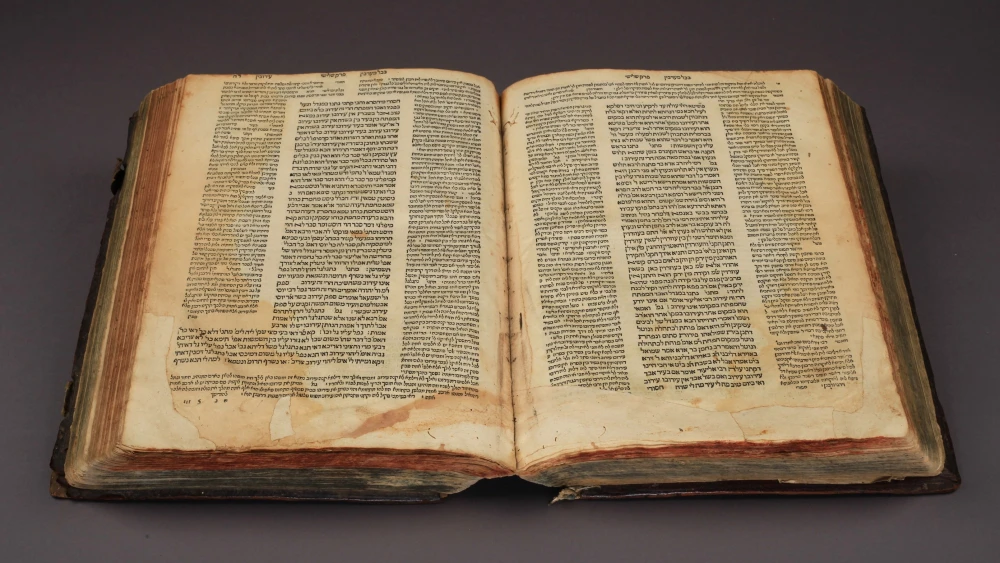
Nowhere is this philosophy clearer than on a traditional page of Talmud. The foundational text sits squarely in the center, but it does not sit alone. It is immediately flanked, framed and interrupted by the running commentaries of Rashi, the Tosafists and centuries of subsequent rabbinic glosses (hagahot). The text was never meant to be preserved under museum glass. It survives precisely because generations of Jewish readers took pen in hand, crowded into the white space of the margins and argued about it.
True memory is not a cloud server you rent.
For hundreds of years, serious readers in both religious and secular life understood that reading was an act of confrontation. Thinkers kept commonplace books and handwritten journals, in which they painstakingly transcribed excerpts from their reading and added their own reflections. To engage with a text meant leaving physical marks on it: underlining phrases, dog-earing pages, scribbling objections in the margins and synthesizing the author’s claims with your own words. That friction was not an inconvenience; it was the entire point.
Writing by hand forces a cognitive investment that modern digital interfaces have engineered away. To write a note in the margin of an article, you have to read it closely enough to locate its fault lines. To summarize an argument in a notebook, you have to distill what the author actually meant and decide where it fits within your own intellectual framework.
Today, technology has eliminated the friction. When an algorithm reveals an insightful analysis or a provocative opinion piece, saving it only requires the split-second tap of a thumb. We tuck it away into a folder and instantly resume scrolling.
Psychologists call this “cognitive offloading.” It is the mind’s automatic tendency to discard information the moment it registers that an external device has cataloged it. When saving becomes effortless, reflection becomes obsolete.
By outsourcing curation to automated servers, we bypass the mental struggle through which critical judgment is formed. An unbroken Jewish intellectual tradition is not sustained by people who merely accumulate vast archives of reading material. It is sustained by people who wrestle with ideas, internalize them and carry them in their minds.
Reclaiming that cognitive muscle in our hyperconnected ecosystem does not require discarding our devices or retreating into nostalgia.
When you encounter an essay or an argument that genuinely matters, refuse to let it vanish into a digital folder. Reintroduce deliberate friction into your routine. Print the page, take a pen and force yourself to write in the margins, underline a sentence that bothers you, write a counterargument in the blank space at the bottom or keep a single notebook where you summarize what you read each week in your own handwriting.
An unread link buried in a mobile browser is often just digital clutter. But a text that is confronted, questioned and annotated becomes part of your intellectual architecture. True memory is not a cloud server you rent. As revered rabbis have taught us, it is an active argument with the text.