The foreign ministers of Australia, Canada, France and the United Kingdom said in a joint statement issued on Tuesday that they “deeply regret” Palestinian Authority leader Mahmoud Abbas’s decision to postpone parliamentary and presidential elections.
Abbas on Saturday issued a decree calling for presidential and legislative elections on Sept. 11, 2027, revoking an earlier decree that had scheduled parliamentary elections for Nov. 28, 2026.
“Nearly two decades have passed since the last Palestinian Legislative Council elections and five years since the planned 2021 elections were postponed,” the statement read. “An entire generation of Palestinians has reached adulthood without the opportunity to choose their elected representatives. This delay will be deeply disappointing and once again deprive Palestinians of the opportunity to vote and will further erode public confidence in democratic institutions.”
The ministers called on the P.A. to reconsider the postponement and hold legislative and presidential elections “without further delay.”
They also urged “Israel to refrain from actions that could impede the conduct of elections, including the practical arrangements necessary for all Palestinians to participate,” and reiterated that “Hamas can have no role in the future governance of Palestine.”
The four countries formally recognized the “State of Palestine” in September 2025 around the U.N. General Assembly’s annual gathering in New York. They cited Palestinian commitments to elections and democratic reform as part of those decisions.
France and Canada referred to pledges to hold elections in 2026, while Britain cited a commitment to organize new elections within a year of a ceasefire. Australia cited an undertaking to hold democratic elections without specifying a date in its recognition statement.
The Centre for Israel and Jewish Affairs criticized Canada’s response, saying the government had offered no indication of consequences for what the organization described as the P.A.’s failure to meet an election commitment tied to recognition of Palestinian statehood.
“While the Canadian government pursues punitive measures and sanctions against Israel, it must demonstrate that the Palestinians will also be held accountable for failing to honour their commitments and undermining the prospects for peace,” CIJA said in a Tuesday post on X.
CIJA Calls on Government of Canada to Hold Palestinian Leaders Accountable for Broken Statehood Commitments
— CIJA (@CIJAinfo) October 13, 2026
“Canada's joint statement implies that the Palestinian Authority (PA) has broken an explicit commitment on which recognition of Palestinian statehood was predicated:… https://t.co/NecjijKR2I
The American Israel Public Affairs Committee also criticized Canada’s recognition decision.
“Canada bought an empty promise from the Palestinian Authority and is now surprised to be left empty-handed,” AIPAC wrote on X. “Unilateral statehood recognition did nothing to advance real peace with Israel or progress for Palestinians.”
Canada bought an empty promise from the Palestinian Authority and is now surprised to be left empty-handed.
— AIPAC 🇺🇸🇮🇱 (@AIPAC) October 13, 2026
Unilateral statehood recognition did nothing to advance real peace with Israel or progress for Palestinians. https://t.co/lCunBhhlns
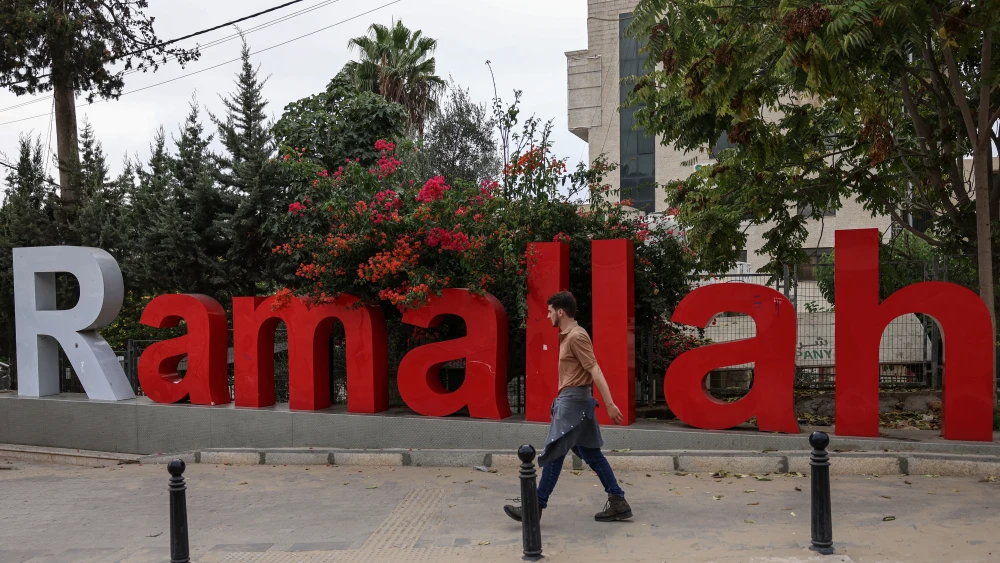
Abbas has been in power in Ramallah—the P.A.'s de facto administrative capital in Judea and Samaria—for more than two decades. His four-year term began on Jan. 15, 2005, but he has remained in office without reelection.
The parliamentary vote, if held, would be the first since January 2006, when Hamas defeated Abbas’s Fatah party. A subsequent factional conflict culminated in Hamas seizing control of the Gaza Strip in 2007, leaving Abbas to govern in Ramallah.