Newsletter
Newsletter Support JNS

Iranian internet blackout enters 12th week

The regime “has sent a country of 90 million largely offline for an unprecedented duration,” NetBlocks reports.

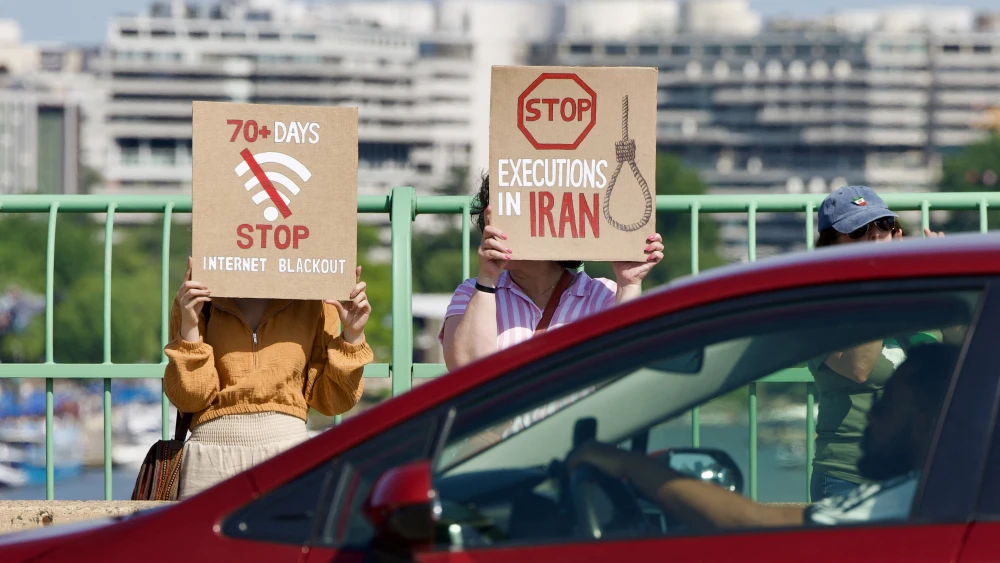
Demonstrators march in in Washington, D.C., in support of the Iranian people, May 16, 2026. Photo by Amid FARAHI/AFP via Getty Images.
Demonstrators march in in Washington, D.C., in support of the Iranian people, May 16, 2026. Photo by Amid Farahi/AFP via Getty Images.

Iran’s internet blackout has entered its 12th week, the NetBlocks global internet monitor said on Saturday.

“The internet shutdown, which has sent a country of 90 million largely offline for an unprecedented duration, continues to erode human rights, the economy and basic liberties at scale,” it stated.

Iranian President Masoud Pezeshkian last week tasked First Vice President Mohammad Reza Aref with forming a body aimed at restoring internet access.

The “Reformist” Shargh newspaper reported that the committee is expected to reconsider the internet restrictions within a month.

The Islamic regime combined advanced surveillance technology, communications blackouts and swift paramilitary crackdowns to suppress nationwide protests that started in late December.

The regime used drones, digital monitoring and military-grade jamming equipment to identify demonstrators and cut off internet access, while casting protesters as foreign-backed agents.

The internet blackout has fueled a growing black market for unrestricted SIM cards and paid VPN services, the opposition Iran International outlet reported on Friday. The blackout has also dealt significant damage to the country’s economy.


“He’s tried to find that middle ground, where he can give a wink and a nod to those kinds of very violent extremist rhetoric, but without being forced to condemn it,” David May, of FDD, told JNS.
Robinson De La Cruz Hilario told authorities that his posts praising Pulse nightclub shooter Omar Mateen and depicting a firearm and imagery associated with neo-Nazi groups were intended to instill fear.
Speaking on behalf of the E5, the French envoy to the global body said that those bidding for construction contracts in Judea and Samaria and eastern Jerusalem risk “legal and reputational consequences.”
“I have a passport that I was just born with,” Laura Pinho said during a CodePink webinar. “How can I live in this world if I don’t make every effort to equalize the playing field in whatever way that I can?
Secular activist Naor Narkis’s suggestion that Religious Zionist soldiers’ casualty rates might not be so high were they to do “full military service” was “unnecessary,” said Golan.
“Hamas’s actions are time and again ignored by human rights organizations,” the Defense Ministry unit said.