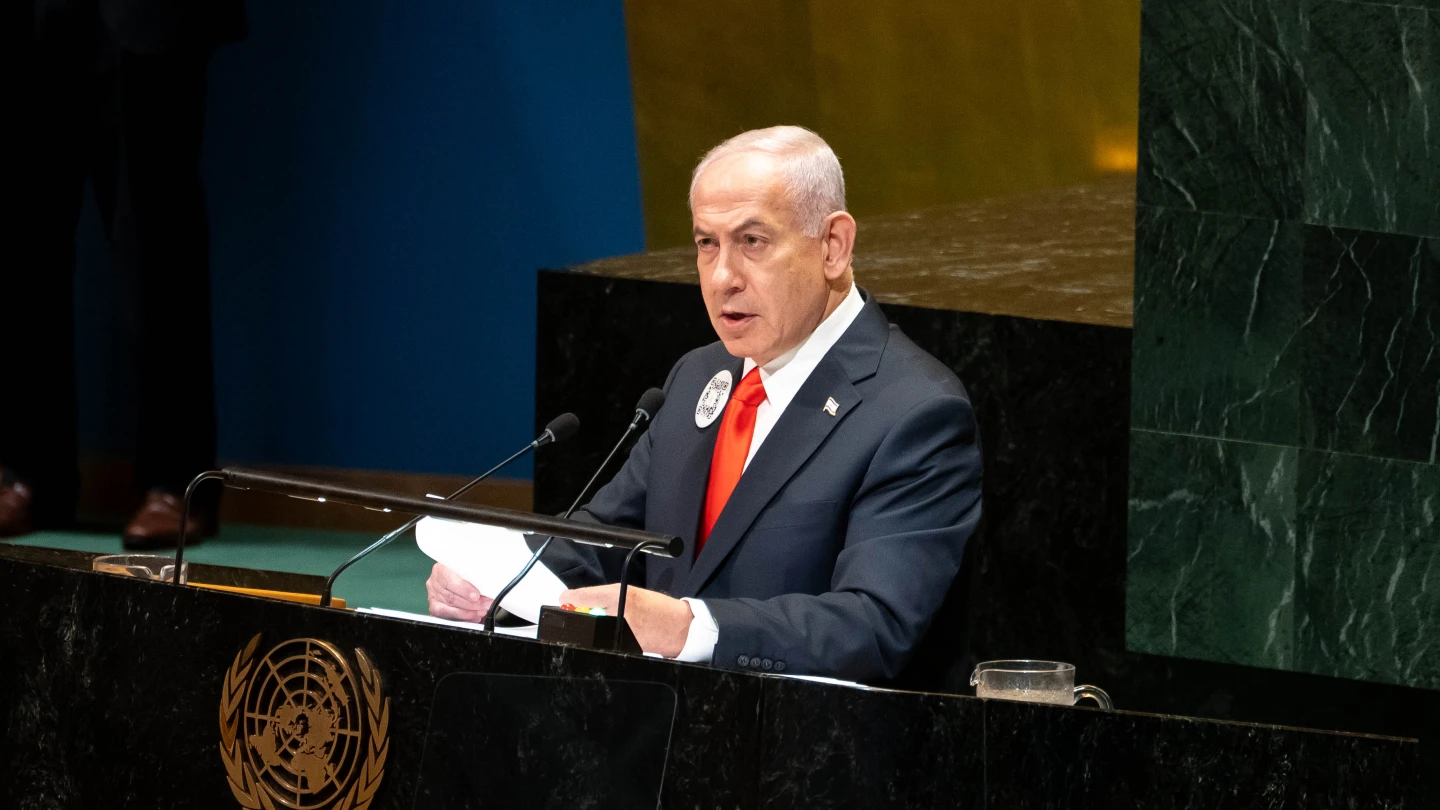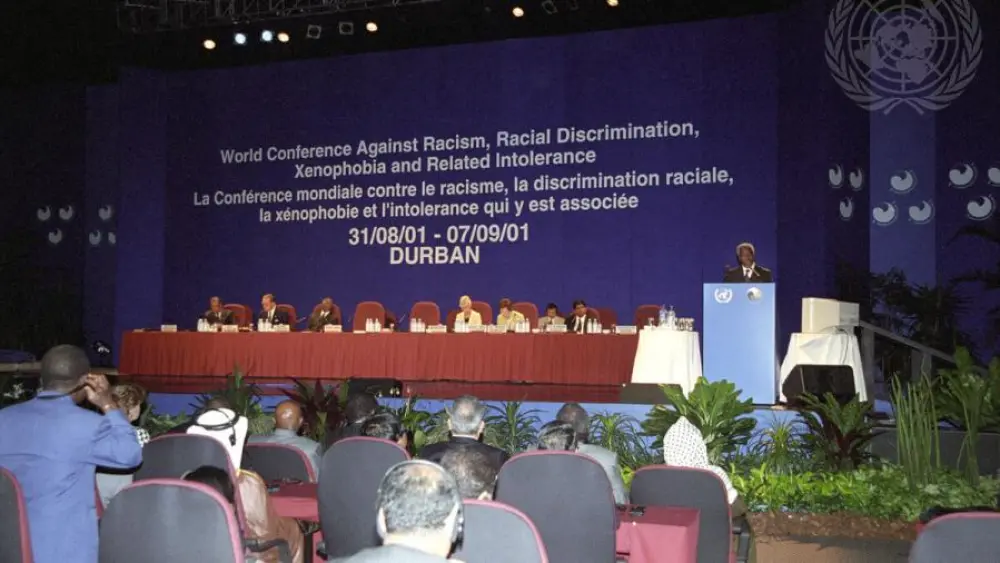
Durban IV, held this year on Sept. 22 and marking the 20th anniversary of the World Conference against Racism, Racial Discrimination, Xenophobia and Related Intolerance, turned out to be a debacle. This was expected.
But the lies that it propagated, like those of its predecessors, did not begin in 2001, with the first such gathering in South Africa. The world should have seen what was coming back in 1975 when the “Zionism is racism” mantra was introduced with the passage of U.N. General Assembly Resolution 3379.
Indeed, Durban was and remains a most regrettable creation of the United Nations.
It is high time for the United Nations to reject useless distractions from its mission of promoting humanity and peace. It must simply prohibit this hateful commemorative event from happening again.
If member countries want to hold a festival of hate, they should do so without the blessing or the name of the United Nations. To go through this dishonest exercise of announcing something in the name of fighting racism, which prompts at least 20 Western countries correctly to boycott it, while others attend under political pressure, is ridiculous.
The United Nations should just save itself the embarrassment of having its name attached to this fiasco. The countries firmly committed to Durban are those that have called for Israel’s destruction. Many of them commiserate with Iran.
“Zionism is racism” is just a catchy slogan. Of course, there’s no truth in it. Zionism is not racism. The ancestral Jewish homeland, like Judaism itself, is built and based on a code of humanitarian behavior that is reflected today in Israel’s richly diverse population, one conceived in freedom, free will and mutual respect. The rest, let’s be honest, is politics and opinion. As in any democracy, Israel feasts on political debate. Its history reflects such energy.
For millennia, expanding civilizations made the Holy Land the prize of conquests. Jewish settlement there in an industrial world increased in the 1800s, even before Theodor Herzl launched the Zionist movement.
For 73 years, the modern State of Israel has blossomed as a legal, sovereign nation and is the foundation of thousands of years of the history and practice of Judaism.
In addition to Zionism not being racism, Israel is not an “apartheid” state. The mere utterance of words doesn’t make it so.
The construction of a security wall or other security provisions does not make it so. The BDS movement, another demeaning, delegitimizing campaign, is mostly harmful economically to Palestinians and enemies who perpetuate destructive “from the river to the sea” rhetoric. Israel does not exist on illegally occupied land. Research the Six-Day War (1967) and the Yom Kippur War (1973).
These propagandistic themes are bogus. They persist without any basis in fact. Neither do such messaging efforts help the ambition, vision or hope for a Palestinian state. Any effort to guide or assist Palestinians toward statehood is getting a sneak preview in Gaza and parts of the West Bank (Areas A and B). They are not managing well, but not because of Israel. They are failing because of Hamas and the Palestinian Authority, which maintain the failed ambitions since the U.N.’s Partition Plan.
Durban will forever be known as a failure, the utter antithesis of the United Nations. So embarrassingly flawed is its heinous mission that it raises one question: Why allow these commemorations to occur at all? What is the purpose of the United Nations convening “hate fests” against a country that, in fact, delivers so many positive contributions to repairing the world? Consider the following:
- Israel routinely provides humanitarian, disaster relief and medical aid throughout the world;
- Israel installs water purification systems for other continents;
- Israel exports agricultural solutions for hunger-challenged countries;
- Israel celebrates cultural and religious diversity inside and outside the country; and
- Israel delivers key technological solutions to cybersecurity.
The answer is as simple as it is obvious. There is no purpose in convening any Durban commemorative event. None. It is a waste of time and resources.
Surely, U.N. Secretary-General António Guterres, a man of peace, understands how such events linked to Durban are counterproductive. In the same way that UNESCO (the United Nations Educational, Scientific and Cultural Organization) removed the Carnival of Aalst in Belgium from its World Heritage list in 2019, the General Assembly and its agencies should disengage from anti-Zionist festivals.
Such events are poisoning minds. As Durban IV is now part of the past, perhaps the U.N. can exercise its power to halt Durban V.
Charles O. Kaufman is president of B’nai B’rith International.