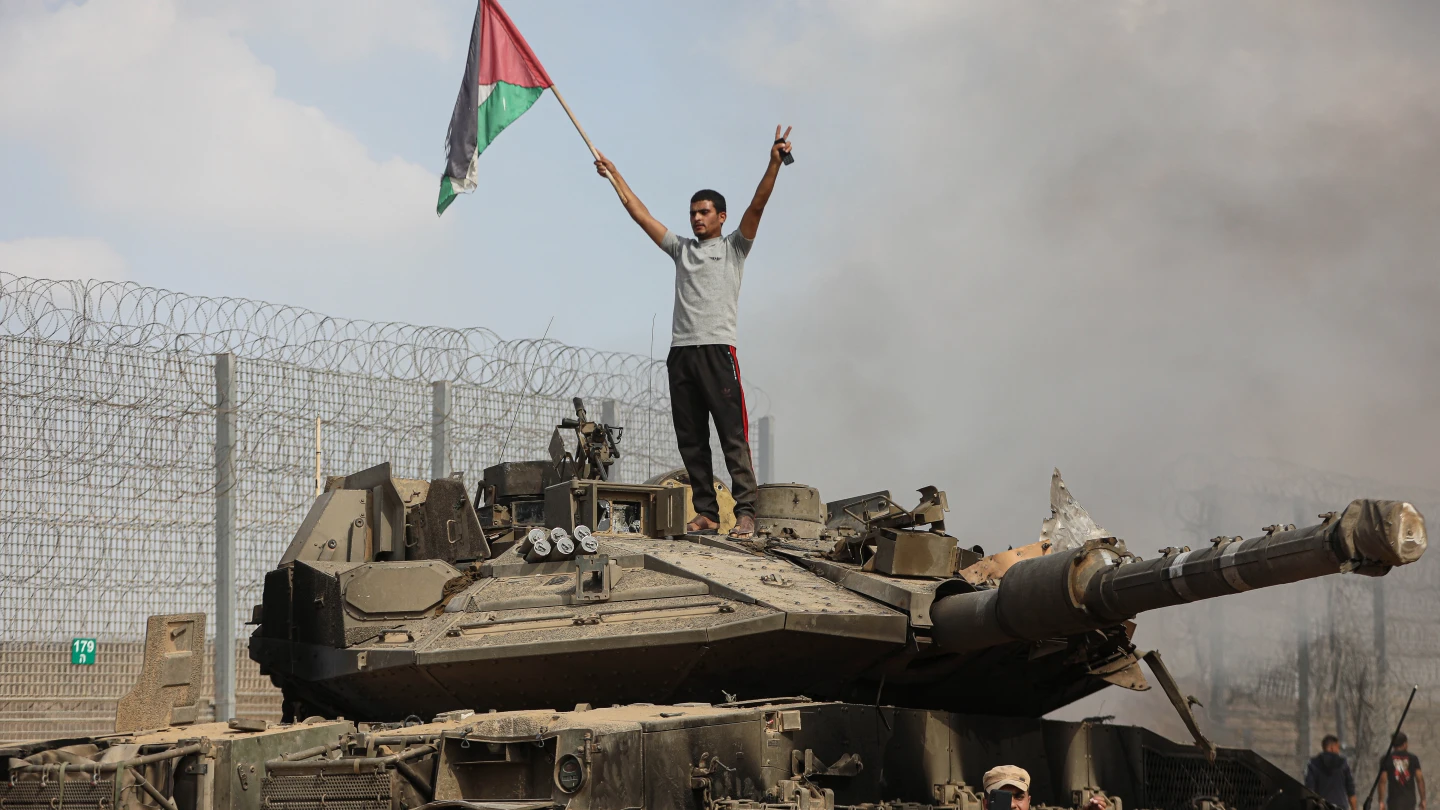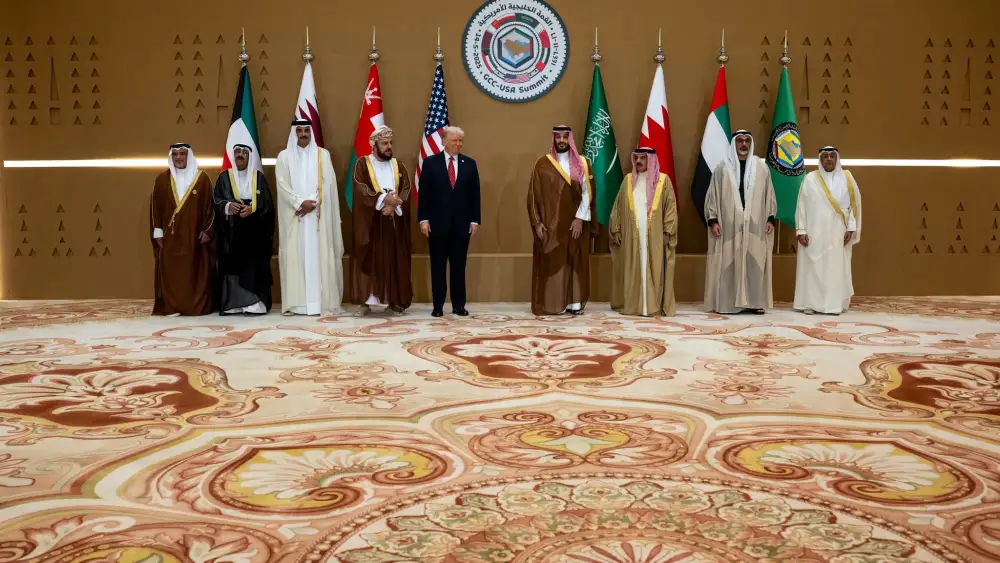

For decades, the United States sold Gulf monarchies hundreds of billions of dollars in advanced weapons. These regimes were called “allies,” treated as partners and defended as pillars of regional stability. Yet now, with their order under threat, their American-built arsenals sit mostly idle.
In the past decade, U.S. arms sales to Saudi Arabia, the United Arab Emirates, Qatar and Kuwait totaled $300 to $450 billion. U.S. President Donald Trump also advanced a $142 billion deal with Saudi Arabia—the largest arms agreement ever—and aims to sell F-35s to the Saudis and the Emiratis.
Throughout this partnership, the United States exchanged weapons for oil and influence, while Gulf states channeled revenue into U.S. defense contracts. This deal provided America with strategic access, jobs and industrial benefits, boosting the economy and rewarding presidents and congressional districts involved in defense. Simultaneously, the Pentagon reduced its per-unit weapons costs.
Even as the justifications for this policy evolved—from countering Soviet influence during the Cold War to deterring Iran afterward—the essence of the transactions stayed consistent. For instance, the Ronald Reagan administration in 1981 implausibly framed the sale of AWACS surveillance aircraft to Saudi Arabia as deterrence against Moscow. Later, Iran became the central concern. Regardless of these shifting rationales, it was tacitly understood that, despite their growing arsenals, Gulf states would ultimately rely on U.S. military intervention.
Now, instead of joining the fight, these governments are focused on the one thing that has always mattered most to them: keeping their royal heads on their shoulders. Indeed, their contribution so far has been limited to shooting down incoming missiles and drones—acts of self-preservation, not alliance.
The Gulf states opposed U.S. action against Iran, fearing threats to themselves. It’s likely that CENTCOM did not consider their involvement in planning “Operation Epic Fury” with Israel, which was likely wise. Someone (probably Qatar) might have leaked intelligence to Tehran, losing the element of surprise. But that phase has passed. The conflict is now a test of alignment, and the Gulf states are failing.
Despite having large, modern air forces, these nations have avoided offensive operations against Iran. Their restraint has been shaped by fears of retaliation, instability and exposure.
Yet neutrality carries its own risks: If they remain on the sidelines and the Iranian regime endures, they may be permanently vulnerable—reliant on a U.S. security guarantee that is itself limited by domestic resistance to foreign entanglements. Consequently, the Gulf leaders and Saudi Crown Prince Mohammed bin Salman, in particular, have privately urged Trump to finish the job, aligning with Israel’s view that regime change is necessary.
Their unused capability is staggering. Saudi Arabia has 320 to 350 combat aircraft, the UAE 130 to 150, Qatar 90 to 110 and Kuwait 70 to 90. These advanced fleets include F-15s, F-16s, F/A-18s, and European models like Eurofighters and Mirages. Together, the Gulf states have more than twice as many combat aircraft as the State of Israel.
Thus, even a limited contribution from these forces could significantly alter the operational landscape: more targets would be hit, Iran’s capabilities would degrade more rapidly, and the burden on the U.S. and Israeli militaries would be meaningfully eased.
The public narrative in America has drifted toward a strange defeatism. We are told that Iran is “winning” because the regime remains standing, continues firing missiles across the region, and still threatens the Strait of Hormuz. We are told the goals of eliminating Iran’s nuclear and missile programs are unachievable because the facilities are too deeply buried. References to U.S. ground troops are accompanied by predictions of mass casualties, and any mention of sustained military pressure is met with invocations of Iraq and the specter of quagmire.
This defeatism should be rejected. We removed the regime of Iraqi dictator Saddam Hussein, freed Iraqis from tyranny, the region from destabilization and allies from a powerful foe. Staying the course in Iran offers similar strategic rewards—if we have the will and allies to persevere.
For decades, the United States provided security, arms and political support, helping Gulf monarchies avoid tough choices. If CENTCOM believes broader participation would shorten the war and improve its outcome, Trump should warn Gulf states that future access to American weapons, intelligence and protection is tied to active involvement—access that was never meant to be unconditional.
To secure continued American support, these states must commit forces now.