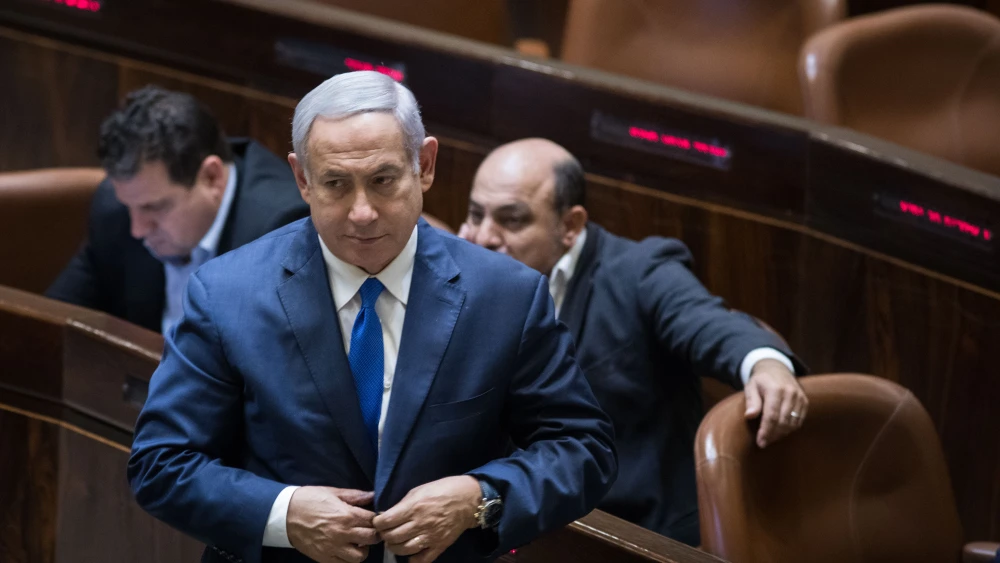
Israeli Prime Minister Benjamin Netanyahu and other Likud officials’ sharp criticism of former Habayit Hayehudi leader Naftali Bennett and Justice Minister Ayelet Shaked over their decision to split from the religious-Zionist faction and form the New Right party is only expected to grow.
The two have already been lambasted for making a move that jeopardizes Netanyahu’s chances of forming a stable right-wing coalition following the April 9 election, assuming the Likud wins the ballot as all the polls currently predict.
The mudslinging has a very specific point: to paint Bennett and Shaked into a corner from which they have to endorse Netanyahu as their candidate for prime minister. If and when that happens, Likud will rethink its position on the New Right.
Until they endorse him, Netanyahu is expected to paint the New Right’s leaders as being actually affiliated with the left. This is why he has repeatedly alluded that Bennett may rekindle his political alliance with Yair Lapid, head of the centrist Yesh Atid Party, something that would essentially clear the way for Bennett to join a left-wing coalition.
The longer Bennett and Shaked take to endorse Netanyahu, the harder Likud officials will try to undermine their credibility; and if the two announce that they will hold off on endorsing any one candidate until after the elections, Likud will undoubtedly try to paint them as having teamed with Meretz and the Joint Arab List, no less.
However, if there is something Netanyahu is truly wary of, it is that Bennett and Shaked’s move may result in one of the current right-wing parties failing to pass the 3.25 percent electoral threshold, which may translate into the Right losing power.
In conversations with close associates, Netanyahu said he plans to run an aggressive election campaign. Likud, which is currently projected to win between 27 and 30 Knesset seats, may go up in the polls, but it would probably be at the expense of other right-wing parties, which come April may find themselves ousted from parliament.
Without them, Netanyahu would struggle to form a coalition, and a scenario where the opposition is able to form a political bloc against him could become a reality.
Mati Tuchfeld writes for Israel Hayom.