


Harsh words are one thing. Actions are another.
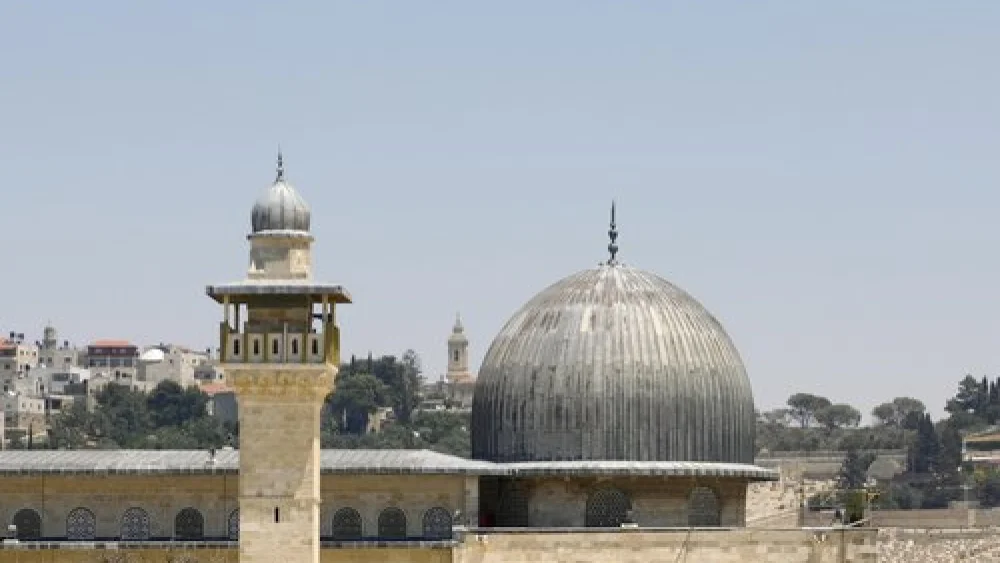
The Sha’ar HaRachamin (“Gate of Mercy”), near the Golden Gate in the Old City of Jerusalem, was open on Sunday. Crowds might not have gathered, but the Waqf has started renovations at a place that has been closed since 2003, other than classes and matriculation exams held there with permission from the authorities.
Officially, Israel made it clear on Sunday that it would enforce the court’s closure order and other orders that led to the area being shut off due to Hamas operations nearby. But the effectiveness of those orders are now in doubt. It’s not at all clear whether the Hamas-affiliated group, whose activity led to the area being closed down in the first place, still exists. That question arose during discussions to remand Waqf leaders who, in a highly unusual move, were arrested on Sunday.
Meanwhile, the political leadership under Israeli Prime Minister Benjamin Netanyahu has decided to allow Jordan, which is outraged over the arrests of the Waqf leaders, to submit a plan to refurbish the area, which will be restored to the hands of the Muslims. The only question that is still unanswered is whether or not it will become an area of prayer.
Realistically, it’s hard to assume that after the area is reopened and the Waqf is already active there, Israel would be able to keep Muslims from praying at the site.
We are also starting to see how deep the involvement of Fatah officials and extremists in the Jordanian gambit at the “Gate of Mercy,” near the Golden Gate, runs.
The Jordanians are the ones who put those people on the Waqf council—both because of reports that Jordan would be losing its status on the Temple Mount as part of U.S. President Donald Trump’s upcoming “deal of the century” regarding Mideast peace, and because of complaints those officials made to the Waqf over its acceptance of Jewish prayer on the mount.
It appears that the Southern Branch of the Islamic Movement and the Al-Aqsa Association were major actors in the latest escalation. Members of the Southern Branch of the Islamic Movement are now working with Sheikh Ikrama Sabri, who is on the new, expanded Waqf council, and who is identified with the outlawed Northern Branch of the Islamic Movement.
Sabri is also an ally of Sheikh Raed Salah and Turkish President Recep Tayyip Erdoğan.
Nadav Shragai is a veteran Israeli journalist.


