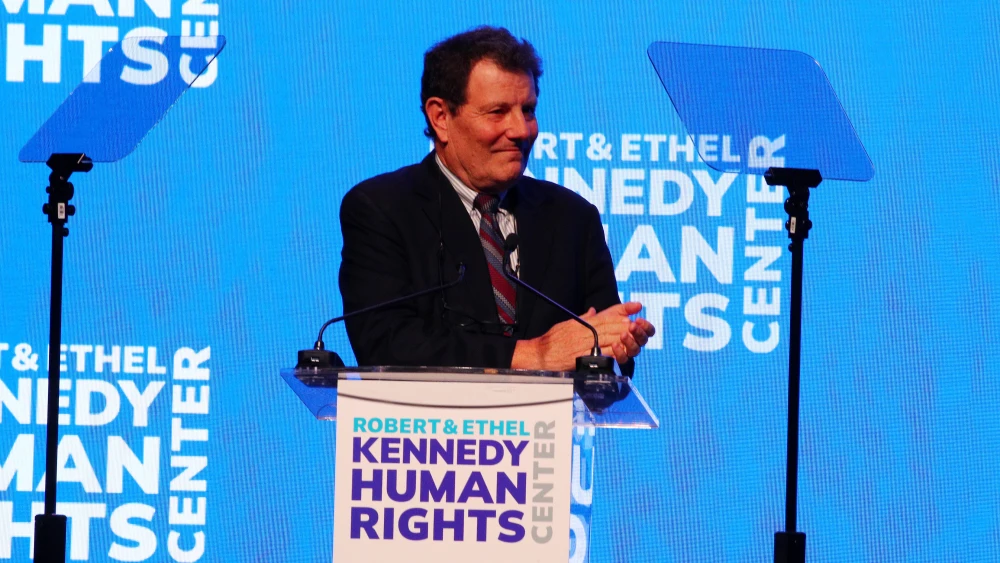
The New York Times has opened an investigation into its columnist Nicholas Kristof after it was reported that he wrote about individuals who donated to his political campaign without disclosing this information.
Israel’s Foreign Ministry on Thursday shared a Fox News report on the matter, adding that Kristof “spent years questioning everyone else’s integrity. Now his own is under review. Turns out disclosure rules aren’t just for other people.”
Nicholas Kristof spent years questioning everyone else's integrity. Now his own is under review.
— Israel Foreign Ministry (@IsraelMFA) June 18, 2026
Turns out disclosure rules aren't just for other people.https://t.co/d1A9M5H1mF
Kristof briefly left the Times in 2021 to run for governor of Oregon. After his failed bid, the newspaper welcomed him back a year later, stating that the columnist would refrain from writing about donors to his campaign or disclose his relationship with them, aligned with newspaper’s strict rules about its journalists and political activism.
“Previous political donations made by some people Nick Kristof mentioned in his columns should have been made more clear to readers. Editors from Times Opinion are reviewing these articles to determine further clarifications for readers,” a Times spokesperson told Fox News.
On Monday, outlet Semafor reported that between 2022 and 2025, Kristof wrote favorably about Bill Gates and his nonprofit, experts, a financial institution and other organizations that donated to his political campaign.
The relationship between the Times and Kristof came under scrutiny after he wrote a piece on May 11 titled “The Silence that Meets the Rape of Palestinians,” in which he accused Israeli guards of sexually assaulting Palestinian prisoners.
The column drew a flurry of criticism worldwide, culminating in the United Nation’s decision to place Israel on a list of parties suspected of committing sexual violence in conflict.
NGO Monitor, an Israel-based research institute, said that Kristof’s piece “lacked credibility” by relying primarily on anonymous and unfalsifiable testimonies, some of which belong to NGOs with direct links to Hamas.