
How desperate are the Democrats for power? They’ve shown they are willing to support a candidate with a Nazi tattoo, one who associated with the terrorist responsible for the World Trade Center bombing, as well as a range of anti-Israel “progressives” in their effort to retake the House and Senate. The result is the latest stage of a slide that began with the Democrats’ unwillingness to denounce the two antisemites in their congressional delegation.
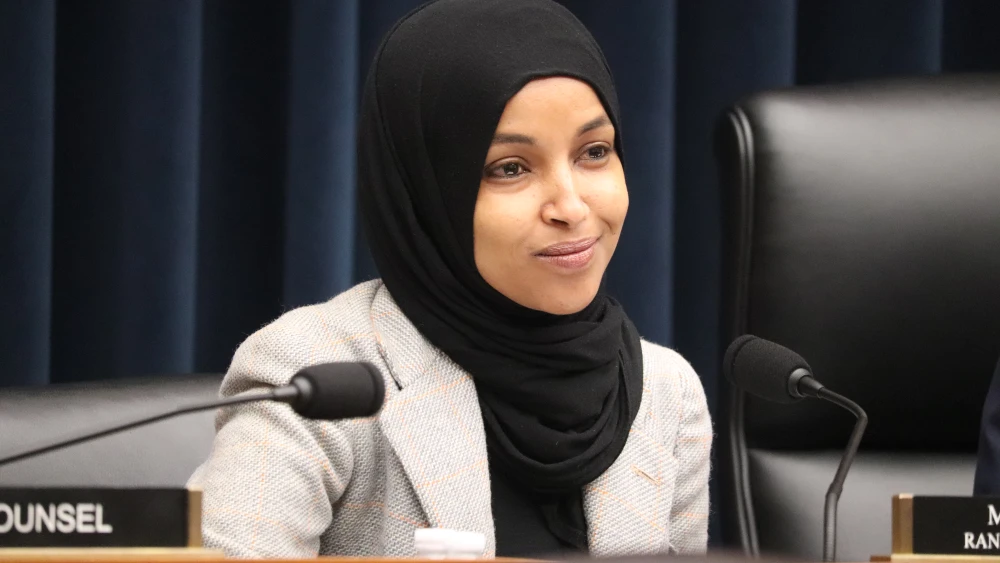
Their descent began in February 2019 when Rep. Ilhan Omar (D-Minn.) used antisemitic tropes, suggesting the dual loyalties of Jewish Americans and suggesting that pro-Israel sentiment in Congress was bought rather than principled.
The question was whether Democratic leaders would apply to antisemitism the same standards they claimed to apply to every other form of prejudice. Six Democratic leaders of the House of Representatives issued a statement calling on her to apologize for the “use of antisemitic tropes and prejudicial accusations about Israel’s supporters,” which they called “deeply offensive.”
Yet there was no effort to censure Omar or expel her from the party or the House.
Omar apologized “unequivocally” for her remarks, saying she was “grateful for Jewish allies and colleagues who are educating me on the painful history of antisemitic tropes.”
But clearly unbowed, she made similar remarks a few weeks later.
This time, the entire House was asked to rebuke her. House Speaker Nancy Pelosi (D-Calif.) defended Omar, expressing confidence that “her words were not based on any anti-Semitic attitude.” The same people who defended Maine Senate candidate Graham Platner—Sens. Bernie Sanders (I-Vt.) and Elizabeth Warren (D-Mass.), sided with Omar as well. So did then-California Sen. Kamala Harris.
When it came time to vote on March 7, however, the Democrats who controlled the chamber could not bring themselves to condemn her by name. They couldn’t even condemn antisemitism on its own terms. Instead, to satisfy the far left that was already starting to influence the party, members diluted the resolution by adding a denunciation of “Islamophobia, racism and other forms of bigotry,” rather than directly addressing Omar’s hatred of Jews and Israel.
Not only did Omar feel unchastened; she viewed the vote as a victory. She released a statement with two other Muslim Democrats—Reps. Andre Carson of Indiana and Rashida Tlaib of Michigan—praising the resolution as historic for condemning anti-Muslim bigotry for the first time in the nation’s history.
As I wrote at the time, even this toothless resolution was met with hysteria from the antisemites and their defenders. On Twitter, there were hashtags for StandwithIlhan, IStandWithIlhan, and, of course, the requisite JewswithIlhan.
The message the Democratic Party sent that day was unmistakable: antisemitism carries a lower price than other forms of bigotry. Cross certain lines, and the party will negotiate. It will hedge. It will find a way to make the problem go away without forcing accountability.
That decision reverberated far beyond a single controversy. It helped establish a pattern in which increasingly extreme rhetoric about Jews, Israel and Zionism was tolerated, excused or reframed rather than confronted directly. The deeper lesson was simple: What was once disqualifying gradually became acceptable in parts of mainstream political discourse.
Not only was Omar not punished, but she was also given a plum assignment on the Foreign Affairs Committee, where she could work to undermine the U.S.-Israel relationship. The late committee chair Eliot Engel (D-N.Y.) said, “I’m looking to get rid of antisemitism, not looking to punish anybody.”
It is the logic of parties that prioritize survival over principles.
Critics will immediately ask: What about Donald Trump? What about Charlottesville, “very fine people on both sides,” the Proud Boys, the Jan. 6 Capitol riots and pardons of those insurrectionists? Trump’s systematic destigmatization of hatred—his willingness to offer rhetorical cover to white supremacists, neo-Nazis, and insurrectionists—has done profound and lasting damage to American political culture. No honest accounting of how we arrived here ignores that.
But the Democratic Party’s failure is not absolved by pointing to Republican failure. If anything, it compounds it. When both parties treat antisemitism as negotiable—one by openly courting the far right, the other by protecting its far-left flank—the result is a political culture in which hatred is not stigmatized but managed. Not confronted but accommodated. Not defeated but normalized.
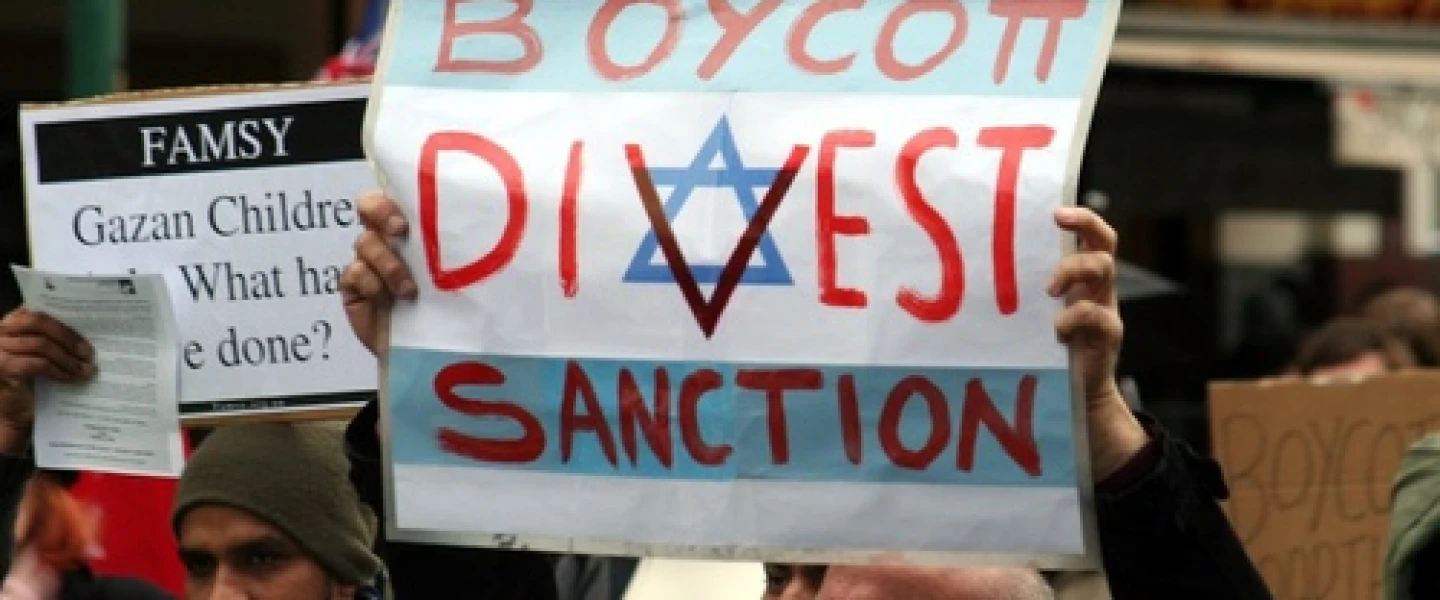
That same logic appeared again when Democrats were unwilling to criticize Tlaib, the other prominent House antisemite. In 2023, when the Republican-led House voted to censure the Michigan congresswoman for her repeated criticism of Israel and her use of the phrase “From the river to the sea”—a slogan that calls for the elimination of the world’s only Jewish state—only 22 Democrats out of 212 could bring themselves to vote for disciplinary action.
And now Platner. I don’t know if he is an antisemite. I do know that philosemites do not get a Totenkopf tattoo—a symbol inseparably associated with Nazi terror and the SS—on their bodies and leave it there for years. At a minimum, it reflects a shocking indifference to what that symbol represents.
Yet Democratic leaders who proclaim zero tolerance for hatred and insist on moral clarity look past it. They also look past the allegations involving women and the other controversies surrounding his candidacy. Faced with a choice between their stated principles and the opportunity to win a Senate seat, they chose the Senate seat.
The Democratic Party has also decided that Jewish voters have nowhere else to go, and that the voters most animated by hostility to Israel and indifference to antisemitism need to be kept happy. It is the same logic that led Republicans to stand behind Trump after the Access Hollywood tape. It is the logic of parties that prioritize survival over principles.
The voters will decide, we are told. But democratic legitimacy is not the same as moral legitimacy. Millions of votes do not transform a Nazi tattoo into a qualification for office. Saying so plainly is what distinguishes a party with principles from a party with only interests.
“The presence of antisemites in their midst is a test for the Democratic Party,” I argued after the 2019 vote. “Members claim to have zero tolerance for bigotry, but their response to Omar and Tlaib raises the question: Will they stand for morality or political expediency?”
In 2026, we learned the answer.