U.S. Vice President JD Vance, in a coordinated round of media appearances on Monday, promoted the Trump administration’s forthcoming memorandum of understanding with Iran as a conditional agreement centered on verification, economic incentives and the dismantling of Tehran’s nuclear capabilities.
Vance repeatedly emphasized that any benefits to Iran would be contingent on compliance. “All of these things come along with benefits if Iran delivers—and nothing if Iran doesn’t deliver,” he told CNN, adding that the United States retains “the leverage here” to deny economic relief absent Iranian commitments.
.@VP on the Memorandum of Understanding with Iran: "All of these things come along with benefits if Iran delivers, and nothing if Iran doesn't deliver... Most importantly, they're going to have a verifiable commitment to not building a nuclear weapon." pic.twitter.com/yGgH3TodMx
— Rapid Response 47 (@RapidResponse47) June 15, 2026
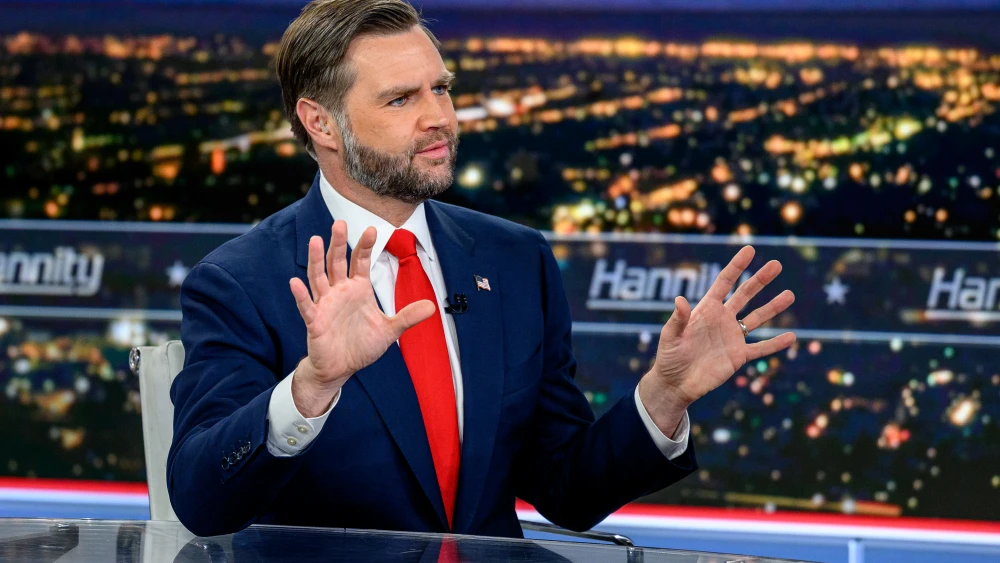
A central theme was the elimination of Iran’s enriched uranium stockpile. In an interview with Fox News, Vance said the U.S. would work with international partners and Iran “to destroy that stockpile of enriched material,” describing it as a step that would further set back Tehran’s nuclear program. He added that Iran is “agreeing right now to eliminate the enriched stockpile,” warning that failure to halt enrichment would mean forfeiting “the other benefits of the bargain.”
Vice President JD Vance tells @seanhannity how the US will work to guarantee that Iran never has a nuclear weapon.
— Fox News (@FoxNews) June 16, 2026
"They're agreeing right now to eliminate the enriched stockpile. And if they don't get to a point where they agree to stop enriching, then they don't get the other… pic.twitter.com/gFVBR9gZtG
Vance also underscored verification mechanisms, confirming to NBC News that international inspectors would play a key role. “One of the core parts of the agreement is that the IAEA and the United States are going to help Iran destroy the highly enriched stockpile,” he said, calling the deal “built around verification.”
.@VP: "One of the core parts of the agreement is that the IAEA and the United States are going to help Iran destroy the highly enriched stockpile, and that's something that's spelled out very clearly in the MOU." pic.twitter.com/rPUpwsqrXk
— Rapid Response 47 (@RapidResponse47) June 15, 2026
In each appearance, Vance framed the agreement as a pathway to broader normalization if Iran alters its regional behavior. He told CNN that the deal requires Tehran to “stop funding violent terrorist organizations” and commit, in a “verifiable” way, to never building a nuclear weapon, while offering reintegration into the global economy if it complies.
In a video message posted to X, Vance characterized the deal as a “win-win for the American people,” saying it would ensure Iran never acquires a nuclear weapon while opening economic pathways if it complies. “We ensure Iran doesn’t have a nuclear weapon either way,” he said, adding that the outcome now depends on whether Tehran follows through on dismantling its program.
The President has been clear from day one: Iran will never have a nuclear weapon.
— JD Vance (@JDVance) June 15, 2026
Once again, President Trump's efforts to establish peace have paid off for the American people, despite countless attempts to thwart it by people who hate America and President Trump. pic.twitter.com/w9SWDRCOsZ