Palestinian Islamic Jihad

As Iran feels increasingly cornered by U.S. pressure, and as tensions between U.S. and Iranian forces in the Persian Gulf rise, the greater the risk becomes of miscalculation and inadvertent escalation.

Islamic Jihad leader: ‘Greater battle with Zionist enemy to come, we were hours away from bombing Tel Aviv’
Speaking to a Lebanese TV station on May 7, PIJ leader Ziyad Al-Nakhaleh said that his organization had only demonstrated a portion of its “power and determination” in its armed conflict with Israel.

“This is not an ‘even-handed’ situation, but Palestinian terrorism and violence across an international border that every candidate and elected official should be able to condemn unequivocally,” Malcolm Hoenlein, executive vice chairman of the Conference of Presidents of Major American Jewish Organizations, stated unequivocally.
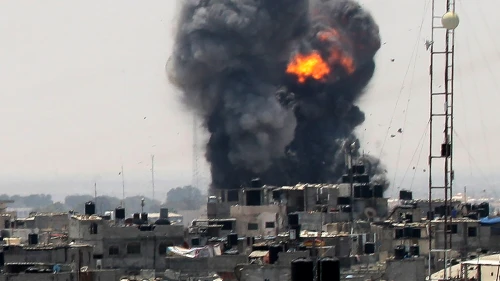
Speaking to a Lebanese TV station, Ziad Nakhala issues threats against Israel and predicts a large-scale war in the coming months against the backdrop of U.S. actions in the region.

The Israeli Air Force arrived at this fight with a longer-than-usual list of intelligence targets, striking enemy sites and personnel. But questions center on what comes next.
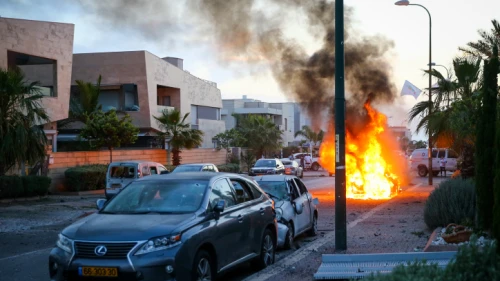
The defense and security establishment believes deterrence has been restored, but not fully, and that if no political understandings are reached it is only a matter of time until the next escalation.
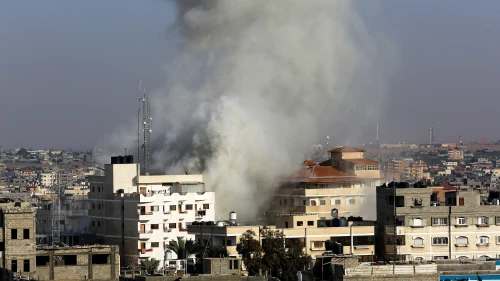
The Hamas-run Gaza Health Ministry initially blamed Israel for the deaths, and the news spread quickly, fueling accusations of Israeli brutality and lack of respect for human rights.

Once Israeli deterrence is restored, said Blue and White Party leader Benny Gantz, the second objective should be to “initiate a diplomatic-political process that will harness external powers to this place, and create a situation in which the gaps between the rounds of fighting increase.”
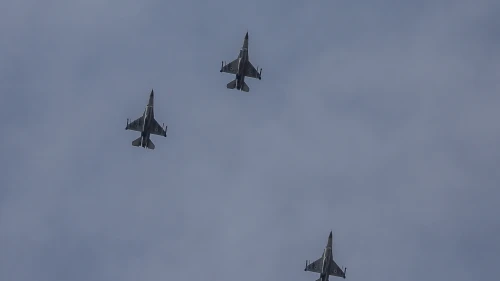
“The IDF concept of using accurate intelligence for pinpoint airstrikes has proven deficient. A land incursion may be needed to convince Israel’s enemies that we are ready to pay a price in casualties in order to secure the well-being of our citizens,” said Efraim Inbar, president of the Jerusalem Institute for Strategy and Security.
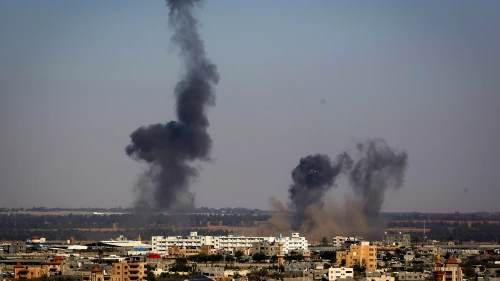
The Iranian proxy group has been behind a string of attacks in recent weeks designed to sabotage Egyptian-led efforts to steer Gaza towards calm.
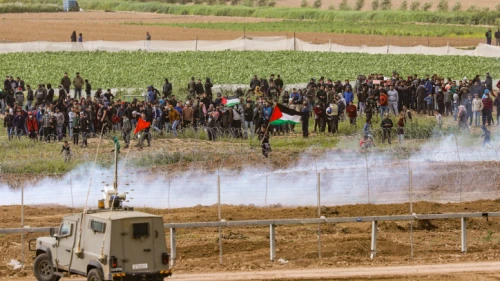
According to the IDF, the rocket fired by the Palestinian Islamic Jihad in Gaza on Monday was an attempt to derail ceasefire efforts between Israel and Hamas.
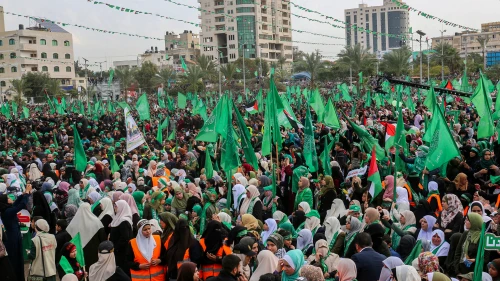
While Cairo is exerting its influence in Gaza to avoid a new conflict and mediate a period of calm, Iran sees Gaza as one more base to grow and control a proxy terrorist army.