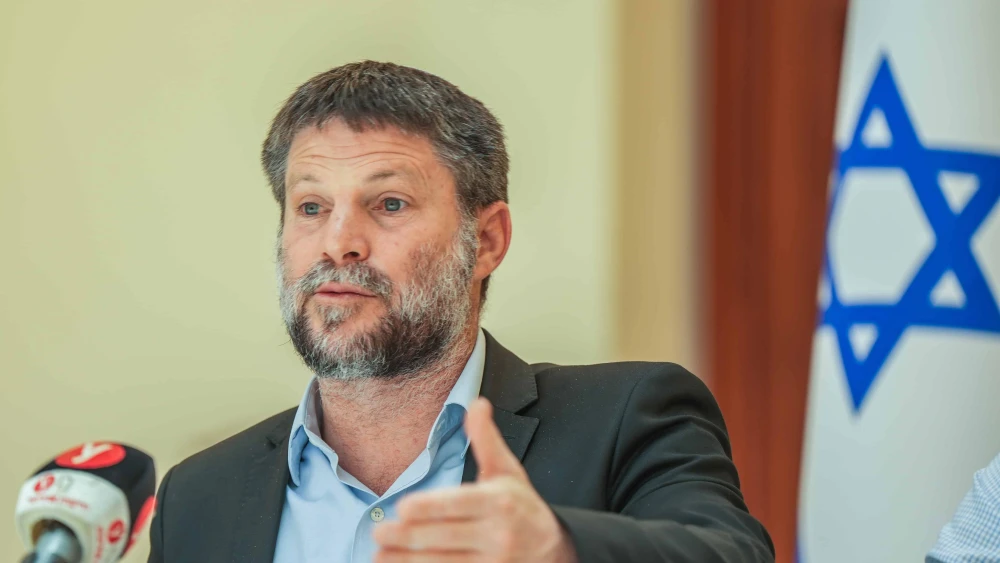
Finance Minister Bezalel Smotrich on Monday said a developing ceasefire agreement with Hamas would be a “catastrophe” for Israel’s security, stressing that his Religious Zionism Party would not vote to approve it.
“The emerging deal is a catastrophe for the national security of the State of Israel,” said Smotrich. “We will not be part of a surrender deal that includes the release of arch-terrorists, halting the war, undermining the achievements that were secured with many lives lost, and abandoning numerous hostages.”
העסקה המתגבשת היא קטסטרופה לביטחון הלאומי של מדינת ישראל.
— בצלאל סמוטריץ' (@bezalelsm) January 13, 2025
לא נהיה חלק מעסקת כניעה שתכלול שיחרור ארכי מחבלים, עצירת מלחמה ומסמוס הישגיה שנקנו בדמים מרובים, והפקרת חטופים רבים.
זה הזמן להמשיך בכל הכוח, לכבוש ולטהר את כל הרצועה, לקחת סוף סוף מידי חמאס את השליטה על הסיוע ההומניטרי…
He advocated instead for pressing ahead with the military operation against Hamas in Gaza.
“Now is the time to continue with full force, to conquer and cleanse the entire Strip, to finally take control of humanitarian aid from Hamas, and to open the gates of hell on Gaza until Hamas surrenders completely and all hostages are returned.”
Also on Monday, 10 members of Prime Minister Benjamin Netanyahu’s governing coalition came out against the terms of the emerging hostage deal, the Kan News public broadcaster reported.
Signatories to the initiative include MKs Avihai Boaron, Amit Halevi, Dan Illouz, Tsega Melaku, Hanoch Milwidsky, Moshe Passal and Moshe Saada, all members of Netanyahu’s Likud Party, as well as Religious Zionism Party lawmaker Simcha Rothman and Otzma Yehudit’s MK Limor Son Har-Melech.
“Do not cross the most basic moral lines, do not endanger Israel’s security,” the missive to Netanyahu urged.
Meanwhile, National Unity Party leader Benny Gantz is backing the emerging agreement.
“The arrival at a framework for the return of our captives is a supreme value and a strategic necessity—their non-return and abandonment is a national catastrophe,” tweeted Gantz.
“National Unity will provide full political support for the framework for their return,” he continued.
הגעה למתווה להשבת חטופינו היא ערך עליון וצורך אסטרטגי - אי השבתם והפקרתם היא קטסטרופה לאומית.
— בני גנץ - Benny Gantz (@gantzbe) January 13, 2025
המחנה הממלכתי תתן גיבוי פוליטי מלא למתווה להשבתם.
Ohad Tal, a lawmaker for Smotrich’s Religious Zionism Party, seconded his criticism, tweeting that the party will “not support a bad deal that leaves many of the hostages in Gaza, and that releases terrorists with blood on their hands.” Israel, he added, “must continue its military pressure and unleash hell on Gaza until Hamas is defeated and all of the hostages are returned.”
Orit Strock, Israel’s minister of settlements and national missions, on Sunday wrote on X about the need to measure the price of a deal to free the captives.
A deal to free only some hostages, and especially women, she warned, could mean that “dozens of people will be left behind, including soldiers who were kidnapped during heroic battles, young people who were kidnapped only because instead of fleeing for their lives, they chose to take care of others.”
She also warned against a deal that would embolden terrorists to commit more attacks.