Newsletter
Newsletter Support JNS

Trump vows new Iran deal ‘within four weeks’ if re-elected

At the same time, six Arab countries have called on the United Nations to extend its arms embargo on Iran.

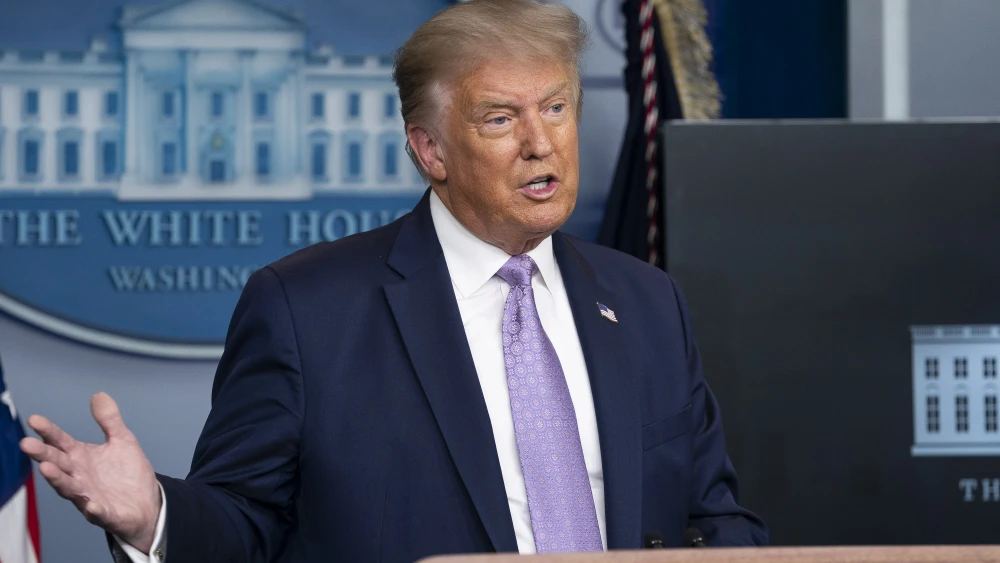
U.S. President Donald Trump answers a reporter’s question during a press conference on Aug. 5, 2020, in the James S. Brady Press Briefing Room of the White House. Credit: Joyce N. Boghosian/The White House.

U.S. President Donald Trump vowed that if re-elected in November, there would be a new deal with Iran “within four weeks.”

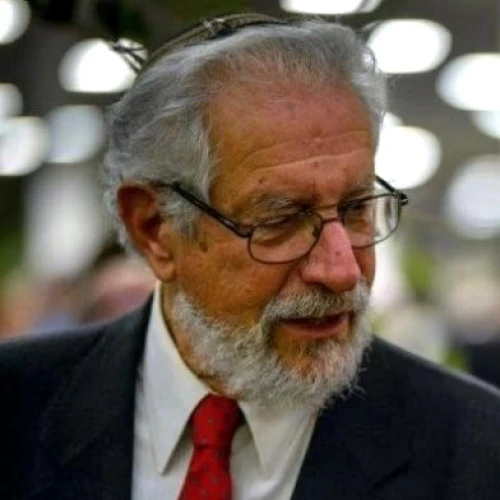
“When we win, we will have a deal within four weeks,” he said in leaked footage from a fundraiser on Sunday at the New Jersey home of Syrian-Jewish leader Stanley Chera, a real estate developer and friend of the president who died in April at the age of 77 due to complications from coronavirus.

The crowd reacted positively, an attendee told JNS on Monday.

Trump withdrew the United States in May 2018 from the 2015 Iran nuclear deal, reimposing sanctions lifted under it, along with enacting new penalties against the regime. The presumptive 2020 Democratic presidential nominee, former U.S. Vice President Joe Biden, has repeatedly said that, if elected, the United States would re-enter the deal if and when Iran returns to compliance.

Trump’s announcement comes as the United States is set to introduce a resolution this week at the U.N. Security Council to extend the arms embargo on Iran, which expires on Oct. 18. In a similar effort, six Arab countries have called on the United Nations to extend its arms embargo on Iran.

China and Russia, who, like the United States, have a permanent veto on the Security Council, are expected to veto the measure—a move that the Trump administration has said would result in enacting snapback sanctions under the deal, which would include extending the arms embargo indefinitely.

Kurt Schwartz of CAMERA told JNS that editors on the site commit “errors of omission” when they hide Piker’s “indifference to and even denial of Hamas’s sexual assault.”
“Every marker matters,” Michael X. Garrett, chairman of the American Battle Monuments Commission, said. “Because remembrance worthy of sacrifice must be careful, humble and exact.”
Simon Hankinson of the Heritage Foundation told JNS that policies restricting ICE cooperation “assist people who are deeply hostile to the United States.”
“Many of these faculty helped to create an atmosphere where Jewish, Zionist and Israeli faculty and students felt excluded, unwelcome and even physically threatened,” Raeefa Shams of the Academic Engagement Network told JNS.
Israel sees the move as a long-term strategic step, implementation due to begin in the coming days.
A 3,500-year-old heritage site sacred to Jews faces unnecessary Palestinian Authority barriers.