U.S. Foreign Policy

“The more we help Israel in terms of their capability to deny Iran a nuclear weapon, the less likely we’ll have a war,” Sen. Lindsey Graham (R-S.C.) said, adding that the theUnited States should try to provide Israel with “anything that changes the equation.”
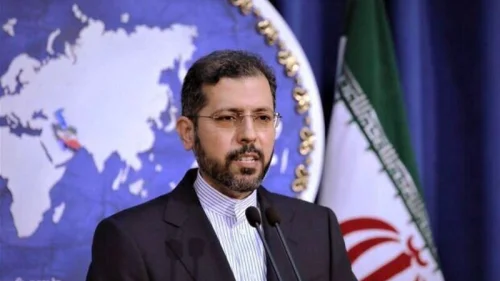
Iran’s Foreign Ministry spokesman also accused the U.S. of shedding “crocodile tears” over the situation in Yemen.

Just like in 2015, it is expected an agreement with Iran would be unanimously rejected by Republicans in both chambers, as well as some Democrats. While it’s unlikely that two-thirds will reject the agreement, it’s likely to be rejected by a majority vote, according to JINSA.
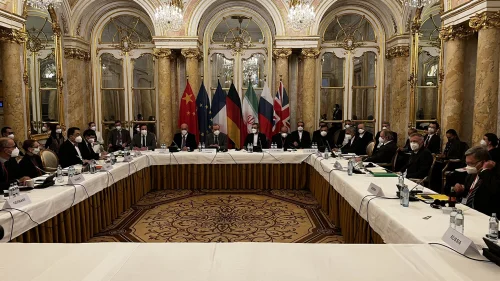
Annalena Baerbock was “convinced that a full restoration of the JCPOA would make the region more secure, including Israel; otherwise, we would not be having these talks.”

The long-range, surface-to-surface “Kheibar-Shekan” missile was displayed during a ceremony that coincided with celebrations in Iran marking the 43rd anniversary of the Islamic Revolution.

Eyal Hulata is reportedly holding talks with his American counterpart, Jake Sullivan.

“Terrorism ... is how you conduct negotiations, Tehran-style” says Israeli Prime Minister Naftali Bennett, after U.S. grants sanctions waivers in run-up to resumption of Vienna talks.

Sheikh Tamim bin Hamad Al Thani said he does not envision the country joining the Abraham Accords “in the absence of a real commitment to a two-state solution” between Israel and the Palestinians.

The U.S. president also welcomed a new $20 billion deal that Qatar Airways Group signed with Boeing to create jobs.
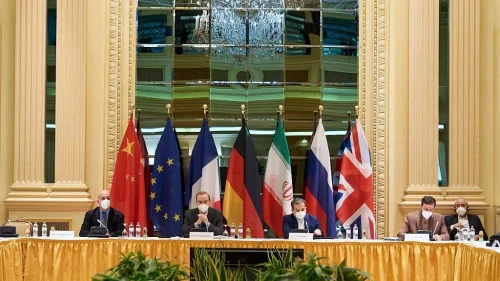
Negotiations on the release of several American hostages held by Tehran continue on a separate track, and “it’s hard to imagine a return to the JCPOA without the release of those hostages.”

Due to the sensitivity of the issue and Israel’s good working relationship with the two countries, officials are treading carefully to avoid appearance that they’re taking sides.

Through the recent engine tests and the launch of satellites at the end of December—in the midst of nuclear negotiations—Tehran has made it clear that it does not intend to compromise on the issue of missile development.