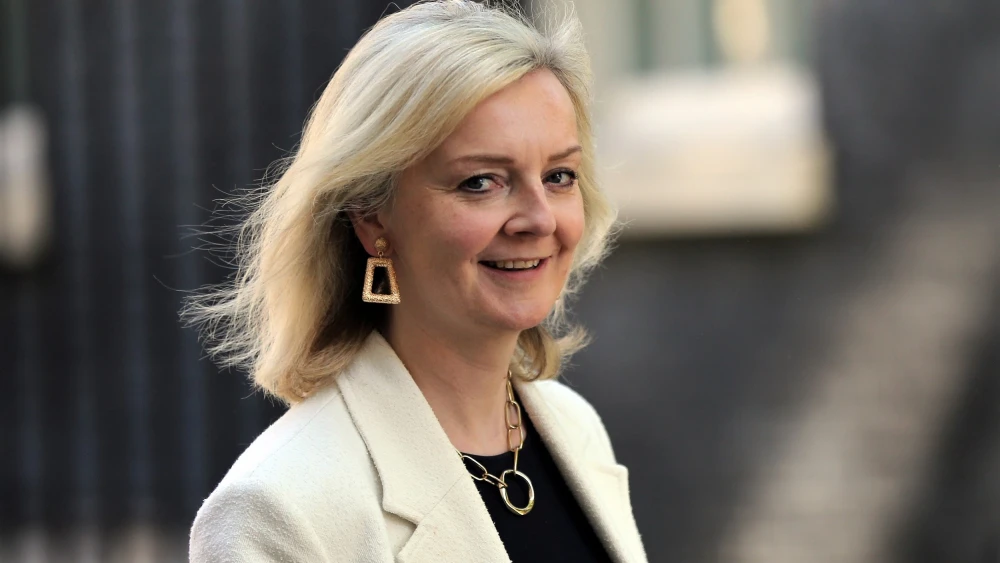
Arab ambassadors in London have sent a letter to newly minted UK Prime Minister Liz Truss urging her to scrap what they described as “an illegal and ill-judged” plan to move the British Embassy to Jerusalem, The Guardian reported on Friday.
According to the report, some Arab diplomats have warned that such a move could jeopardize negotiations on a free trade deal between the United Kingdom and the Gulf Cooperation Council which is slated to be completed this year.
While the report noted that numerous Arab nations were expected to oppose the prospective move, it emphasized that both the United Arab Emirates and Bahrain, which two years ago normalized relations with Israel as part of the Abraham Accords, also endorsed the letter to Truss.
For his part, Palestinian Authority envoy to London Husam Zomlot was quoted as saying: “Any embassy move would be a blatant violation of international law and the U.K.’s historic responsibilities. It undermines the two-state solution and inflames an already volatile situation in Jerusalem, the rest of the occupied territories, and among communities in the U.K. and worldwide. It would be disastrous.”
The British premier in September told her Israeli counterpart Yair Lapid that she was considering moving the British Embassy in Israel from Tel Aviv to Jerusalem, and that a “review of the current location” was underway.
It came after Truss, who was previously foreign secretary, pledged during the Conservative Party leadership contest in August to review moving the embassy, adding that she was aware of “the importance and sensitivity” that surrounded the legation’s location.
In May 2018, the United States opened its embassy in Jerusalem, a year after President Donald Trump announced that he would move it to the Israeli capital from Tel Aviv.
In a video address at the time, Trump stated, “Israel is a sovereign nation, with the right like every other sovereign nation, to determine its own capital. Yet for many years, we failed to acknowledge the obvious. The plain reality is that Israel’s capital is Jerusalem. Today we follow through on this recognition and open our embassy in the historic and sacred land of Jerusalem.”