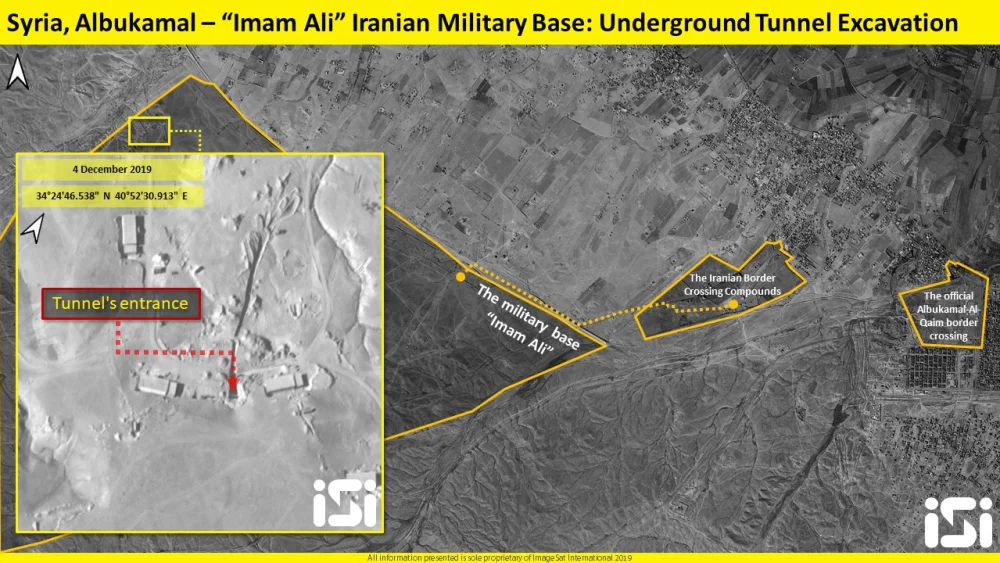
Twelve Iranian-backed fighters were killed on Saturday night in drone strikes in the Deir ez-Zor region of eastern Syria, according to a U.K.-based Syrian opposition war monitor.
The Iranian positions were hit by eight strikes just before midnight, the Syrian Observatory for Human Rights (SOAR) said on Sunday. The Iranian-backed militias had brought in reinforcements to the positions three days ago, according to the report.
Separately, on Thursday, Syrian news agency SANA reported that Israel had carried out an airstrike in a central Syrian town, causing explosions and a large fire.
Residents in Lebanon said that they heard jets flying towards Syria at low altitude, according to an AP report.
Last week, there was another airstrike in eastern Syria, near the Iraqi border, targeting three military vehicles belonging to Iran-backed fighters, according to SOAR.
Five foreign fighters were killed in the strike, for which “Israel was likely responsible,” said SOAR head Rami Abdul Rahman, according to the AFP.
Israel has reportedly carried out hundreds of airstrikes in Syria since the Syrian Civil War broke out in 2011, targeting Iranian and its allies, including Lebanese-based Hezbollah.