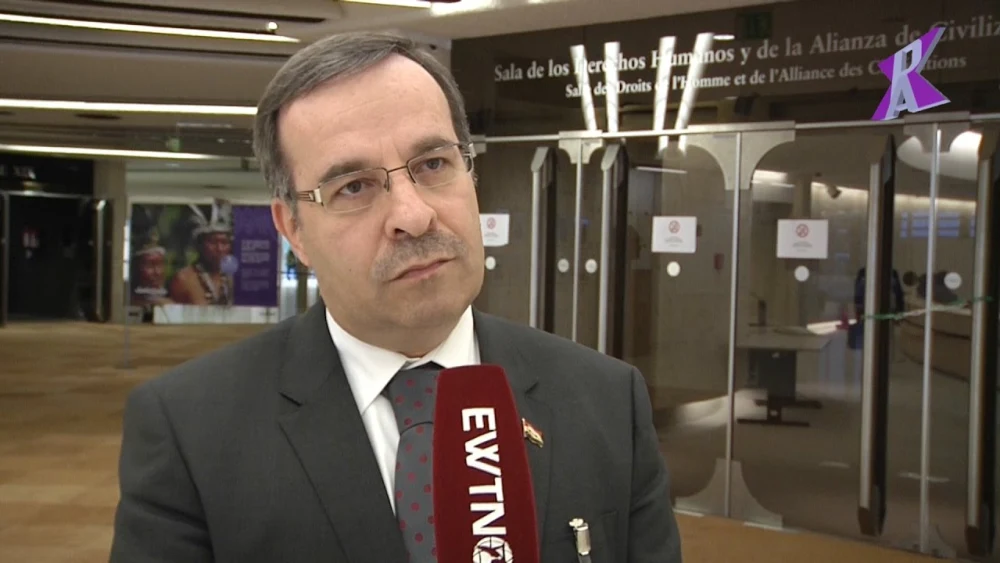
Syria’s U.N. envoy on Monday called for Jerusalem to withdraw from the Golan Heights at a meeting of the world body’s Human Rights Council.
Insisting his country had the right to “recover” the Israeli Golan Heights, Hussam Edin Aala said: “We demand accountability and we call for impunity to be combated. We condemn the decision of the Trump administration, which is illegal, regarding the occupied Golan.”
“We need to put an end to the actions of the occupation,” he said, which is “confiscating” land and “pillaging” resources.
Aala further blasted Israel’s practice of holding cabinet meetings in the Golan Heights, and called its decision to name a new community on the strategic plateau after U.S. President Donald Trump as “provocative.” He said that through such steps, Washington had encouraged Israel to “perpetrate further war crimes.”
The Syrian ambassador further called on Israel to withdraw from “occupied Lebanese territories.”
Aala was one of several representatives to call on the U.N. High Commissioner for Human Rights, Michelle Bacelet, to publish a database of companies with ties to businesses in Israeli settlements, according to a report in The Jerusalem Post.
He made his comments at the UNHRC discussion of Agenda Item 7, which mandates the council review Israel’s conduct at every session.
Israel is the only country with a dedicated agenda item at the Human Rights Council. All other human-rights abuses are discussed under Agenda Item 4.
This article first appeared in Israel Hayom.