Newsletter
Newsletter Support JNS
David Isaac

David Isaac

David Isaac, an expert on Jewish history, politics and current events, is an Israel bureau correspondent for JNS.
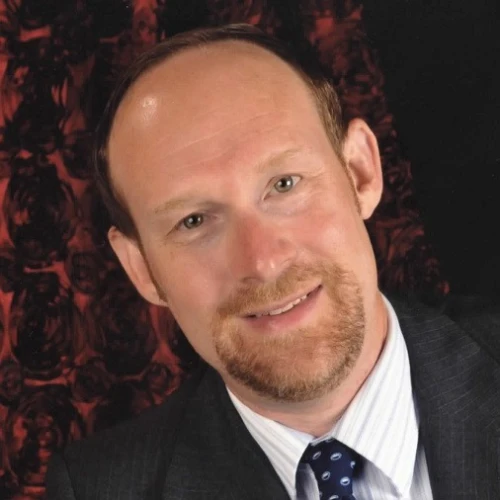
Ra’am’s Mansour Abbas has cultivated a conciliatory image before Hebrew-speaking audiences, but speaks quite differently when addressing his Arab Israeli constituents.
Record turnout underscores faith in the democratic process as the results reshape the political landscape.
Israeli analysts told JNS that at the least, an opposition victory means a freeze on new settlement construction. In the worst-case scenario, it puts Israel’s very survival at risk.
Security remains central to the election, but voters on the right and left differ over the threats facing Israel and how best to address them.
With active hostilities on three fronts, the next leader of the Jewish state must grapple with security issues first and foremost.
A central message of the prime minister’s campaign is that the “change camp” can’t win without the support of Arab parties.
“In the event that the worst-case scenario happens and we don’t get 61 ... I will say to the 120 members of Knesset: Come and vote according to your conscience,” the head of the Yashar Party said.
On the witness stand, Avichai Mandelblit acknowledged a lack of awareness about and approval of prosecutors’ investigation tactics.
“I am proud to lead a tremendous revolution in settlement in Judea and Samaria and to effectively kill the idea of a Palestinian state,” Israeli Finance Minister Bezalel Smotrich told JNS.
“The friendship between the Moroccan and Jewish peoples has deep roots and a rich history,” said Israeli Foreign Minister Gideon Sa’ar.
The U.S. State Department extended its visa restrictions against Palestinian delegates and officials for another year, citing their internationalization of the conflict, unilateral moves for statehood and glorification of terrorism.
Israel vigorously defended its decision to attack the Abu al-Duhur Airbase, with its defense minister taking issue with criticism by the U.S. ambassador to Turkey, which he called “full of inaccuracies.”
Laying claim to the breadstuff “may seem amusing at first glance,” said Asaf Rosset of Israeli NGO “Preserving the Eternal,” “but behind it lies a much more dangerous and broader strategy.”
“Publicly hounding a leading Jewish institution in this way is liable to exacerbate antisemitism in England and encourage more Jews to leave—which may be good for Israel, but not so good for Britain,” said UKLFI’s CEO.
“British officials appear more concerned about the U.K.’s image than about the dangerous implications of bolstering the Hamas terror regime,” said the group’s legal adviser Anne Herzberg.
Why UKLFI’s Chief Executive Jonathan Turner was on their radar remains unclear.
Mayssaloun Nassar’ social media posts reveal attitudes typically expressed by terrorist groups.
“We will take action to enforce the full judgment at his place of residence in England,” the Shurat HaDin—Israel Law Center’s Nitsana Darshan-Leitner said.
Knesset Member Yoav Segalovitch, the one Jewish member of the party, will be the representative. Segalovitch served as an Israeli law enforcement officer.
Members of the Joint List who walked out of the Knesset during the singing of “Hatikva” stood for the Palestinian anthem at a Fatah convention in May.
The proposed law, which was signed by more than 100 members of parliament, now must be debated by the National Assembly.
Claudia Roth, 71, calling her remarks a “huge mistake” and a “great stupidity.”
“There is no difference between what is being done to us today and what was done to our grandparents in the ghettos of Europe 800 years ago,” said Israel’s ambassador to the United States.