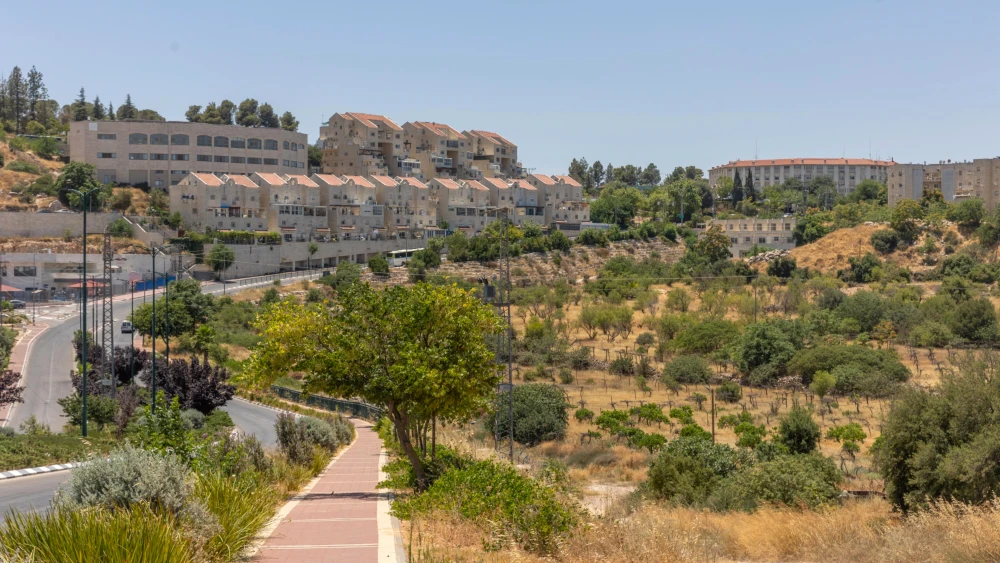

A flurry of expansion activity in Judea and Samaria in recent months included the signing of “Roof Agreements” for Karnei Shomron and Mateh Binyamin, as well as announcements of upcoming ones for Ariel and in the Shomron Regional Council, which comprises approximately 1,081 square miles and is one of the largest regional councils in Israel’s Samaria region.
On Wednesday, the connection of central and western Samaria communities to the Gush Dan wastewater treatment plant was inaugurated in a ceremony attended by Israeli Energy Minister Eli Cohen and Samaria Regional Council chairman Yossi Dagan. The communities of Peduel, Bruchin, Alei Zahav and Leshem were connected to the system for the first time, with Revava, Kiryat Netafim and Gush Kana, along with the Barkan Industrial Zone expected to be connected in the coming weeks.
“We are erasing the Green Line and applying sovereignty in law and in practice. We will continue to work for the infrastructure on the way to a million residents in Judea and Samaria,” said Cohen of the 136 million shekel ($46.6 million) initiative.
So what’s behind this sudden uptick in activity?
According to Naomi Kahn, director of the International Division at Regavim, a research-based think tank and lobbying group dedicated to the protection and preservation of Israel’s sovereignty, it may be a combination of factors.
“It is likely a push before elections to show results, but a lot of things got back-burnered during the war,” she explained. “Plus, there is a ticking clock for current Knesset members. They plan to get as much done before their time is up.”
Another possible factor, she said, was that over the course of the war much of the world had turned its back on Israel diplomatically.
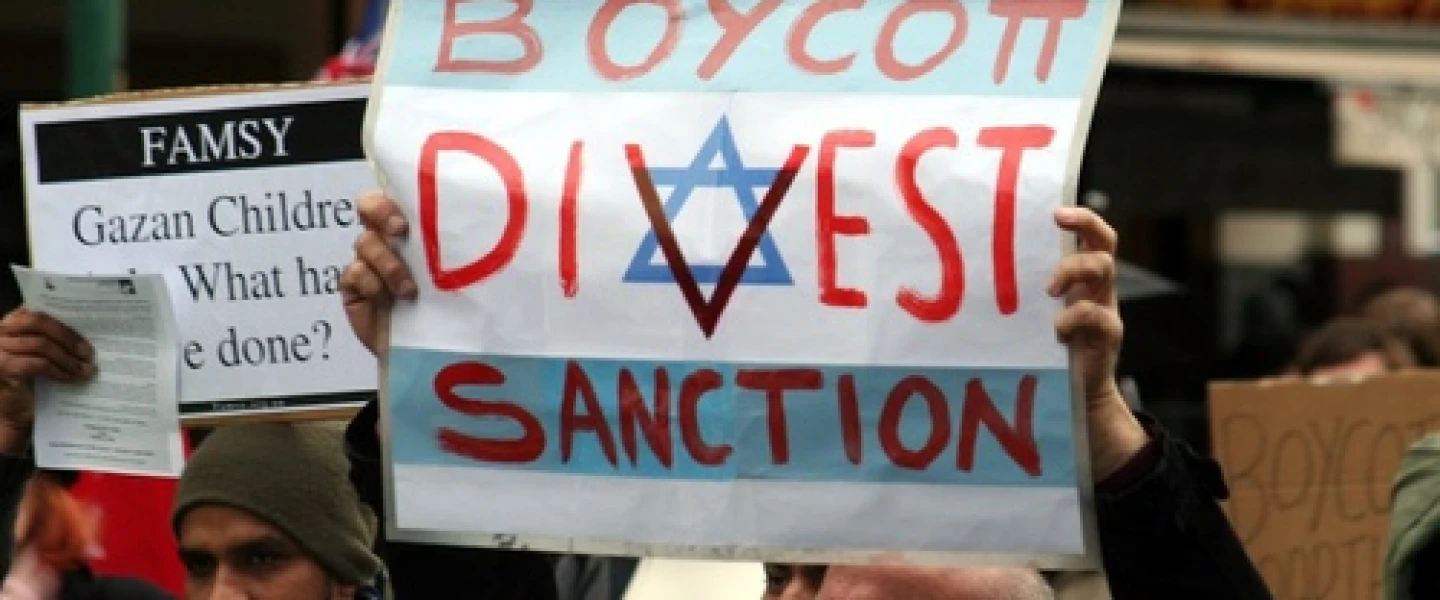
“All those years foreign governments have threatened to punish Israel with war crimes charges, to blacklist government members, to use sanctions and boycotts against us. But now they’ve done it all. This could be Israel’s way of saying, ‘go ahead, bring it on,’” she said.
Kahn, along with her organization, is currently being sanctioned by the European Union for “facilitating settlement expansion” through her advocacy and legal work to prevent illegal Palestinian land grabs.
The 2022 Israeli legislative election resulted in a right-wing coalition victory, leading to the swearing-in of Benjamin Netanyahu’s 37th government. Campaign promises made by the current government included massive settlement expansion in Judea and Samaria, legalizing outposts and “massive construction.” Now, months before the new elections, some of this seems to be coming to fruition.
At the Karnei Shomron ceremonies on June 14, Israeli Prime Minister Benjamin Netanyahu, unable to attend but clearly on board with the plan, addressed attendees via a congratulatory recorded video message.
Knesset members who attended shared optimistic messages.
“We are marking a historic moment, not only for Karnei Shomron, but for the entire Jewish settlement in Judea and Samaria,” said Israeli Housing and Construction Minister Haim Katz. The upcoming Roof Agreements would include 182,000 housing units and 52.47 billion shekels ($17.9 billion) .
The clearest message of all came from Israeli Finance Minister Bezalel Smotrich, who said, “We are shaping our future here, on the homeland. There are those who think that political pressure can be exerted on us to give up our rights. They do not understand the DNA of the Jewish people. Our answer to pressures, threats and sanctions. There will be more construction, more development, more alignment, more sovereignty... a national declaration that Israel will continue to be in its land, develop it and ensure its future home.”
He topped it off with, “Mr. Prime Minister, the time has come to also act in Judea and Samaria and to declare sovereignty here before the elections.”
On Tuesday, June 16, Smotrich claimed to have cancelled the Hebron Agreement, a move that would take away the Palestinian-run Hebron municipality of planning and construction powers. Israel’s Foreign Ministry swiftly issued a tweet claiming that this was not the case, with an unclear explanation about the Hebron municipality being “uncooperative.”
“He didn’t change any of the jurisdiction lines,” explained Kahn, chalking the rhetoric up to election talk. “Ninety-seven percent of Hebron is under the Palestinian Authority. However, changes were made recently and the P.A. Municipality no longer has jurisdiction over the 3% comprising the Jewish neighborhood and religious sites (including the Cave of the Patriarchs),” she said.
Netanyahu’s campaign promises (along with allies that included Smotrich’s Religious Zionism and Itamar Ben-Gvir’s Otzma Yehudit) focused on security, settlement expansion, judicial changes, security and anti-crime initiatives, religious/conservative policies that included priorities like countering Iran.
One week before the 2022 election, Netanyahu and allies signed the Settlement Expansion Pledge, part of the broader “Right-Wing Coalition Agreement / Joint Commitment on Judea and Samaria,” for “massive construction” in Judea and Samaria towns in 2022. The pledge included commitments to legalize outposts, accelerate building, and advance sovereignty steps in Judea and Samaria.
Nadia Matar, co-director of the The Sovereignty Movement, an advocacy organization for Judea/Samaria settlement, declared the de jure support “Amazing. This government is slowly but surely undoing 30 years of Oslo damage and tragedy. The people of Israel are grateful and expect all the amazing de facto sovereignty actions to be sealed with a de jure sovereignty: i.e. a vote, before the upcoming elections, for the application of Israeli sovereignty.”
However, attempts to annex areas in Judea and Samaria were quashed by U.S. President Donald Trump as recently as October 2025, after Israeli advanced two symbolic bills in the Knesset for annexation, one for Maale Adumim and the other for broader Judea and Samaria sovereignty.
Votes passed narrowly in preliminary readings (e.g., 25-24 for the wider bill), but Netanyahu’s government largely boycotted or opposed them as “political provocation.”
The vote triggered 15 Arab/Muslim countries/organizations to issue a condemnation coordinated from Doha, reflecting Qatar’s active diplomatic role on Palestinian issues.
At the time, Trump responded with a public statement that Israel would not annex Judea and Samaria, calling it against U.S. policy and warning it would undermine regional deals (including Gaza).
Since then, de facto sovereignty measures, including registering land as Israeli state property, approving new settlement construction, expanding infrastructure and gradually transferring civilian administration from military to civil authorities effectively and quietly deepened Israeli integration and control over parts of the area without a single dramatic declaration of annexation.
According to Matar, however, “only with de jure sovereignty will we make sure there never will be a Palestinian state, only with de jure sovereignty Israel will be strong and will have declared: the land of Israel is ours forever.” That, she said, “is what the majority of the people want, and we pray: let it continue.”
But will the Trump administration and those driving the end to the Iran war find a way to stop such efforts?
On Nov. 18, 2025, in a White House meeting with Trump, Saudi Arabia’s Crown Prince Mohammed bin Salman stated, “We want to be part of the Abraham Accords, but we want also to be sure that we secure a clear path to a two-state solution.”
The position issued by the Saudi Foreign Ministry in February 2024 and repeatedly reaffirmed through 2025–2026 is, “There will be no diplomatic relations with Israel unless an independent Palestinian state is recognized on the 1967 borders with East Jerusalem as its capital, and that the Israeli aggression on the Gaza Strip stops and all Israeli occupation forces withdraw from the Gaza Strip.”
With Trump’s “eye on the prize” (the Nobel prize, that is), in conjunction with his memorandum to end the Iran war, he has likely been trying to persuade Saudi Arabia, Qatar, Pakistan, Turkey, Egypt and Jordan to join the Abraham Accords subsequent to any Iran agreement. Most countries view the push as unrealistic without progress on creating a Palestinian state.
This is at odds with Israel’s sudden surge toward sovereignty in Judea and Samaria, and the question is whether it the first step toward Israel reasserting its independence from the river to the sea, or whether it’s a last-minute push ahead of fateful elections.