


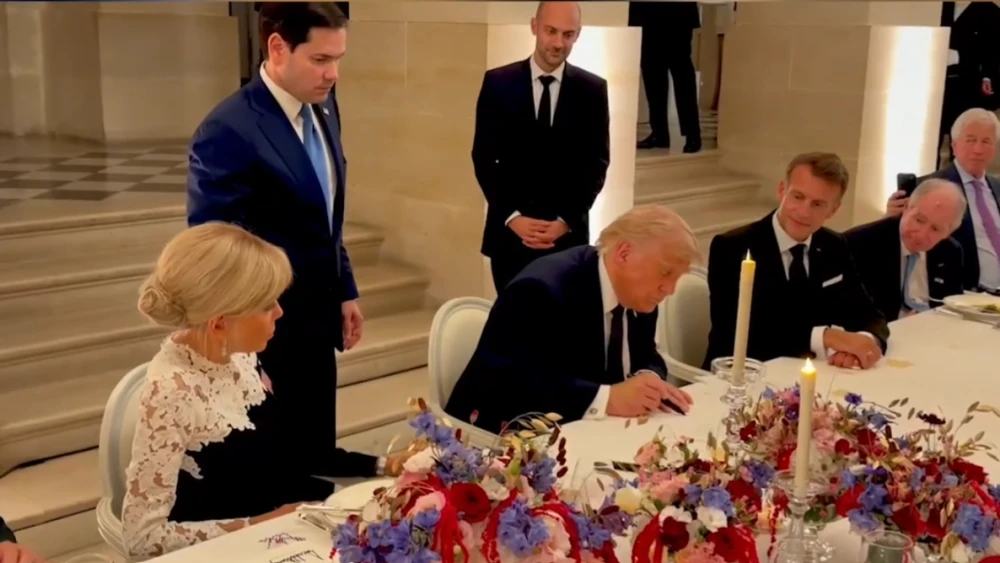

The announcement of a diplomatic breakthrough between Washington and Tehran, signed by President Trump at the Palace of Versailles on June 17 before a planned public unveiling at the Bürgenstock resort in Switzerland, has sent a powerful shock wave across the Middle East. Designed to extend the current ceasefire by 60 days, reopen the Strait of Hormuz and launch longer-term nuclear talks, the Memorandum of Understanding has been celebrated worldwide as a lifeline for global economies.
Yet beneath the surface of this diplomatic achievement lies a profound strategic crisis for Jerusalem. By explicitly incorporating Lebanon into the framework’s halt to hostilities, the agreement fundamentally constrains Israeli national security. It freezes a conflict that Israel was working hard to keep separate from broader international diplomacy, leaving a battle-hardened Hezbollah firmly planted on its northern border and straining the foundations of the U.S.-Israel alliance.
For months, the Israel Defense Forces has carried out a wide-ranging offensive in Southern Lebanon, occupying a strategic buffer zone intended to ensure the safe return of displaced northern residents. Israel’s military strategy depended on the freedom to continue operations until Hezbollah was decisively and permanently neutralized.
The framework agreement dismantles this strategy. By placing strict limitations on Israeli military activity in Lebanon, Washington is in effect protecting Hezbollah’s core military capabilities. Critically, Iran’s theocratic government remains in place, its stockpile of highly enriched uranium has not been surrendered, its ballistic missile capabilities have not been destroyed, and it has not ended its support for anti-Israel militias such as Hezbollah in Lebanon.
Pushed into an unwanted and premature ceasefire, Israel faces a worst-case containment scenario: Its freedom of action has been curtailed by its closest ally, while its most immediate existential threat remains intact, actively rearming and shielded by an international agreement.
The Lebanon dimension of this accord is especially contentious. Iranian Foreign Minister Abbas Araghchi declared that any continued occupation of Lebanese territory would be regarded as a violation of the Memorandum of Understanding, and that, in Iran’s view, the two parties to the agreement are the United States and Israel on one side, and Iran and Hezbollah on the other. Washington has pushed back sharply.
U.S. Ambassador to Israel Mike Huckabee stated that Secretary of State Marco Rubio made clear that the nuclear deal and the question of Israel’s presence in Lebanon are entirely separate issues. Israeli Ambassador to the U.S. Yechiel Leiter was equally blunt, stating that Israel would not withdraw from Southern Lebanon and that Tehran had no business inserting itself into that question. Nevertheless, the contradictory interpretations of the deal’s terms have created dangerous ambiguity on the ground.
The tensions between Washington and Jerusalem have already surfaced publicly. Prime Minister Netanyahu held a tense phone call with Vice President JD Vance, in which Vance asked Israel to scale back IDF presence in Lebanon, a request Netanyahu refused. Trump said at the G7 summit in Évian-les-Bains that he was “not happy” with the way Israel had handled itself in Lebanon, adding pointedly: “Without us, without the United States, there would be no Israel.” Trump went further still, suggesting that Syria should take over from Israel in the fight against Hezbollah, arguing that Israel’s campaign had been too prolonged and indiscriminate.
$24 billion before negotiations
Beyond the border, this accord functions as a significant political windfall for Hezbollah within Lebanon’s domestic arena. The group will portray the new framework as a resounding victory for the “Axis of Resistance,” claiming it withstood the combined military pressure of the West and Israel. This triumphalism poses serious problems for the fragile Lebanese caretaker government in Beirut.
For years, sovereign Lebanese political factions had quietly hoped that international pressure would lead to enforcement of U.N. Security Council Resolution 1701 and effective disarmament of the militia. Instead, the G7 leaders’ call for Hezbollah’s disarmament remains aspirational at best, with the group undefeated and Iran securing both a ceasefire umbrella and access to billions in previously frozen assets.
Iran’s central bank head confirmed that under the agreement, the country is set to receive half of its roughly $24 billion in long-frozen funds before final negotiations even begin. Armed with this financial windfall and its surviving missile stockpile, Hezbollah will cement a powerful veto over Lebanon’s political and military future, reducing the Lebanese government to little more than a diplomatic facade.
This situation places Israel in a position where the U.S. administration, anxious to protect its broader regional deal with Iran, is already applying visible pressure on Jerusalem to stand down. Israel was entirely excluded from the U.S.-Iran peace negotiations, and while Israeli officials previously said they would support an agreement, they have expressed serious reservations about its terms.
Should Israel continue to refuse an IDF withdrawal, Washington could take more drastic steps, including withholding diplomatic cover at the United Nations or slowing the delivery of precision-guided munitions. Stripped of conventional options, Israel’s defense posture would likely shift toward radical survivalism, leaning heavily on maximum strategic deterrence through highly disproportionate preemptive strikes to forestall a multi-front attack.
In a scenario of growing American disengagement, Hezbollah’s next moves would be deliberate and opportunistic. Rather than launching an immediate all-out assault, the group’s first phase would be a highly public, triumphalist return to the border, reclaiming vacated territory as proof of its resistance. Regional officials with direct knowledge of the interim deal have said it would require Israel to leave nearly all the territory it currently occupies in Lebanon, minus a few hilltop positions along the border.
Under the protection of a U.S.-Iran-mandated ceasefire, Hezbollah would swiftly rebuild its underground attack infrastructure along the Blue Line international border. Once a reliable logistics corridor through Syria and Iraq is secured using the financial windfall from Iranian sanctions relief, Hezbollah would wait for the right moment of internal Israeli political weakness before launching a large-scale saturation assault.
The U.S.-Iran agreement is expected to launch negotiations toward a final settlement to end the war. Yet by treating Lebanon as a secondary concern to global energy markets, the framework accord may inadvertently set the stage for the very catastrophic conflict it claims to be preventing.
Originally published by the Jerusalem Center for Security and Foreign Affairs.


