Archaeology
News and features about archaeological finds linking stories from the Torah and Prophets, or other historical events to the State of Israel

Excavations reveal an unusually large structure with 120 jar handles bearing seal impressions in one of the most important archeological collections uncovered in Israel.
The researchers said “discovering these artifacts in an archaeological context which can be dated with a high probability is very rare.”

“Since late antiquity, there has been almost complete uniformity of the biblical text. A Torah scroll in a synagogue in Kiev would be virtually identical to one in Sydney. By contrast, in Qumran, we find in the very same cave different versions of the same book,” said Professor Noam Mizrahi.

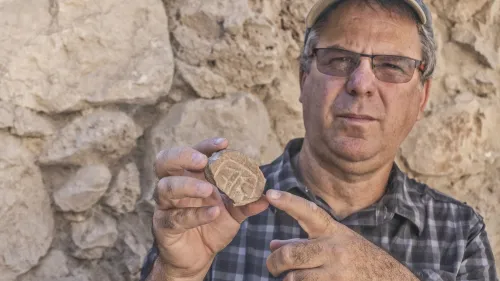
The 1.1-inch-square clay impression was probably a badge or medal of honor made to commemorate a Canaanite battle victory some time in the Late Bronze Age between the 12th and 15th centuries BCE.

The discovery of the coin, said to be the only one from the era bearing the name “Jerusalem” to have been discovered in the ancient city, was announced in honor of the upcoming Lag B’Omer holiday.

Under cover of the coronavirus shutdown, the P.A. paved an access road at the site that has destroyed the remains of the ancient fortress wall and water cisterns, says Israeli NGO.

Archeologist Yuval Baruch said the stone was an ancient weapon used by forces besieging a city to hurl projectiles at fortress walls.
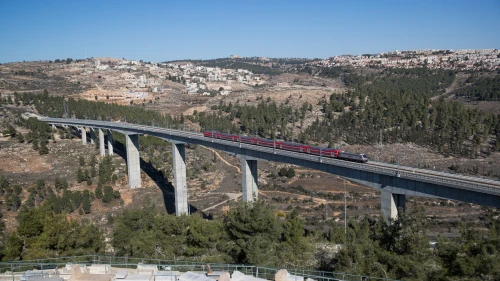
The project would involve the construction of two new stations and an 1.8-mile-long tunnel under downtown Jerusalem and the Old City.

The museum also said that 900,000 users follow its account on Twitter, and more than 300,000 use the museum’s profile on Facebook with 80,000 on Instagram.

An ancient measuring table and dozens of stone measurement weights suggest that the location served as a major town square.

A collection of 50 black-and-white photographs in the year following the 1967 Six-Day War portrays effects on the Israeli and American mindset.

Israeli Foreign Ministry hails the opening of the contested Roman-era site as the result of “long and strenuous” negotiations with France, which has owned the site since the late 19th century.