Archaeology
News and features about archaeological finds linking stories from the Torah and Prophets, or other historical events to the State of Israel

Coins found above and below a 2,000-year-old road to the Temple Mount prove that it was constructed between 31 and 40 C.E., and thus likely commissioned by the infamous Roman governor of Judea.
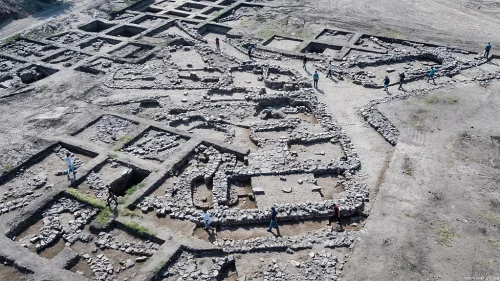
The city, which researchers say dates back 5,000 years and was home to 6,000 residents, marked the beginning of urbanization in the Land of Israel and changes what was previously known about Canaanite era.

Since researchers made their first discovery back in 2008, the entire collection of remains includes three teeth, a pinky bone and a lower jaw.

The small, 2,600-year-old clay seal was uncovered in earth from near the Western Wall, and bears the Hebrew name and title “Adoniyahu Asher Al Habayit,” both of which appear multiple times in the Bible.
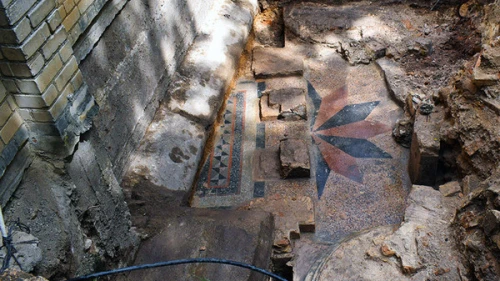
“These are the discoveries that fascinate us most,” said the researchers. “It is the personal objects that provide a direct connection to people, to those who prayed here, that immediately ignites the imagination.”
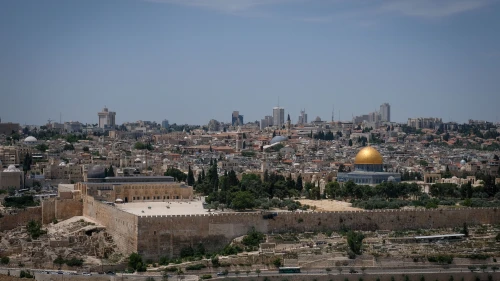
The discovery, made by the Mount Zion Archaeological Project, confirms accounts of the fall of the Fatimid city in 1099 C.E. to the forces of the First Crusade.

After years of searching and speculation, researchers think they have finally located the Philistine city where David hid from King Saul prior to ascending the monarchy.

U.S. Ambassador to Israel David Friedman responded to accusations by the Palestinian Authority Foreign Ministry: “Fake News: ‘Friedman uses sledgehammer to destroy wall under Palestinian homes.’ Real News: ‘Friedman uses sledgehammer to break ceremonial cardboard wall to open once-in-a-century archaeological discovery.’ ”

The program announces its 2019 dates for enhanced experiences open to the general public.

After discovering a unique way to isolate yeast from ancient pottery—and together with a local brewer—the Israeli archaeologists and microbiologists produced high-quality beers that modern drinkers can enjoy.

The pro-Israel rights group Regavim reported that local farmers told their activists that “the sarcophagi from which the bones were removed had recently ‘disappeared.’ ”

The marker is one of three discovered in 2018 in the small agricultural town of Moshav Ramot in the Golan Heights.