Newsletter
Newsletter Support JNS
Yaakov Lappin

Yaakov Lappin

Yaakov Lappin is an Israel-based military affairs correspondent and analyst. He is the in-house analyst at the Miryam Institute; a research associate at the Alma Research and Education Center; and a research associate at the Begin-Sadat Center for Strategic Studies at Bar-Ilan University. He is a frequent guest commentator on international television news networks, including Sky News and i24 News. Lappin is the author of Virtual Caliphate: Exposing the Islamist State on the Internet. Follow him at: www.patreon.com/yaakovlappin.


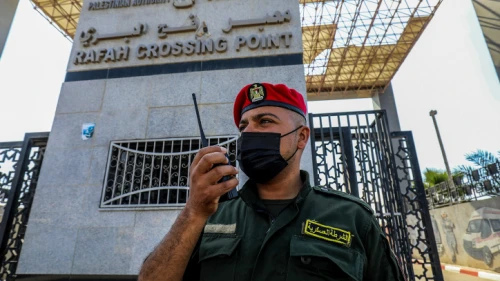
If they can infiltrate from the Egyptian desert area that borders the Jewish state, then so can terrorists; the Israel Defense Forces has teamed up with police to cut trafficking runs by half.
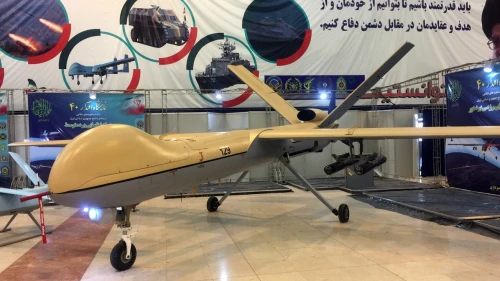
With Tehran viewing itself as a regional power in possession of advanced technology, coupled with a commitment to “self-reliance,” its military industries have produced a sprawling industry of unmanned aerial vehicle mass-production lines.
Since 2015, Israel has been forced to develop an efficient mechanism to deconflict with Russia over Syria in order to stop its worst enemy, Iran, from building a war machine on Syrian soil.
One way that Egypt has been responding to America’s pressure is by not putting all of its eggs in one basket and diversifying its defense purchases, making significant procurements from France, such as 30 Dassault fighter jets, and Russia, which has sold Cairo 24 Sukhoi SU-35 fighter jets.
Moscow recently held a major Mediterranean military exercise; Jerusalem’s situation is a “very difficult challenge,” says former Israeli Ambassador to Russia and Ukraine Zvi Magen.
“Even now, Hezbollah’s Golan File Unit gathers intelligence and awaits an opportunity to attack Israel,” says a report by the Alma Research and Education Center.
“Hezbollah and the Houthis are linked by a mutual sympathy of two Shi’ite organizations, each working in their arena. This cooperation is part of a system that is headed by Tehran. This is the right way to look at it,” Col. (res.) Shaul Shay tells JNS.
Mon4t’s technology makes use of a smartphone’s built-in sensors, such as its accelerometer, gyroscope, touch screen, microphone and GPS to closely monitor brain conditions from the comfort of a patient’s home, says Ziv Yekutieli, co-founder and CEO of Mon4t.
Senior terrorism researcher Michael Barak warns that the West is not doing enough to deradicalize “the next generation of jihad” growing up in Syrian camps. He also notes that the location of Abu Ibrahim Qurayshi raises more questions than answers.
“Lebanon has been out of the economic waters game for a long time. The Syrians have ‘taken a bite’ from gas reserves to the north—and the maritime border between Syria and Lebanon has never been finalized,” Maj. (res.) Tal Beeri tells JNS.
Israeli Defense Minister Benny Gantz said the new vessels “will upgrade the capabilities of the navy and contribute to Israel’s security superiority in the region,” hinting at their multiple abilities.
According to Col. (res.) David Hacham, a longtime adviser on Arab affairs, Cairo has been able to delay an ultimatum that would have expired at the end of December.