Newsletter
Newsletter Support JNS

Ancient Jerusalem wine found to be seasoned with vanilla

Israel Antiquities Authority says unearthed wine jugs help reveal what people ate and drank prior to Jerusalem’s destruction by Babylonia in 586 BCE.

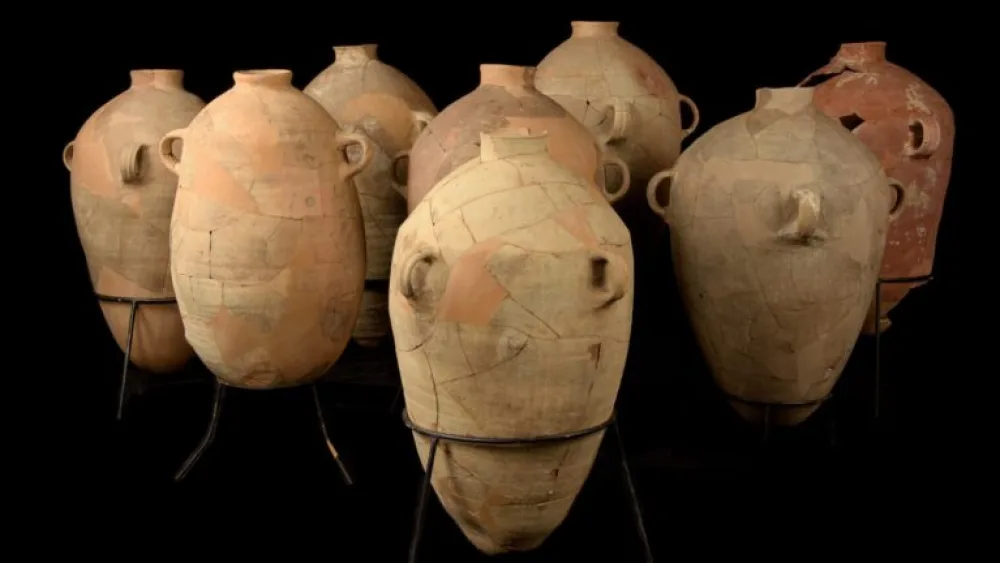
A collection of wine jars after the restoration process. Photo by Dafna Gazit/Israel Antiquities Authority.

Researchers from the Israel Antiquities Authority and Tel Aviv University were surprised to discover remnants of vanilla in 2,600-year-old wine jars unearthed in the City of David National Park in Jerusalem.

The researchers were investigating two buildings destroyed by the Babylonians in 586 BCE when they unearthed the eight jars. They date back to the reign of the biblical King Zedekiah, who ruled the kingdom of Judah when the Babylonians destroyed Jerusalem and exiled the Jews.

Using chemical tests, the researchers identified remnants of vanilla molecules preserved in the tiny spaces on the side of the pottery vessels.

In a recent study published in PLOS ONE, the scientists write that vanilla was not known to be available in the Middle East before Columbus sailed to the Americas in 1492.

Tel Aviv University doctoral student Ayala Amir, who conducted the research in the laboratories at the Weizmann Institute and Bar-Ilan University, said that the “vanilla markers were an unusual find.”
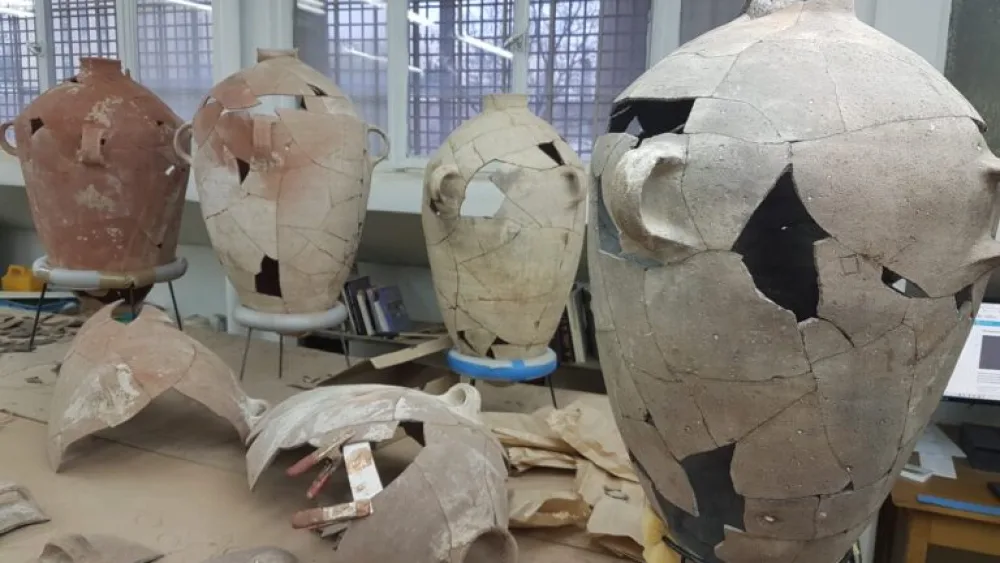
Ancient wine jugs are being restored in the laboratories of the Israel Antiquities Authority. Photo by Ortal Chalaf/restoration by Joseph Bocangolz.
Ancient wine jugs are being restored in the laboratories of the Israel Antiquities Authority. Photo by Ortal Chalaf with restoration by Joseph Bocangolz.

Scientists believe that the vanilla, considered a luxury, might have come from India via an international trade route that crossed the Negev during the seventh century BCE.

On the handles of some of the jars was a seal impression in the shape of a rosette, indicating that the jar and its contents were part of the royal administration of the kingdom of Judah. The number of jars indicates the economic importance of wine, noted the scientists.

Ortal Chalaf and Joe Uziel, directors of the excavation on behalf of the Israel Antiquities Authority, said that the jars will help reveal what people ate and drank prior to Jerusalem’s destruction by Babylonia.

Said the scientists: “The jars opened a window for us.”
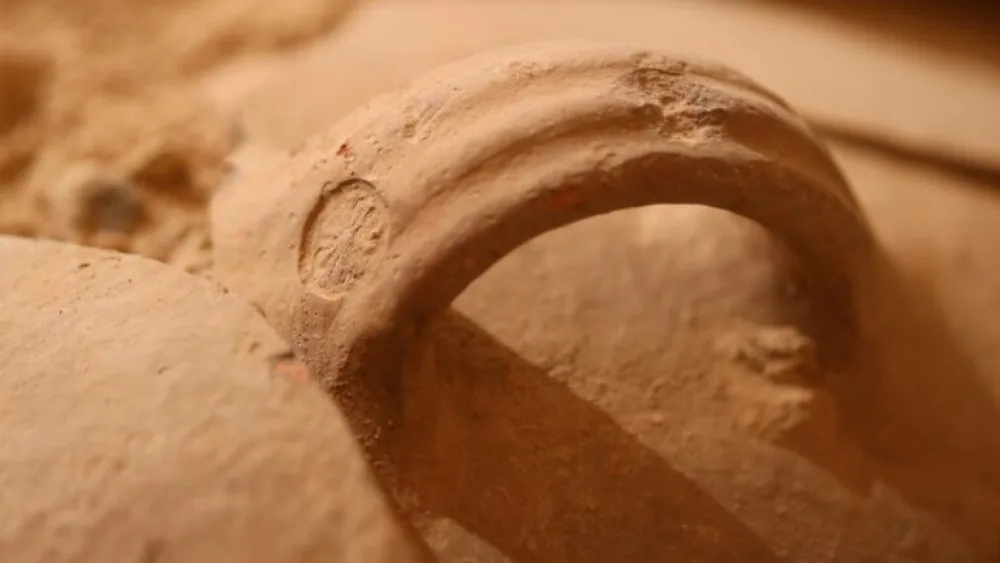
A jar handle with a rosette impression associated with the royal economy in the Kingdom of Judah. Photo by Eliyahu Yanai/City of David.

“We remain committed to maintaining stability along Israel’s northeastern border and ensuring the security of the residents of northern Israel,” said Danny Danon, the Israeli envoy to the United Nations.
“Gazans are demanding an end to Hamas rule and an end to the cycle of war and destruction that Hamas brought upon them,” Ahed Al Hendi of the Center for Peace Communications told JNS.
“Even the promotional poster we received from the organizers was different and contained no Nazi symbols or extremist imagery,” the club’s board of directors told JNS.
The open letter came as a poll found that most Jewish New York City voters believe the normalization of anti-Zionism is fueling the rise in antisemitism.
Defense minister says Israel is prepared to “finish the job” after Esmail Qaani warned that the Islamic Republic would respond forcefully to any future Israeli military action.
The Israeli minister that as long as the Iranian-backed proxy group Hezbollah continues to target IDF soldiers, the current situation cannot continue.
Benny Gantz, JNS editor-in-chief Jonathan S. Tobin, Gilad Erdan, Mosab Hassan Yousef, Nissim Black and leading voices in security, diplomacy, media, law and Jewish communal affairs headline the summit’s third day in Jerusalem.
