Newsletter
Newsletter Support JNS

Islamic State claims attack on Sinai natural-gas pipeline

Terrorist group says its fighters were responsible for the attack on “the natural gas line linking the Jews and the apostate Egyptian government.”

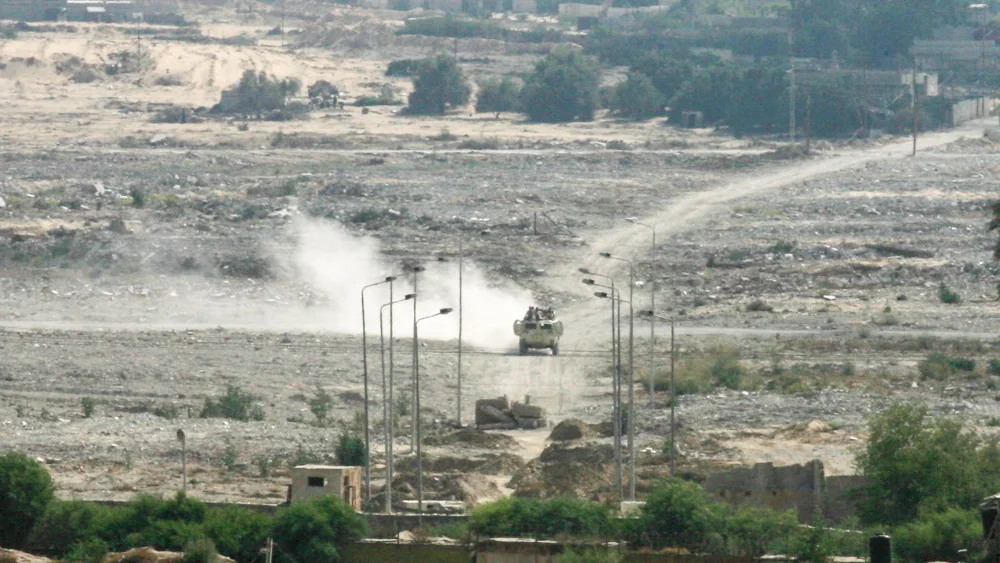
Egyptian armored vehicles patrol on the Egyptian side of the Gaza border, seen from the south of the Gaza Strip, on July 2, 2015. Photo by Abed Rahim Khatib/Flash90.

The Islamic State (ISIS) terrorist group on Monday claimed responsibility for an attack on a pipeline in the Sinai Peninsula on Sunday. The group did not provide any evidence for its claims, according to Reuters.

ISIS posted on its Telegram account that “caliphate soldiers targeted ... the natural gas line linking the Jews and the apostate Egyptian government,” the AFP reported.

Gunmen attacked a gas pipeline in the northern Sinai late on Sunday, according to Egyptian security sources. The attackers, suspected Islamist terrorists, blew up the pipeline west of el-Arish, causing a fire but no casualties, according to Reuters.

Egypt began importing gas from Israel’s Leviathan field in January through a pipeline that includes a sub-sea section that connects el-Arish to the coastal city of Ashkelon, Israel.

Following the initial report of the pipeline attack, the companies developing the Leviathan field denied that the gas flow from Israel to Egypt had been disrupted.

“The flow of gas from Leviathan to Egypt is continuing as normal,” they said in a statement, according to the report.

“We already have demonstrated that hate and hateful acts are not going to be tolerated, and so if we could even take it a step further to define antisemitism and what that is like, then I want to be able to take that,” Jeannette Sánchez-Palacios told JNS.
The United States, Morocco and Israel said they are “undaunted by regional challenges”
The former president’s son pointed to a “bombshell” report that he said had been published a few days earlier, apparently referring to claims by Haaretz.
The find is clear evidence of a previously unknown community in the area during the time of the Second Temple, according to the Israel Antiquities Authority.