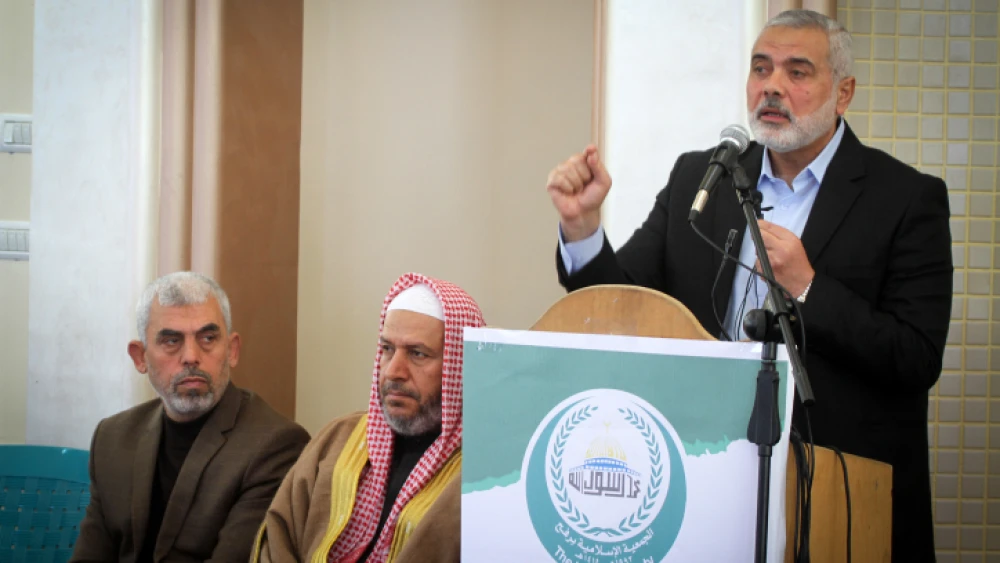
This November, as much of the world focuses on the U.S. presidential election, another political race will come to an end under our very noses, one that will have a major effect on Israel: the election for the leadership of Hamas’s political wing.
As of now, Hamas politburo head Ismail Haniyeh, his predecessor Khaled Mashaal and the leader of Hamas in Gaza, Yahya Sinwar, are all competing for the spot. Haniyeh’s right-hand man, Salah al-Arouri, might also throw his hat into the ring.
The election is being held as a power struggle plays out among Iran, Turkey and Qatar. Egypt is also a player. But to understand the forces involved, it’s necessary to go back nine years.
The Syrian war, which erupted in March 2011, posed a dilemma for the Hamas leadership under Mashaal, who was based in Damascus. Mashaal wanted to stay neutral, but Syrian President Bashar Assad demanded his support. The problem was solved when Mashaal was forced to leave Syria and recamp to Doha, Qatar.
“By taking that step, Mashaal detached himself from Syria and Iran and joined the Turkey-Qatar axis,” explains Middle East researcher Yoni Ben-Menachem of the Jerusalem Center for Public Affairs.
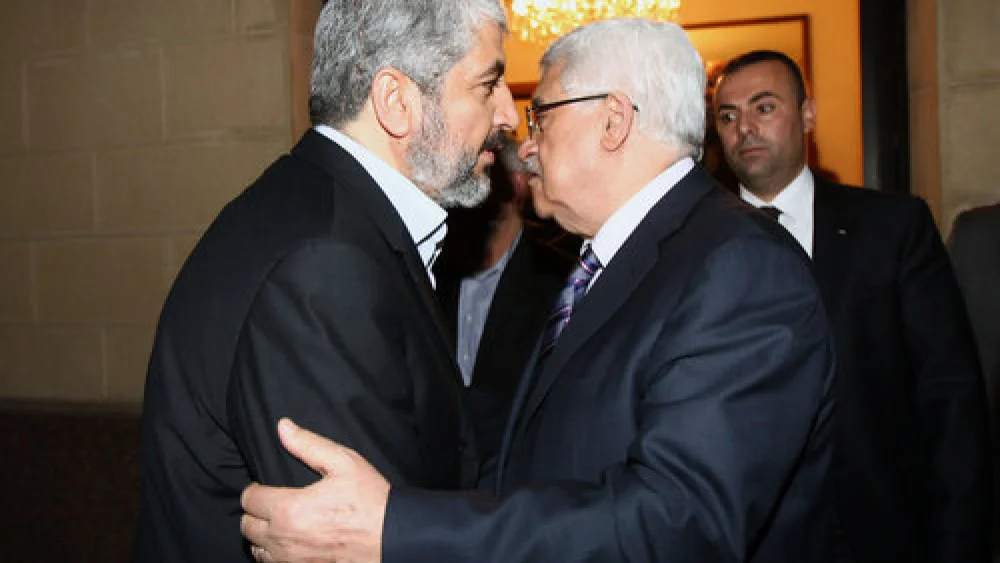
Mashaal was confronted with another crisis during Israel’s “Operation Protective Edge” in the summer of 2014 when he fell out with Hamas’s military wing, particularly Sinwar and Mohammad Deif, the leader of the Izz ad-Din al-Qassam Brigades, Hamas’s military wing.
“He had an agent who was deployed as a battalion commander of Hamas’s military wing near Zeitoun,” said Ben-Menachem. “He [the agent] would call Mashaal and report what was happening in the military wing, and Hamas had him executed.”
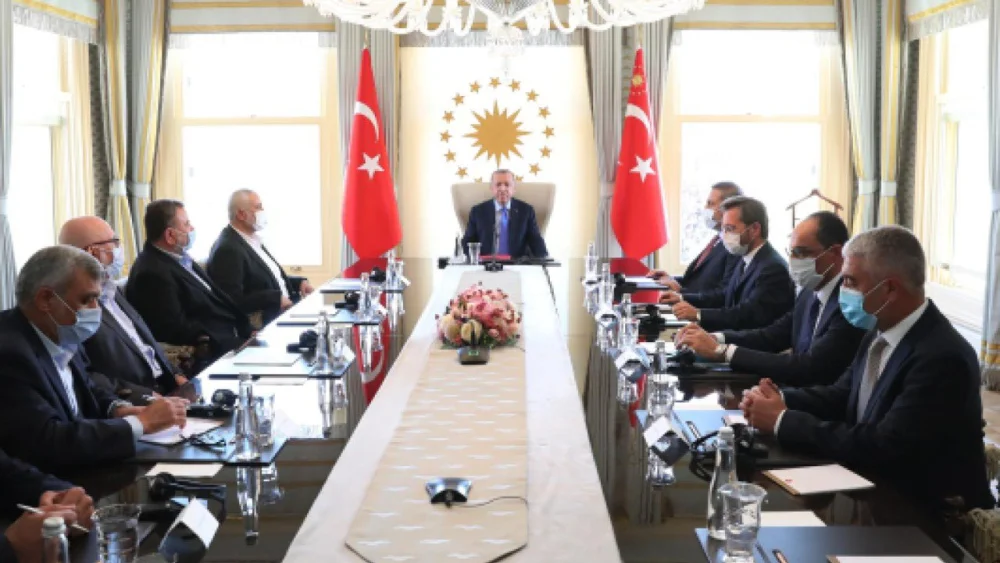
Even before the crisis with Assad, Mashaal was moving closer to Turkey. In 2006, Ahmet Davutoğlu, then a close adviser to Turkish President Recep Tayyip Erdoğan, ensured that the door was open to Mashaal when he visited the headquarters of Erdoğan’s AKP party. Six years later, Mashaal’s ties with Erdoğan were exposed when Mashaal spoke at an event marking the AKP’s 10th anniversary. All these events, and many visits later, strengthened the ties between Hamas and Turkey.
“Turkey treats Hamas as a legitimate entity because the way it sees it, [Hamas] was democratically elected,” said Hay Eytan Cohen Yanarocak, a researcher on modern Turkey at the Jerusalem Institute for Strategy and Security.
“Erdoğan sees its [Turkey’s] relationship with Hamas through the lens of the ‘good Muslim,’ ” explained Yanarocak.
Closer ties to Ankara, however, weren’t enough; in the last election for the political leadership of Hamas, Mashaal was replaced by Haniyeh.
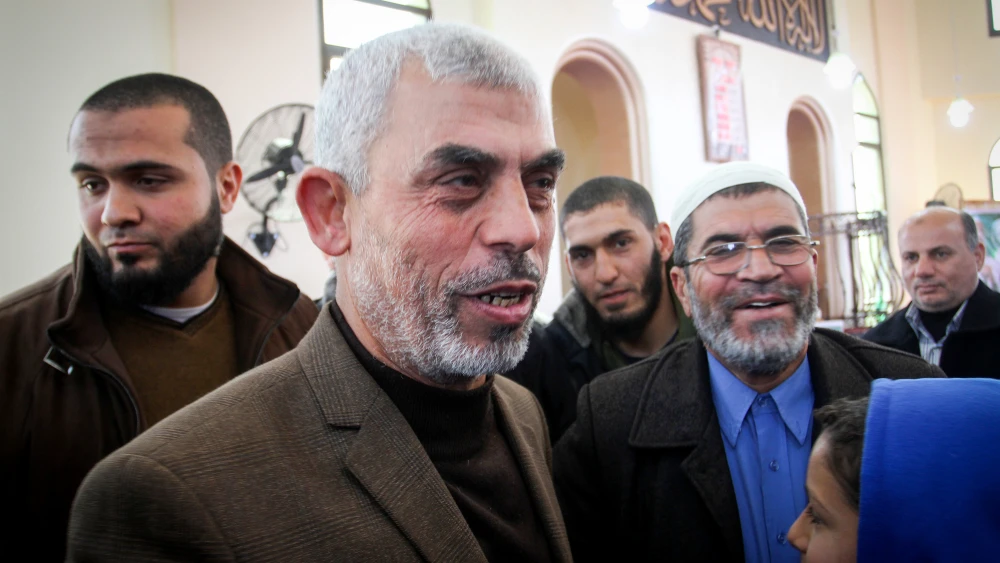
“Hamas’s military wing, which is close to Iran, is what led Haniyeh to victory and Yahya Sinwar being elected head of Hamas in Gaza,” said Ben-Menachem. “The last election also led to the Hamas leadership being returned to the Gaza Strip for the first time since Sheikh Ahmad Yassin was killed [in 2004].”
And then, on Jan. 3 of this year, former commander of Iran’s elite Quds Force, Maj. Gen. Qassem Soleimani, was killed in a U.S. strike in Iraq, which was bad for Haniyeh. He had left Gaza prior to the targeted killing to prepare for the election and promised Egypt he would not visit Iran. However, he chose to go to Tehran to take part in Soleimani’s funeral, and even spoke there, calling Soleimani a “shahid [martyr] of Jerusalem.” Since then, Cairo has been angry at Haniyeh and refused to allow him back into Gaza. Two weeks ago, Egypt refused to allow Haniyeh’s wife and two daughters and their husbands to cross its borders into Qatar to reunite with him.
Meanwhile, Sinwar was taking care to improve his position with Egyptian President Abdel Fattah al-Sisi. Sinwar has neither Mashaal’s strategic capability nor Haniyeh’s impressive rhetoric, but he knows how to take advantage of a situation.
“He [Sinwar] took care to foster a relationship with senior officials in Egypt. He decided to cut ties with the Islamic State in Sinai, and in return got Egypt to open the Rafah crossing. He also came up with the idea of the ‘Marches of Return’ and the explosives-laden balloons,” said Ben-Menachem.
While Sinwar was looking out for Gaza and gaining the support of Hamas’s military wing, Haniyeh and Mashaal have been vying for votes from Palestinians in the Persian Gulf and Lebanon. Haniyeh, unlike Mashaal, is doing so much more openly. On Aug. 22, he met with Erdoğan in Istanbul and received a million dollars in cash. Last week, he began touring Lebanon and handing out the money.

“All the money that Erdoğan is sending as a donation is aimed at winning the hearts and minds of the people who see him as a ‘big brother,’” said Yanarocak. During his visit to Lebanon, Haniyeh took care not only to speak at Palestinian refugee camps, but also to promote himself on the Shi’ite axis. He met with Hezbollah leader Sheikh Hassan Nasrallah in Beirut. The meeting was held after Sinwar agreed to a ceasefire to the latest escalation with Israel, proving who the real boss in Gaza was. Sinwar brokered the deal through Qatar and never bothered to loop Haniyeh in.
And what is keeping Hamas busy elsewhere in the world?
“Whoever is elected isn’t likely to affect Hamas’s satellites and activities in far-flung places like Yemen, where it has at least three representatives among the Houthi rebels,” said Michael Barak of the International Institute for Counter-Terrorism at the Interdisciplinary Center Herzliya.
“It’s not impossible that there are also senior members of [Hamas’s] military wing there, who arrived to teach the Houthis what they know,” said Barak.
Meanwhile, Hamas’s terrorist activity in Malaysia poses another military problem for Israel.
“Hamas’s military wing is gaining power there. The organization has training camps that are still operating there, some two-and-a-half years after Fawdi al-Batsh was killed there,” said Barak.
Another significant issue will be the election for the Shura Council, which is responsible for agreeing on strategic decisions.
“If Sinwar is elected head of the politburo, it will bring the leadership back to the Gaza Strip,” said Ben-Menachem.
Moreover, if Sinwar is elected head of Hamas’ political affairs, it will necessitate the election of a Hamas leader for the Gaza Strip itself.
It’s hard to assess where the race stands, for a number of reasons. There is no official list of candidates, there is no voter registry that would allow the Palestinian public to know who is casting ballots and Hamas has yet to announce a date for the election. Basically, the organization’s Shura Council meets secretly on an unannounced date and the election process itself takes place in an undisclosed location, under heavy secrecy. The council announces the identity of the winner, and there is no appeals process.
This article first appeared in Israel Hayom.