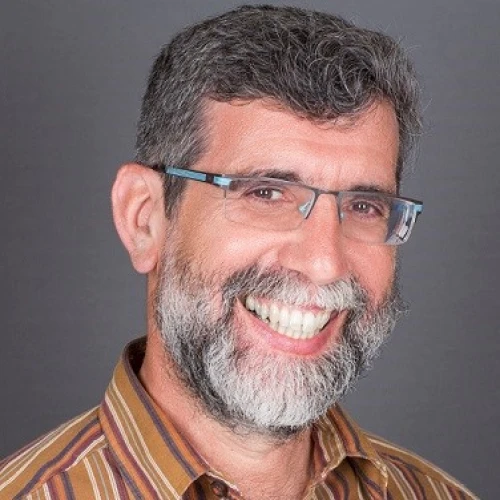
Meeting with European diplomats on the sidelines of the U.N. General Assembly went as one would expect of representatives of countries that have been recognizing a state of “Palestine,” which the Jewish state and others say rewards Hamas, according to Daniel S. Mariaschin, CEO of B’nai B’rith International.
“What we have here on an international level is a ‘don’t confuse me with the facts’ worldview,” Mariaschin told JNS. “All of these arguments, which we feel are well-grounded, are clearly not getting through in terms of persuading because minds were made up 12 months ago and 18 months ago.”
“You can almost feel that for three weeks, Israel has a right to defend itself,” he said. “It had a short shelf life.”
B’nai B’rith holds meetings on the sidelines of the General Assembly annually, but the conversations this year—which were largely with Europeans, but also with diplomats from Africa, Australia, Egypt and South America—were more challenging this year, since Rosh Hashanah took place during the high-level U.N. debate week.
“These meetings are really an opportunity, particularly with countries that are problematic, or worse, to be able to do the truth to power presentation,” Mariaschin told JNS. “This has all been building up over the past two years.”
Before the High Holidays, France and Saudi Arabia led a summit on recognizing an independent Palestinian state, which another eight countries did after the meeting.
Mariaschin told JNS that he and colleagues pressed diplomats about their governments’ leveling “the blood libel of genocide” and starvation charges against the Jewish state. They also challenged attendees of the French- and Saudi-run summit about why action items, which emerged from the event, did not address the hostages, whom Hamas continues to hold in Gaza.
“Why aren’t the hostages at the top of the list?” he said. “This issue of hostages, and the issue of Hamas, it’s in the second, third, fourth paragraph, if at all.”
Mariaschin said that he and colleagues also pressed Spanish diplomats about rising Jew-hatred on campuses in the country and language that Pedro Sánchez, the Spanish prime minister, has used about the Jewish state, which Israel says is a “disgrace.”
‘Being on the right side of history’
B’nai B’rith leaders also told countries that recognizing an independent Palestinian state is “mindless” when they leave the Jewish state out of the conversation.
“Why are you trying to create a fait accompli that you can’t even bring into existence?” Mariaschin said.
Some diplomats gave B’nai B’rith evasive answers, and others were defensive, according to Mariaschin, who referred to “these seasoned people, who we assume to understand history.”
“Some answers left me with the impression that they go along to get along,” he told JNS. “That’s how it works at the United Nations.”
“Nobody gave a cogent, persuasive answer because there is no cogent, persuasive answer. That’s what makes this so bizarre,” he said. “It comes down to being on the right side of history, to understanding the difference between good and evil, and that should be simple.”

“Any sixth-grader who is perceptive could see through this, because if you’re going to recognize the Palestinian state and then work on all of the issues that have to be worked on afterward, like who picks up the garbage, who delivers health services, where are the airports and where are the seaports, why would the Palestinians want do that when you’ve already told them what they’re going to get at the end of the day?” Mariaschin said.
“Why would terrorists want to turn the burner down when they know they’ve already got it in their pocket?” he said. “When I say ‘mindless,’ that’s what this is.”
Many diplomats seemed uninterested in learning about misinformation and disputed claims that they may have heard about aid to the Gaza Strip, according to Mariaschin. B’nai B’rith also discussed Iran and Ukraine with diplomats, he said.