Newsletter
Newsletter Support JNS

Foreign minister of Oman denies normalization of diplomatic ties with Israel

Yusuf Bin Alawi said what has been an apparent warming of relations between the two is “a peaceful process to find a settlement for the Palestinian cause that guarantees their rights and the interests of all.”

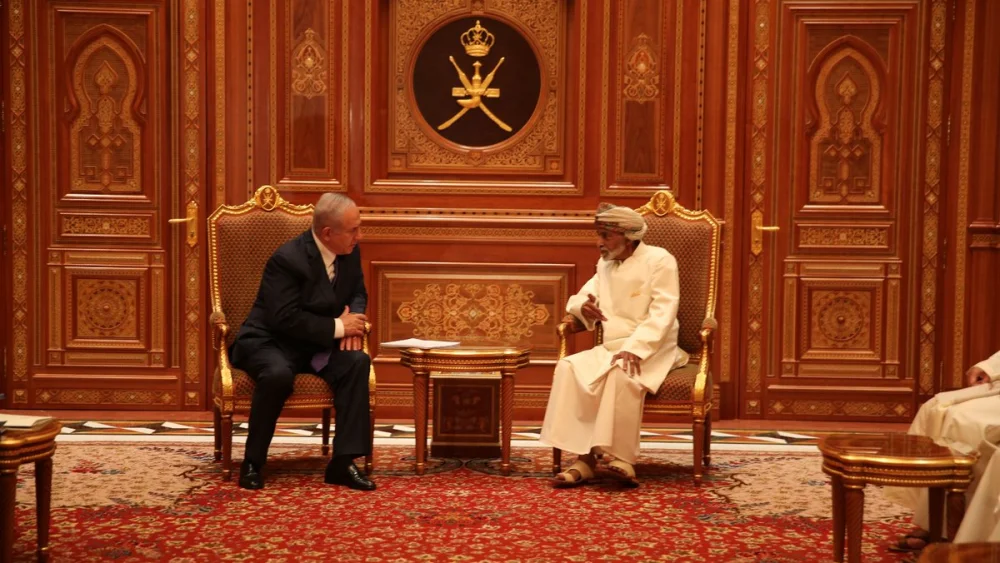
Prime Minister Benjamin Netanyahu with Sultan Qaboos bin Said in Oman, October 2018. Credit: Benjamin Netanyahu via Twitter.

Omani Foreign Minister Yusuf Bin Alawi announced on Monday that there is no diplomatic normalization with Israel, saying that what has been an apparent warming of relations between the two is “a peaceful process to find a settlement for the Palestinian cause that guarantees their rights and the interests of all.”

Addressing a joint press conference with Russian Foreign Minister Sergey Lavrov in Moscow, Alawi said Oman backs a two-state solution to the Israeli-Palestinian conflict and refuted the notion that his country is working on Israel’s behalf.

In October, Israeli Prime Minister Benjamin visited Oman and met with its ruler, Sultan Qaboos bin Said, who has led his country for nearly 50 years.

It was the first visit by an Israeli prime minister to the country since Shimon Peres in 1996.

“My intent was to honor our Jewish neighbors and friends,” Nathalie Kanani stated. “We are all human, and even with the best intentions, honest mistakes can happen.”
The man was recognized by police officers while attending a court hearing of the three other suspects connected to the case.
The U.S. president warned that the U.S. military will begin targeting Iranian power plants and bridges on Tuesday if the Strait of Hormuz is not opened.
The event, which was attended by 70,000, comes just over two months after the rapper, also known as Kanye West, publishing an apology letter for antisemitic remarks.
An 11-year-old girl critically hurt last week by an Iranian missile remains in serious condition.
The question follows a controversial ruling by the Israeli High Court of Justice instructing the military to permit an anti-war protest on Saturday night in larger numbers than wartime restrictions on public gathering allow.