


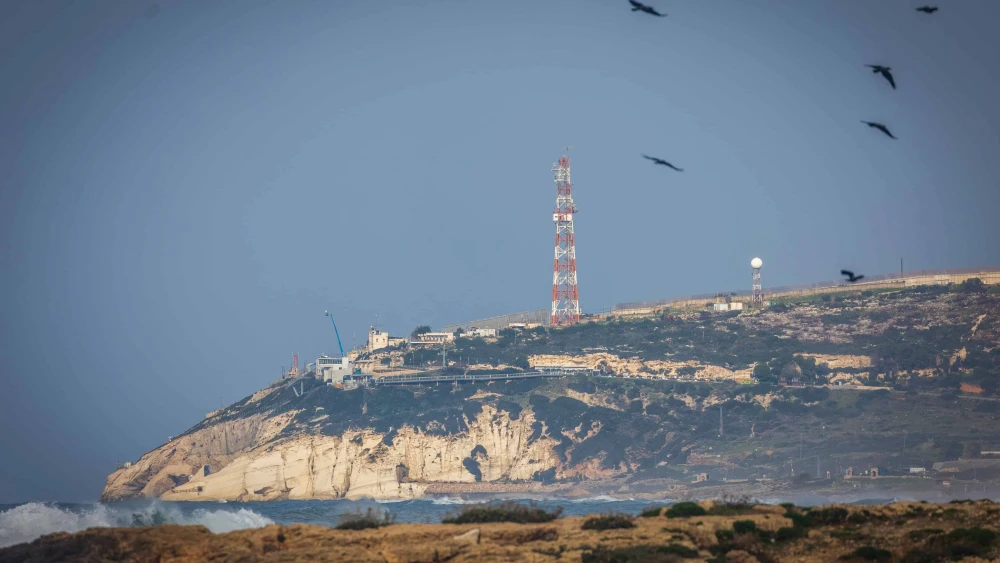
The Lebanese terrorist group Hezbollah on Tuesday launched a barrage of missiles at an Israeli Air Force air traffic control base on Mount Meron in the Upper Galilee.
Twelve rockets were fired at Meron, with four intercepted and six hitting open areas, Channel 12 reported.
Hezbollah said on Tuesday that it had fired a “large number” of rockets from Lebanon at the base, “in response to the recent massacres in Lebanon and Syria, and to attacks against civilians and houses in our villages.”
The Israel Electric Corporation reported that the attack damaged a high-voltage line in the Meron area, but that it was able to restore power to residents remotely.
The attack caused slight damage but the IDF said it has backup systems to ensure that the air traffic control base continues to operate, and “there is no damage to the air force’s detection capabilities.”
Sirens sounded in Israeli communities close to the border in the morning hours and in Kfar Giladi in the afternoon, with a single launch from Lebanon detected. There were no reports of casualties or damage.
Tuesday’s attack on the air traffic control base was the second this month, after Hezbollah on Jan. 6 hit the base with Kornet-EM missiles, causing damage.
The day before the Jan. 6 attack, Hezbollah chief Hassan Nasrallah had threatened retaliation for the Jan. 2 assassination in Beirut of Saleh al-Arouri, Hamas’s deputy politburo chief.
The Kornet-EM, which has a range of approximately 10 kilometers (6 miles) and was likely supplied by Iran, enabled Hezbollah to inflict damage on the Meron base’s Northern Air Control Unit.
The attacks on the base, located about 5 miles from the Lebanese border, underscore Hezbollah’s ability to carry out precision strikes on Israeli strategic and military targets.
Hezbollah has been conducting daily cross-border attacks in support of Hamas since the day after the war began on Oct. 7, forcing tens of thousands of residents to evacuate.
Six civilians and nine IDF soldiers have been killed by attacks from Lebanon since the start of the war.



