While it remains too soon to know the full implications of the assassination of Iranian Quds Force Gen. Qassem Soleimani, and many questions remain, Iran’s malign activity in the Middle East looks set to continue to create risks for escalation.
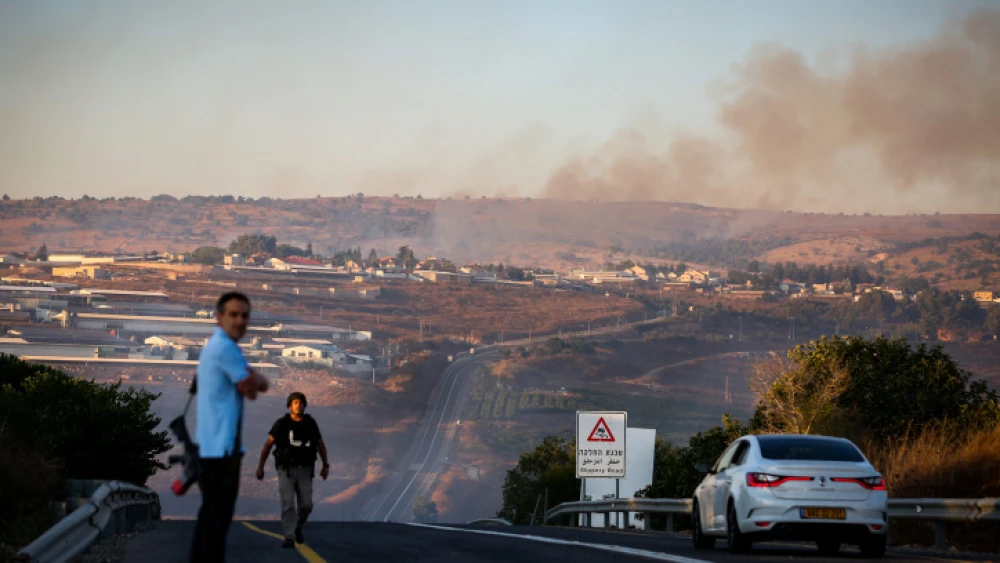
At the top of the list of immediate threats is the Iranian-Hezbollah plan to construct precision-guided missile factories on Lebanese soil. This represents a top proliferation challenge for Israel in 2020, and Tehran is continuing to lean on Hezbollah chief Hassan Nasrallah to proceed with the construction of the factories. Judging by the comments of Israeli officials in recent months, Jerusalem has adopted a zero-tolerance policy towards such activity.
Giving Hezbollah and the Iranians the ability to accurately threaten strategic spots in Israel with guided missiles built on Lebanese soil looks like a step too far in the force buildup program by Israel’s enemies.
Nasrallah, who has his hands full with Lebanon’s political and economic woes, may not be fully aware of Israel’s determination to stop the construction of such factories. While none have likely been built so far, the possibility of construction work starting on such facilities is keeping tensions heightened between Israel and Hezbollah, just as this has been a source of high tensions in 2019.

Hezbollah remains deterred by Israel’s military might, but if it proceeds with the missile factories, it would be taking an enormous risk of escalation by inviting Israeli preemptive action.
The coming months will reveal whether Nasrallah realizes the extent of the danger and decides to step back from the brink.
Two central risks to Israel’s security
Despite the loss of Soleimani, which may have a big impact on Iran’s future patterns of conduct, the Islamic Republic poses two central risks to Israel’s security. The first stems from Iran’s nuclear program, which has been advancing at an alarming rate in recent months; and the second risk comes from Iran’s nefarious regional activities in Lebanon, Syria, Iraq, Yemen and its support for terror factions in the Gaza Strip.
On the nuclear front, blinking red lights should be going off due to Iran’s announcements of resumed uranium-enrichment activities at Fordow and Qom. At the current rate, by this coming spring, Iran’s nuclear program could be six months away from having a sufficient quantity of enriched uranium for a bomb. It’s far from a given that Iran would choose to rush one, due to the risks of inviting American or Israeli strikes, but the fact of the matter is that the program is advancing without anyone stopping it.
On the regional front, Iran is still working hard to proliferate advanced weapons to militias and terror entities throughout the region. Under major distress due to the American “maximum pressure” campaign against it and facing significant internal instability, Iran is reacting aggressively. It’s building missile bases in Iraq to threaten Israel and Saudi Arabia, and transferring missiles to Yemen. It is also likely that Iran has transferred cruise missiles to Syria for use against Israel.
The Iranian proliferation routes were masterminded by Soleimani himself and include ground, air and maritime routes to gets advanced weapons to proxies. Simultaneously, the Iranians are trying to build a network of surface-to-air missile batteries across their sphere of influence to challenge Israel’s air superiority.
This aggression largely stems from the fact that Iran’s leaders are in distress. In many ways, the Islamic Republic is at its lowest point since the 1979 revolution, and Supreme Leader Ayatollah Ali Khamenei has understood that he cannot stop the Trump administration’s campaign of biting sanctions.
As a result, Iran is lashing out and testing the responses of adversaries.
The Iranians have even begun tactical cooperation with ISIS in the region, despite the massive ideological enmity between these Shi’ite and Sunni fundamentalists. Iran-backed militias have supplied weapons to ISIS in Iraq, and in Syria as well, to promote attacks on moderate Sunni elements and Western targets—targets that both sides can agree on attacking.
Last, but not least, the Bashar Assad regime in Syria has resumed its chemical-weapons program—an issue that will require intensive international attention in the coming year.
Israel is a powerful regional power, and its enemies understand its military might well. However, the intent of the Iranian axis to build up its capabilities is creating new potential for escalations, and 2020 looks set to be a volatile year, despite Israel’s powerful deterrence against its enemies.