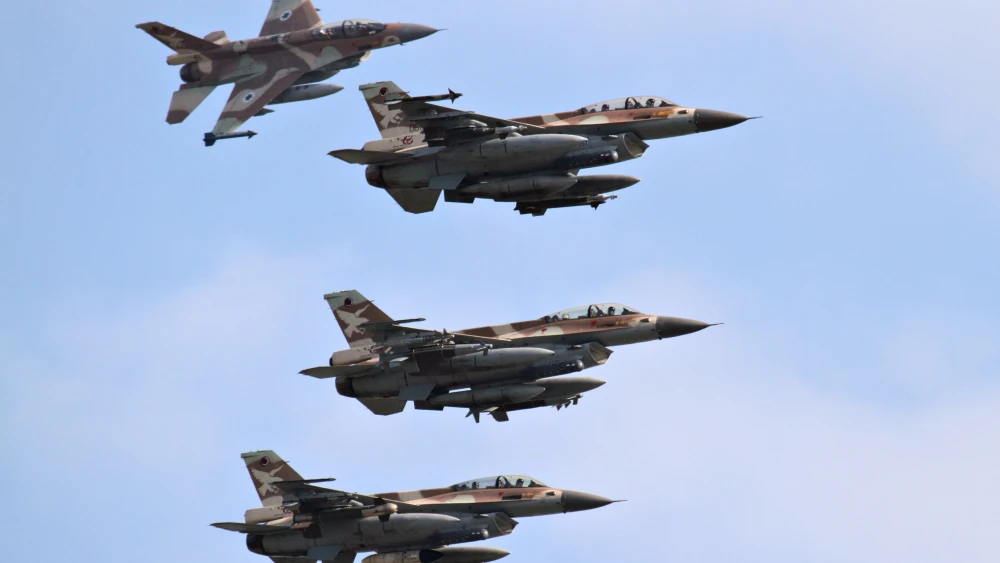
The Israel Defense Forces on Monday attacked several Hezbollah targets in eastern Lebanon’s Beqaa Valley, including Radwan Force training compounds, the military said.
The facilities were used to train operatives and prepare attacks against IDF troops and Israel, including gunfire drills and other weapons exercises.
“The storage of weapons and the activities of the Hezbollah terrorist organization at these sites constitute a blatant violation of the understandings between Israel and Lebanon and constitute a threat to the State of Israel,” according to the statement.
“The IDF will continue to operate to remove any threat to the State of Israel and will prevent the reestablishment of the Hezbollah terrorist organization,” added the military.
On Wednesday, the Israeli Air Force killed two terrorists and struck a facility in Lebanon that violated the terms of the ceasefire, the IDF Spokesperson’s Unit said. The terrorists were killed in separate aerial strikes carried out within two hours. The IDF identified one of the targets as Abd al-Manaam Musa Suwaydan, a Hezbollah operative in the Yatar municipality of Southern Lebanon.
Hours later, the IDF struck a Hezbollah site in the Ansariyah area, south of Sidon in southwestern Lebanon, “which stored engineering vehicles intended to rebuild the terrorist organization’s capabilities and support its terrorist activity.” The military also hit a Hezbollah rocket launcher in the Al-Jibbain area, in the Tyre District.
On Nov. 27, a ceasefire went into effect requiring Hezbollah to withdraw north of the Litani River. Israel and Hezbollah had maintained a tense truce in Lebanon since the end of the Second Lebanon War in 2006, until Oct. 8, 2023, when the Iranian-backed group began firing rockets into Israel in solidarity with Hamas’s invasion the previous day. Israel limited its response to Hezbollah’s attacks and evacuated roughly 60,000 Israeli residents from the border area to reduce casualties.
Last September, Israel escalated its response, killing Hezbollah’s leader Hassan Nasrallah and several other high-ranking terrorists. Nearly a year of fighting devastated the group’s command structure and weapons stockpiles.
According to the Institute for National Security Studies at Tel Aviv University, Israel has killed about 4,150 Hezbollah terrorists since the outbreak of war in more than 15,000 strikes. Some 133 Israelis have been killed, many by the more than 4,000 rockets the group fired into Israel.