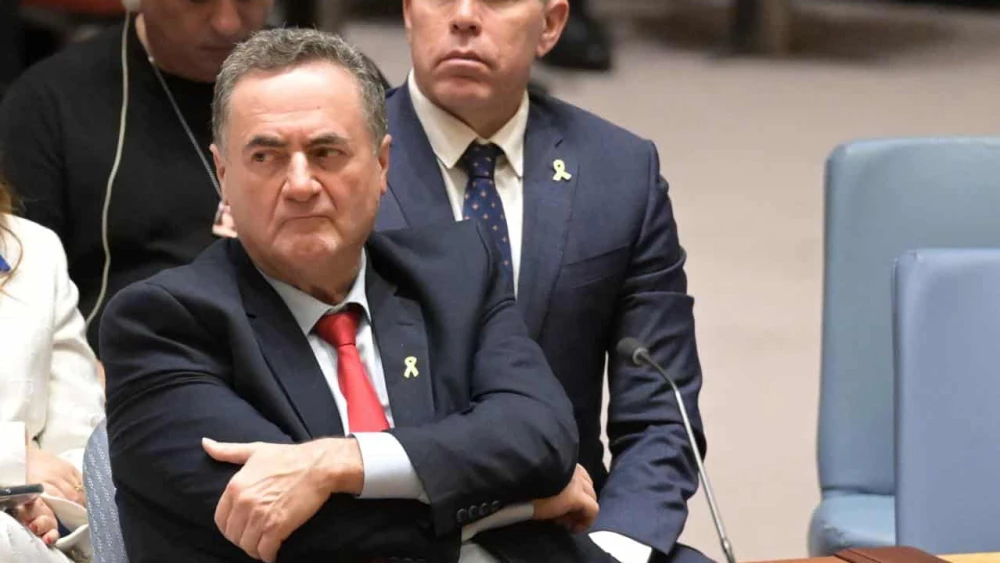
Israeli Foreign Minister Israel Katz said on Tuesday that the Palestinian Authority cannot be allowed to rule post-war Gaza, citing its ongoing financial support for terrorism.
“7% of the Palestinian Authority’s budget goes to murderers of Israelis. More killings = more money. The Palestinian Authority cannot rule Gaza,” he tweeted. The post includes a short video highlighting the fact that the P.A.'s payments to terrorists scale with the number of Jews they killed.
7% of the Palestinian Authority's budget goes to murderers of Israelis. More killings = more money.
— ישראל כ”ץ Israel Katz (@Israel_katz) June 18, 2024
The Palestinian Authority cannot rule Gaza. pic.twitter.com/z9ssLstdGw
The controversial Palestinian policy, referred to by Israel as “pay for slay” or “pay to slay,” has been a sticking point for the United States, which has called for a “reformed” P.A. to take over in Gaza once Israel topples Hamas there.
The policy calls for the paying of monthly stipends to convicted terrorists, released security prisoners and the families of those killed while trying to murder Jews.
Palestinian officials have repeatedly stressed they will never stop the payments, with Abbas saying in 2018 that if Ramallah had only “a single penny left, we would pay it to families of the martyrs and prisoners.”
In the aftermath of the Oct. 7 attack, some 661 Hamas members from Gaza were among the 3,550 terrorists imprisoned in Israel to receive the stipends, according to Palestine Media Watch, a Jerusalem-based non-profit research institute.
Stipends were also received by the families of 23,210 slain “martyrs,” according to PMW.
During his trip to the region last week, U.S. Secretary of State Antony Blinken met with P.A. Prime Minister Mohammad Mustafa in Sweimeh, Jordan. He welcomed the P.A.'s plans for administrative reforms—which did not include ending “pay for slay.”
Blinken stressed “the need for full and consistent implementation of those reforms to achieve the aspirations of Palestinians in the West Bank and Gaza,” according to a U.S. readout of the meeting.