


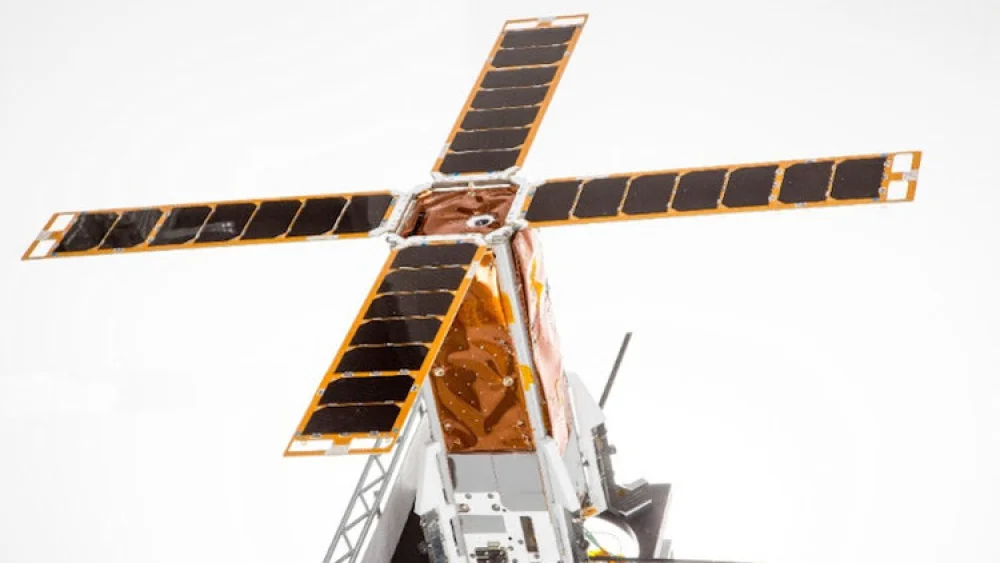
The Israeli micro-satellite developer Effective Space Solutions last week announced the signing of a $100 million multiyear contract to provide satellite maintenance services to an unnamed client.
The signing of the contract with what Effective Space Solutions referred to as a “major regional satellite operator” marks the closure of the company’s first such deal in the industry.
Headquartered in Tel Aviv with additional office in the U.K., Effective Space Solutions was founded in 2013 and specializes in developing and operating a small spacecraft that performs life-extending maintenance services on satellites in space.
“We are seeing steady growth in the number of satellite launches per year, but little progress has been made in increasing the lifespan of this space hardware,” said Arie Halsband, founder and CEO of Effective Space Solutions. “Our technology enables satellite owners to maximize the lifespan of their hardware, and run expensive fuel resources to zero before decommissioning. ... This will be one of the first commercial mission contracts of in-orbit servicing.”
Adding to Israel’s existing reputation as the “start-up nation” and a major hub of innovation, the Jewish state is a rising star in space and satellite technology. Israel is the smallest country in the world to launch its own satellites, and is also one of only 11 nations with the ability to independently launch unmanned missions into space.
With the global civilian satellite technology market worth an estimated $150 billion a year, Israel hopes to corner at least 10 percent of that sector, and is aiming to earn as much as $15 billion in space technology exports annually.


