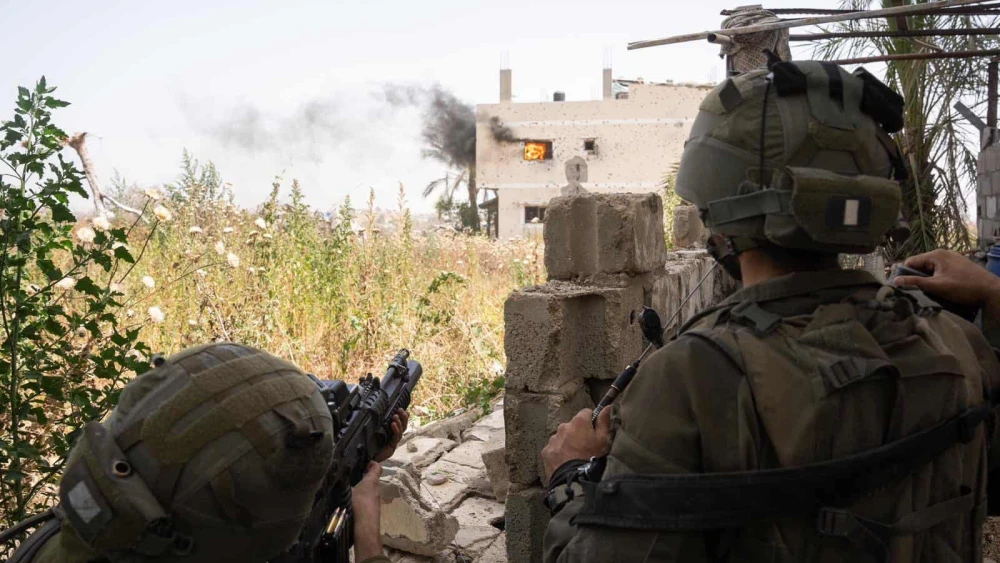
Israel’s War Cabinet met on Thursday afternoon to discuss the Israel Defense Forces’ pending operation in Gaza’s Rafah city, where four of Hamas’s six remaining battalions are entrenched.
The city along the Egyptian border is also where Jerusalem believes that the terrorist group is keeping most of the 133 remaining hostages.
The convening of the War Cabinet comes ahead of an expanded meeting of the Security Cabinet later in the afternoon.
Israel’s military said on Wednesday that it was readying to deploy two reserve brigades to Gaza as preparations continue for a ground invasion of Rafah, including evacuating noncombatants to a humanitarian zone.
After serving on the northern frontier, the 679th Yiftah Armored Brigade and the 2nd Carmeli Infantry Brigade will be heading south for operations in central Gaza, where two of the six remaining battalions are located—in the Nuseirat and Deir al-Balah camps.
The four Hamas battalions in Rafah are Yabna (South), Shaboura (North), Tel Sultan (West) and East Rafah.
The two new brigades will free up the Nahal Brigade, currently in central Gaza, to join the rest of the 162nd Division for the Rafah operation and other activities in the Strip.
Despite intense international opposition to a major offensive in Rafah, Israel has repeatedly stated that it is necessary to win the war against Hamas to ensure that the terror group is not able to regroup and threaten Israel again.
“We will complete the elimination of Hamas’s battalions, including in Rafah. No force in the world will stop us... After what [Hamas] has done, it will not do this again. Neither will it exist,” Israeli Prime Minister Benjamin Netanyahu said earlier this month.