


Three Israel Defense Forces soldiers were killed on Saturday in two separate exchanges of fire with a terrorist along the southern border with Egypt.
In the first incident, two soldiers, one of them female, were fatally shot while manning an observation post along the frontier.
An IDF spokesman said that the soldiers had started a guard shift late Friday night and did not return radio calls the following morning. They were subsequently found dead.
Hours later, during the search for the perpetrator, another soldier died in an exchange of fire within Israeli territory. A fourth IDF soldier was lightly wounded.
The terrorist, identified as an Egyptian police officer, was killed.
Israeli forces were searching the area on Saturday afternoon to rule out the possibility of additional attackers.
The IDF, in conjunction with the Egyptian army, opened an investigation into the attacks. Maj. Gen. Eliezer Toledano, head of the Southern Command, was leading the probe.
המחבל הינו שוטר מצרי. מתקיים תחקיר בשיתוף פעולה הדוק ומלא עם הצבא המצרי.
— צבא ההגנה לישראל (@idfonline) June 3, 2023
האירוע מתוחקר בשטח על ידי מפקד פיקוד הדרום, אלוף אליעזר טולדנו, מפקד אוגדה 80, תת-אלוף איציק כהן ומפקדים נוספים.
כוחות צה"ל ממשיכים לסרוק במרחב על מנת לשלול המצאותם של מחבלים נוספים
Defense Minister Yoav Gallant convened a situational assessment with IDF Chief of Staff Lt. Gen. Herzi Halevi and other top brass.
Prime Minister Benjamin Netanyahu was being continuously briefed on the incident, his office said.
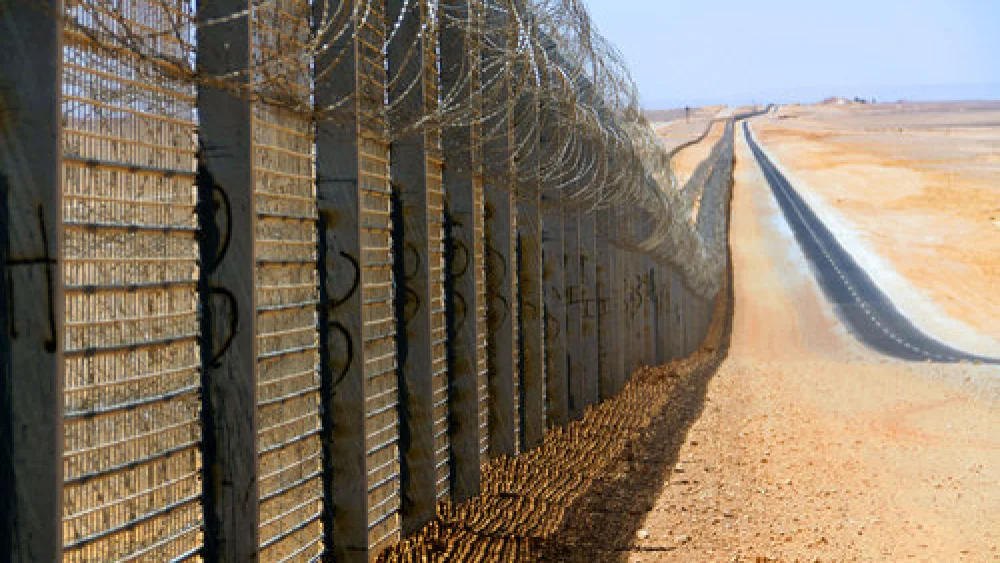
Since Israel completed a high-tech security fence along the border with Egypt, it has been largely quiet.
With its network of radars and cameras, the fence—dubbed “Hourglass” by the Israeli Defense Ministry—issues alerts to IDF units regarding suspicious movements.
It has also entirely curbed the flow of illegal African migrants into the Jewish state and significantly boosted the military’s ability to defend the country against Salafi-jihadist terrorist organizations active in the Sinai Peninsula.
Sinai-based terrorists carried out multiple attacks against Israel in 2011 and 2012, before the fence was completed. In August 2011, terrorists killed six Israeli civilians, an IDF soldier, an Israeli police counterterrorism officer and five Egyptian soldiers.



