Foreign Minister Gideon Sa’ar has formally informed U.S. Secretary of State Marco Rubio that Israel seeks the immediate termination of the United Nations Interim Force in Lebanon (UNIFIL).
In a letter, Sa’ar argued that UNIFIL has failed in its core mission, pointing to Iranian-backed Hezbollah’s continued terror buildup since the 2006 Second Lebanon War.
“The force was intended to be temporary from the outset and has failed in its fundamental task—to prevent Hezbollah’s entrenchment south of the Litani River,” wrote Sa’ar, according to Israel Hayom.
The top Israeli diplomat is expected to meet Rubio, who also serves as the U.S. National Security Advisor, during a visit to Washington next week.
The Trump administration has said it wants to see UNIFIL, which the White House described as “fraught with waste and abuse,” wind down as Lebanon’s military disarms Hezbollah.
But a France-drafted U.N. Security Council resolution, which JNS viewed, proposes to extend UNIFIL’s mandate by a year, with no condition for its ultimate end. The mandate is set to expire on Aug. 31. As a permanent member of the council, Washington holds veto power over its extension.
The Associated Press reported that Rubio had approved earlier this month “a plan that would wind down and end UNIFIL in the next six months, according to Trump administration officials and congressional aides familiar with the discussions.”
The French draft contains no mention of a planned end to UNIFIL’s operations, even as the AP reported that Washington is willing to support a one-year extension, so long as it’s “followed by a time-certain wind-down period of six months.”
The draft mandate renewal, which would carry through Aug. 31, 2026, notes that the Security Council “indicates its intention to work on a withdrawal for UNIFIL with the aim of making the Lebanese government the sole provider of security in southern Lebanon.”
That would happen if the Lebanese government controls all its territory completely and “the parties agree on a comprehensive political arrangement,” according to the draft resolution.
However, UNIFIL’s mandate since the end of the 2006 Lebanon War has largely revolved around the implementation of U.N. Security Council Resolution 1701, which already calls for a permanent ceasefire and a long-term solution, and demands the disarmament of Hezbollah and all non-state actors, along with the restoration of Lebanese sovereignty throughout the country.
Hezbollah attacked Israel on a nearly daily basis between Oct. 8, 2023, and Nov. 27, 2024, along the Jewish state’s northern border, which is an area in which UNIFIL operates.
In his letter, Sa’ar suggested a temporary extension of the mandate for six months to one year to allow the Lebanese Armed Forces to redeploy in Southern Lebanon and UNIFIL to evacuate its positions in an orderly way. During this interim period, UNIFIL’s activities would focus on specific tasks, such as clearing explosives and mines, training the Lebanese army, and organizing the withdrawal of its forces.
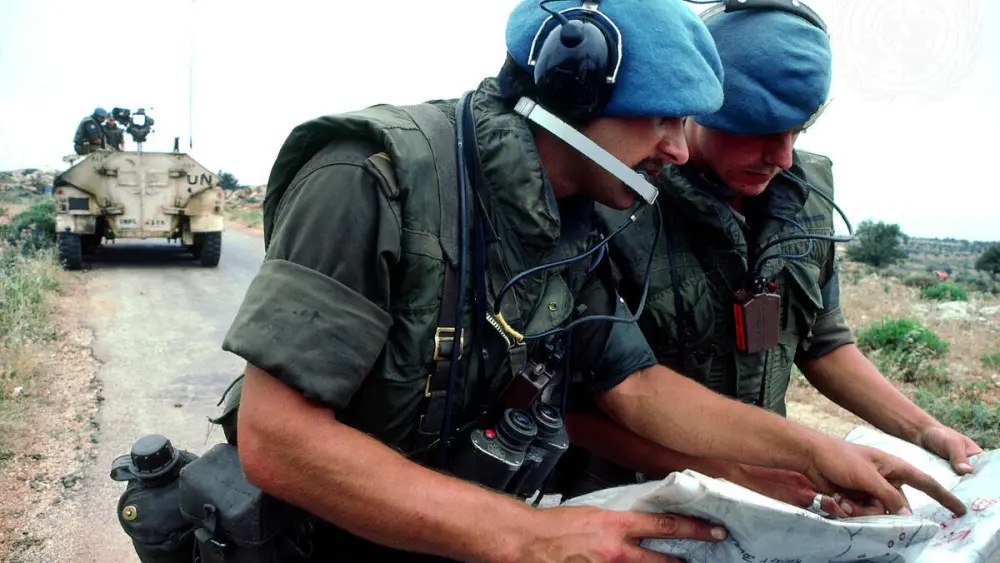
Established nearly 50 years ago, UNIFIL has an annual budget of approximately $538 million and approximately 10,000 troops deployed in Southern Lebanon.
A version of this article was published by Israel Hayom.