Newsletter
Newsletter Support JNS

Israeli lawmakers expedite bill to dissolve the 22nd Knesset

If a coalition deal is not inked by midnight, then Israel will head to new elections on March 2, 2020.

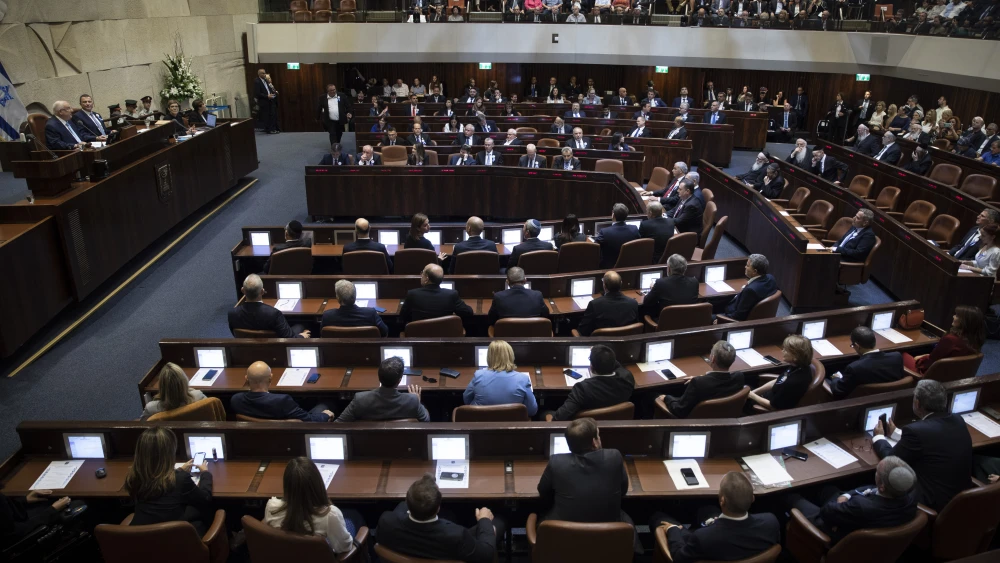
The Knesset plenum hall on the opening of the 22nd Knesset in Jerusalem, Oct. 3, 2019. Photo by Hadas Parush/Flash90.

A bill to dissolve Israel’s 22nd Knesset and set a date for new elections was expedited by lawmakers on Wednesday. If a coalition deal is not inked by midnight, then the country will head into an unprecedented third round of national elections within a one-year period.

The Knesset Arrangements Committee approved a special, fast-tracked legislative process that will allow Knesset members to hold four plenum votes and a committee amendments process in a single day.

Israeli law sets the election date 90 days after the deadline for forming a government passes, but since that would have put election day on the Jewish holiday of Purim, which falls this year on March 10, the bill seeks to set an election date of March 2, 2020.

As the bill already has the support of both the Likud, and Blue and White parties, which together constitute a Knesset majority, it is expected to pass without issue.

The American leader wished the Israeli premier well and condemned Hamas atrocities.
Twenty British diplomats will leave Israel; seven remain under an agreement that pauses retaliation while talks continue.
“Mamdani could not even give us one day to mourn without defaming the Jewish people and giving cover to our enemies,” Inna Vernikov, a Jewish member of the New York City Council, told JNS. “We will not let Mamdani and his radical pals rewrite Oct. 7.”
“The charging by the FBI of Haverford College associate professor Guangtian Ha for harassment and intimidation of a Jewish Israeli professor closes the dotted line between verbal acts of harassment and actionable violence which, when Jews are the recipients, is far too often ignored,” Lori Lowenthal Marcus of the Deborah Project told JNS.