Newsletter
Newsletter Support JNS

Herzog calls Belgian ritual-slaughter ban ‘infringement’ of religious freedom

“We thought that restrictions on the practice of religion belonged to Europe’s history, not to its present and even less so to its future,” wrote Jewish Agency chairman Isaac Herzog.

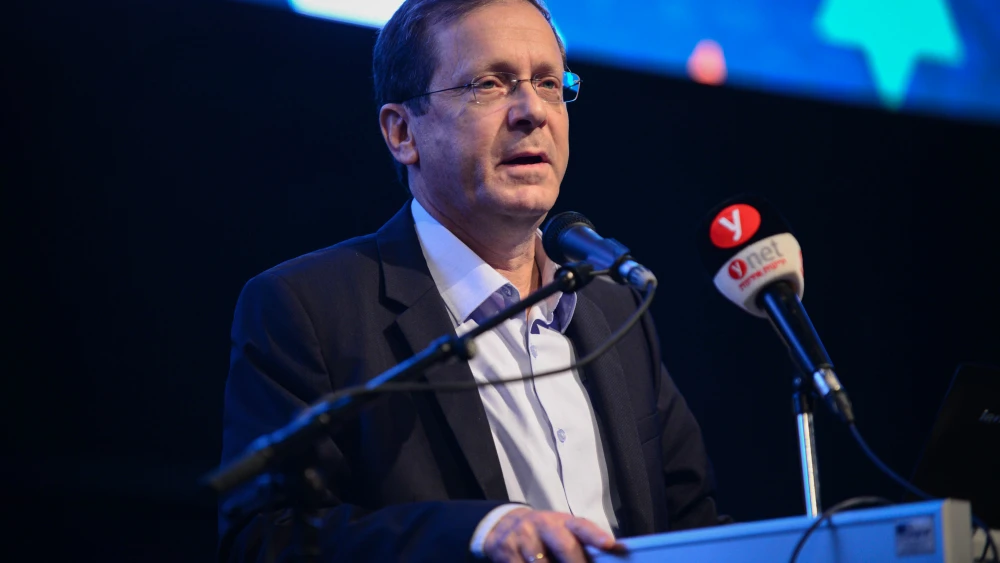
Jewish Agency for Israel chairman Isaac Herzog speaks during the Public Forum Conference on Nov. 15, 2018. Photo by Tomer Neuberg/Flash90.

Jewish Agency chairman Isaac Herzog sent a letter on Monday to the president of the Belgian regional parliament of Wallonia in an appeal to lift the ban on kosher ritual slaughter without stunning in the region.

The ban, initially legislated in 2017 in relation to Jewish and Muslim slaughter, had been in effect since Sept. 1, 2019. It is currently being enforced in the region of Wallonia, although a court ruling is pending on an appeal. A similar law was previously passed by the Flanders regional parliament in Belgium.

The bill passed by the Wallonia Parliament states that animals must be stunned before being killed—a technique that is not acceptable in accordance with Jewish and Muslim ritual slaughter, which requires animals to be conscious when their throats are slit.

Animal slaughter without prior stunning is already banned in several E.U. countries, such as Sweden and Denmark, and other nations in Europe, including Switzerland and Norway.

“This is not only an issue of freedom of practice for traditional kosher butcheries. ... This is an unacceptable infringement of general freedom of religion,” Herzog said about the ban in his letter. “We thought that restrictions on the practice of religion belonged to Europe’s history, not to its present and even less so to its future. I call on you to do your utmost in order to attempt to roll back this legislation so as to find the right balance between animal rights … and freedom of religion.”

“What started a little more than 30 years ago as basic relations of seller and buyer has evolved dramatically to the highest level,” said former Israeli Ambassador to India Ron Malka.
Alan Meltzer praised the Jewish-non-Jewish collaboration behind Stuttgart’s “Anti-Anti 2.0” initiative and held talks with leaders in Baden-Württemberg.
The U.S. secretary of state will travel to the UAE, Kuwait and Bahrain to discuss regional priorities, including the U.S. agreement with Tehran and efforts to secure the Strait of Hormuz.
“It cannot be overstated that ISIS continues to pose a threat to U.S. interests, both domestically and abroad,” said Reid Davis, the FBI Special Agent in Charge in North Carolina.
“He was a giant of a man who helped shape the U.S. economy for decades under presidents of both parties but was always honest in acknowledging his mistakes,” his widow Andrea Mitchell told NBC.
Rapid, tech-driven strikes killed Tehran’s top commanders in seconds and secured air superiority in hours, the Rafael chair and former minister said.
Benny Gantz, JNS editor-in-chief Jonathan S. Tobin, Gilad Erdan, Mosab Hassan Yousef, Nissim Black and leading voices in security, diplomacy, media, law and Jewish communal affairs headline the summit’s third day in Jerusalem.